
ADHD Symptoms Explained: Do I Have ADHD?
ADHD Symptoms Explained: Do I Have ADHD?
Sometimes it can feel like your brain is going in a hundred different directions at once. Maybe you get told off for not paying attention, or you always lose things, or your legs just won’t stop bouncing. If that sounds familiar, you might be wondering if you have ADHD. It’s nothing to be ashamed of — and it certainly doesn’t mean there’s something “wrong” with you.
Lots of people with ADHD are creative, clever, and full of energy. This article will help you understand what ADHD really is, what the symptoms are, and how to spot them.
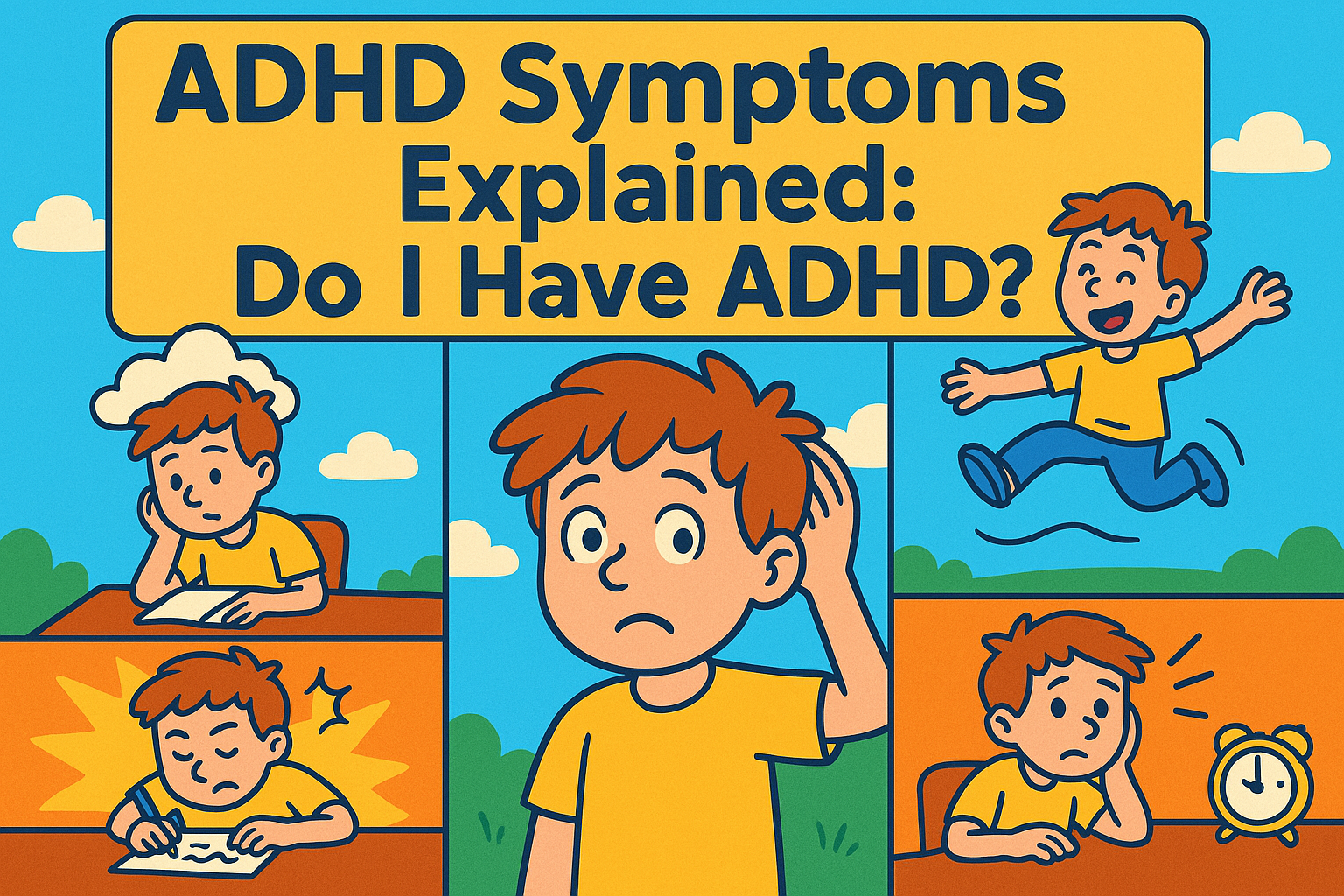
This topic is part of our Info Zone collection. You can read the full topic, once logged in, here: ADHD Symptoms Explained: Do I Have ADHD?
You’ll also find a full Lesson Plan and a handy Parent Q & A sheet, for this topic, ready to use..
What Is ADHD and What Does It Mean?
ADHD stands for *Attention Deficit Hyperactivity Disorder*. It’s a condition that affects how a person pays attention, controls their impulses, and manages their energy levels. It’s not an illness, and it doesn’t mean someone is lazy or naughty. In fact, it’s a brain-based difference that affects how people think and behave.
ADHD is usually noticed in childhood, but not always. Some people don’t realise they have it until they’re teenagers or even adults. That’s because ADHD symptoms can look different depending on the person. There are three main types: inattentive, hyperactive-impulsive, and combined type.
The most important thing to know is this: ADHD is not your fault. It’s just how your brain works, and with the right support, you can absolutely thrive.
Using tools like online reminders, planners, and yes — even AI writing helpers — is just smart. It’s called using your strengths, and there’s no rule that says you have to do everything the hard way.
What Does ‘Inattentive’ Mean?
If someone has inattentive ADHD, they might find it hard to stay focused, especially on things they find boring or slow. Their mind might wander a lot, even if they’re trying to pay attention. They might start one task and then forget all about it halfway through.
It’s not about not caring — it’s about struggling to *hold* attention. You could be listening to someone, but your brain drifts off to thinking about lunch, or Minecraft, or a weird dream you had. That’s not on purpose, and it doesn’t mean you’re rude.
Other signs include being forgetful, losing things like school books or your phone, and missing instructions because your brain skips a beat. If you’ve ever had to ask “What were we doing again?” — this might sound familiar.
What Is Hyperactivity?
Hyperactivity is when your body has a hard time sitting still. People with hyperactive ADHD might feel like they have a motor inside them that never turns off. They tap their fingers, swing their legs, talk a mile a minute, or get up and walk around when they’re supposed to sit.
It’s not just being energetic. It’s being *extra* energetic, even in places like school, where you’re expected to stay calm. This can be frustrating, especially if teachers or parents misunderstand it as being “disruptive.”
Hyperactivity can also happen in the brain — your thoughts might jump from one thing to another before you’ve finished the first one. That can make writing or revising tricky, but there are tricks and tools that can help.
What Is Impulsivity?
Impulsivity means doing things without thinking them through first. That could mean blurting out an answer in class, interrupting people, or making quick decisions that don’t always end well — like eating three slices of cake before thinking about the tummy ache later.
People with impulsive ADHD don’t mean to cause problems. Their brain just reacts quickly, sometimes before they’ve had a chance to think things through. This can also lead to risk-taking behaviours or struggling to wait their turn.
It’s a bit like your brain presses the “Go!” button before checking if it’s safe to cross the road. The good news is that learning techniques to pause and think can help — it just takes practice.
Can You Have All Three Types?
Yes! Many people have what’s called the “combined type” of ADHD. That means they show symptoms of inattention, hyperactivity, and impulsivity. They might get distracted easily *and* be constantly fidgeting or talking too much.
This can make life feel a bit chaotic, but understanding your symptoms can be a superpower. When you know what your brain is doing, you can figure out ways to work with it — not against it.
Combined ADHD is the most common type, but everyone experiences it differently. What’s tricky for one person might not be the same for someone else. That’s why getting a proper assessment is so important.
How Is ADHD Diagnosed?
ADHD isn’t something you can see on a scan or test with a quick quiz. Doctors or psychologists usually diagnose ADHD after talking with you, your family, and sometimes your teachers. They look at how your brain works and how it affects everyday life.
They’ll ask questions about school, home, emotions, and friendships. You might fill in some forms or rating scales. ADHD symptoms must have been present for at least six months and must have started before age 12.
It’s not about labelling you. It’s about understanding what support you might need. Some people are diagnosed young, others as teens. It’s never too late to understand yourself better.
What Causes ADHD?
ADHD is believed to be caused by a mix of genetics and how the brain develops. If someone in your family has it, you’re more likely to have it too. It’s not caused by bad parenting, too much sugar, or playing video games.
Scientists have found that people with ADHD have differences in how certain brain chemicals, like dopamine, work. These chemicals affect attention, motivation, and self-control. That’s why ADHD isn’t something you can just “try harder” to fix.
Remember: you didn’t cause it, and it’s not your fault. It’s just how your brain is wired — and it comes with both challenges *and* strengths.
What Does ADHD Feel Like Day to Day?
Living with ADHD can feel like trying to tune in to one radio station while five others are playing in the background. It can mean forgetting things, making mistakes even when you’re trying, or being told you’re “too much.”
But it can also mean being creative, energetic, curious, and quick-thinking. Lots of famous scientists, artists, and inventors are thought to have had ADHD. It doesn’t stop you — it just means you might need different tools or routines to succeed.
Some days might feel hard, but understanding yourself is a huge step. That’s why learning about ADHD is so important.
Is There Help Available?
Yes! There are lots of ways to manage ADHD. These can include medication, therapy (like CBT – Cognitive Behavioural Therapy), coaching, and classroom support. Your GP can help you get started with an assessment.
Some people with ADHD take medication that helps balance brain chemicals and improve focus. Others use tools like planners, timers, or quiet study spaces. Everyone is different, and that’s OK.
In the UK, support is available through the NHS, your school’s SENCO (Special Educational Needs Coordinator), or specialist charities like ADHD Foundation and YoungMinds.
Can You Still Do Well in School?
Absolutely. ADHD doesn’t stop you from learning — it just means you might learn differently. Some people with ADHD do better with practical tasks, creative projects, or short bursts of study time with breaks in between.
Using AI or tech tools to plan, write, or organise isn’t cheating. It’s smart. The key is to understand how *you* work best and use that to your advantage. With the right support, you can do just as well as anyone else — sometimes even better.
It’s not about being perfect. It’s about being proud of your brain and working with it, not against it.
What Should I Do If I Think I Have ADHD?
If you’ve read this and thought, “That sounds like me,” you’re not alone. The best next step is to talk to a parent, carer, teacher, or GP. They can help you start the process of getting assessed and supported.
There’s no need to be afraid or embarrassed. Learning more about yourself is a good thing, and getting help doesn’t mean something is wrong with you. In fact, it means you’re taking control.
The more you know about your brain, the more powerful you become.
What Do You Remember?
- What does ADHD stand for, and what does it affect?
- What are some common signs of inattentive ADHD?
- How can hyperactivity look different in the body and mind?
- Why is impulsivity a part of ADHD?
- Where can you go in the UK to get support for ADHD?
Write your answers in the comment section below.
Related Topics
Now that you’ve explored what ADHD is and what the symptoms are, you might be interested in learning more about how the brain works, how to manage stress, or how different learning styles affect us all. It’s all about understanding yourself better — and there’s always more to learn!
What Do You Think?
If you found this to be an interesting topic, why not have your say. Or if you can think of ways we could improve it. We would love to know what you learned and more importantly, what you think. So now is your chance, use the comments section below to let us know your thoughts.