
Byzantine Empire History: Secrets of the 1,000-Year Empire (Q&A)
Q & A - Byzantine Empire History: Secrets of the 1,000-Year Empire
If your child is exploring empires or medieval history, this Byzantine Empire history parent Q&A sheet will help you support them at home — even if you haven’t studied the topic before. The Byzantine Empire was the eastern half of the old Roman Empire, and it lasted more than 1,000 years. Based in the powerful city of Constantinople, this civilisation blended Roman law, Greek language, and Christian faith. Its influence still shows up today in religion, architecture, and modern politics.
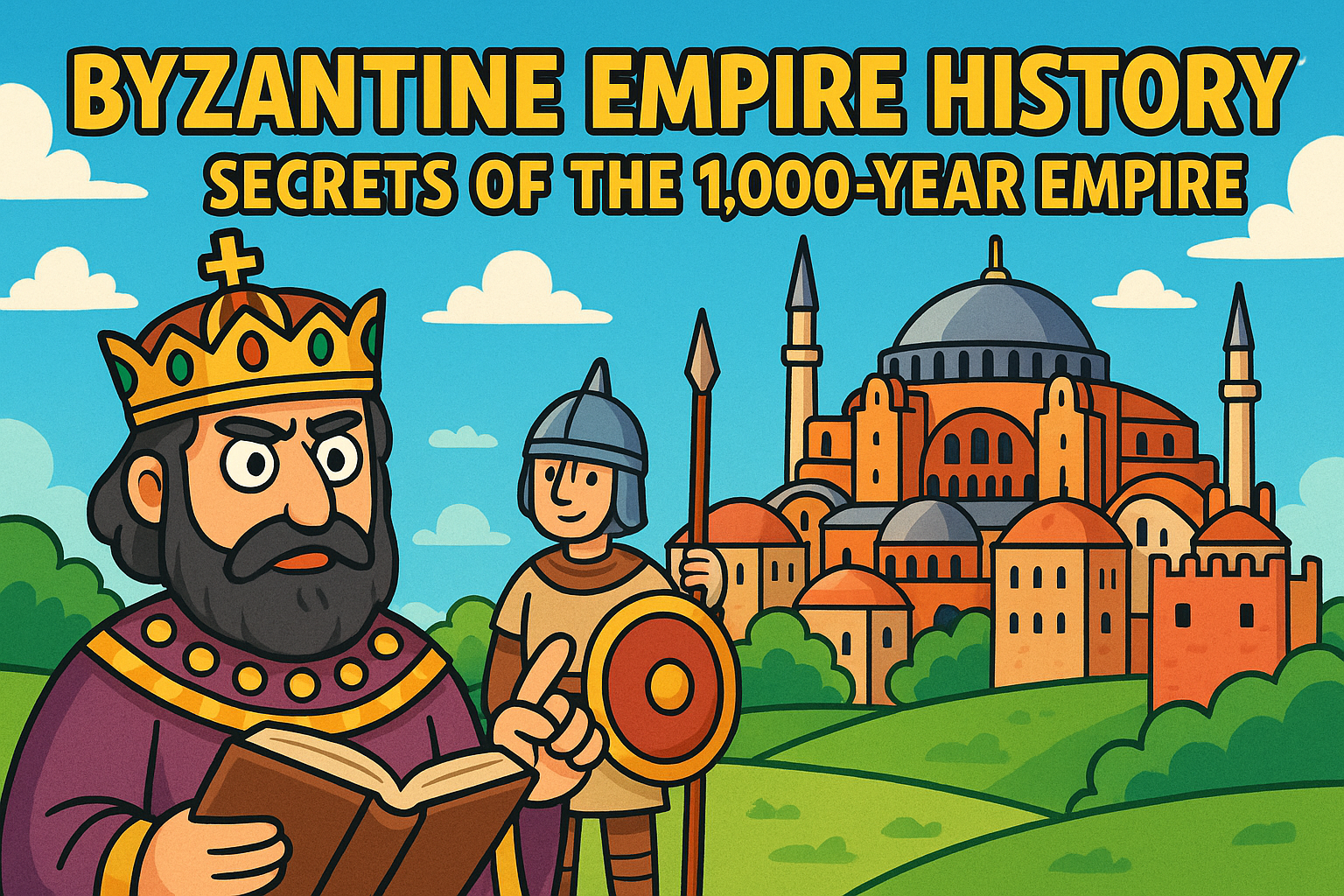
This Parent Q&A page is designed to give you clear, direct answers to the kinds of questions your child might ask during their learning. It breaks down complex ideas into everyday language and gives you confidence to talk about important people, places, and events. You’ll find explanations of key terms, thought-provoking questions, and helpful ways to connect this topic to the real world. Whether your child is asking about emperors, battles, or buildings, you’ll have an answer ready.
We also offer a complete lesson plan if you’d like to go deeper — but you can absolutely start with this. With a topic like the Byzantine Empire, it’s easy to feel overwhelmed. That’s why this Byzantine Empire history parent Q&A focuses on the essential facts and ideas, in a relaxed and parent-friendly way.
This topic is part of our Info Zone collection. You can read the full topic, once logged in, here: Byzantine Empire History: Secrets of the 1,000-Year Empire
You’ll also find a full Lesson Plan and a handy Parent Q & A sheet, for this topic, ready to use..
Tip for Parents: You don’t need to cover everything at once. Pick and choose the questions your child is curious about, and use your own experiences to explore ideas together.
What was the Byzantine Empire?
It was the eastern part of the Roman Empire that survived long after the western half collapsed. It lasted from AD 330 to 1453, centred in the city of Constantinople. It mixed Roman traditions with Greek culture and Christian beliefs.
Why is it called the “Byzantine” Empire?
Its capital was originally called Byzantium before it became Constantinople. Historians later used the name “Byzantine Empire” to make it easier to tell apart from ancient Rome — but people living there still called themselves Romans.
Where was Constantinople, and why was it important?
Constantinople (now Istanbul) was built between Europe and Asia. Its location gave it control of key land and sea trade routes. It was easy to defend and very wealthy, making it the heart of the *Byzantine Empire history parent Q&A* topic.
Who was Emperor Justinian?
Justinian I ruled from AD 527–565. He expanded the empire, built the Hagia Sophia church, and created the Justinian Code — a legal system that influenced Europe for centuries.
What was the Hagia Sophia?
It was a giant church in Constantinople built under Justinian. With its huge dome and gold mosaics, it became a symbol of the empire’s faith and power. Later, it was turned into a mosque and now it’s a museum.
What religion did the Byzantines follow?
They were Christian, but their practices became different from those in Rome. This led to the creation of the Eastern Orthodox Church, still followed in countries like Greece and Russia today.
What was the Great Schism?
This was a big split between the Western Catholic Church and the Eastern Orthodox Church in 1054. They disagreed on church leadership and religious practices.
Why did the empire last so long?
Its strong defences, clever leaders, and good location helped. The empire adapted to challenges over time and used diplomacy (negotiation) to survive invasions. That’s a key idea in this *Byzantine Empire history parent Q&A* guide.
What was Greek Fire?
It was a secret weapon that burned even on water, used in naval battles. No one knows the exact formula today, but it helped the Byzantines defend against enemies at sea.
Why did the empire fall?
After years of war, internal problems, and outside attacks, the empire grew weak. In 1453, the Ottoman Turks used large cannons to break through Constantinople’s walls and took over the city.
What happened to Byzantine culture after 1453?
Many scholars fled west with books and ideas. This helped inspire the Renaissance — a period of new thinking in Europe. The Orthodox Church also continued its traditions.
Was the Byzantine Empire different from ancient Rome?
Yes. It kept Roman laws and government but had a different language (Greek), religion (Orthodox), and culture. It became its own unique civilisation over time.
Why does the Byzantine Empire still matter?
It preserved ancient knowledge, shaped modern Christianity, and influenced law and art. Understanding this empire helps children connect past events to modern life — a key aim of this *Byzantine Empire history parent Q&A* page.
Did the Byzantines invent anything?
They improved Roman laws, created clever defence systems, and developed advanced religious art styles like mosaics. Their use of domes in architecture influenced buildings across Europe and the Middle East.
What did ordinary people do in the empire?
Most worked in trades, markets, farming, or the army. Some were scholars or monks. Daily life included prayer, festivals, and family traditions — just like today, but in very different surroundings.
How can I make this topic real for my child?
Talk about empires they know from books or films. Compare Constantinople to modern cities. Ask them: “What would you do if you were emperor?” Use games, maps, or build models of the Hagia Sophia or city walls.
Is this suitable for younger children too?
Absolutely. While the topic includes deep ideas, you can simplify as needed. Focus on buildings, stories of emperors, or looking at mosaics — and build up understanding gradually.
Where can I go next if my child is interested?
We also offer a full lesson plan on this topic if you want to explore it further. Or you could look into other world empires like Rome, the Ottomans, or the Islamic Golden Age.