Work Smarter, Not Harder: The Science of Simple Machines Explained (Q&A)
Q & A - Work Smarter, Not Harder: The Science of Simple Machines Explained
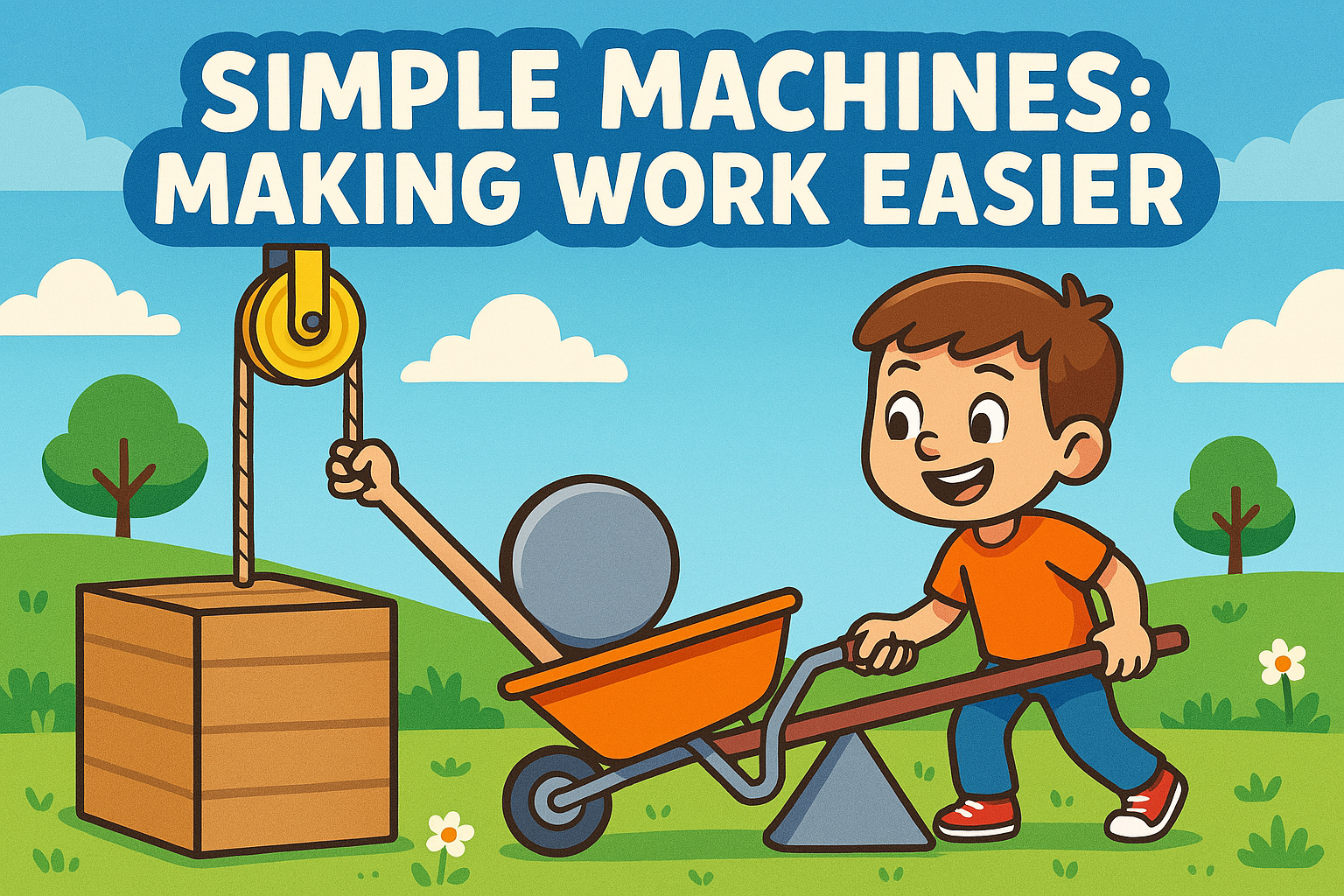
Understanding physics doesn’t need to be intimidating. This topic—simple machines—is a great place to start. It focuses on everyday tools like levers, pulleys, ramps, and wheels that help us do things more easily. These are called “simple machines” because they use basic mechanical principles, but their impact is massive. For example, a seesaw is a lever, and a screw-top jar uses the same science as ancient water-lifting tools.
This Q&A sheet is designed to help you explain these ideas at home. You don’t need to be a physics expert. We’ve included easy-to-follow answers that explain difficult words (like “mechanical advantage,” which means how machines make effort easier). The questions are based on the sorts of things children naturally ask, and they work well for mixed ages from 8 to 16.
There’s no pressure to complete everything in one go. You might talk about one machine while using tools in the garden, or notice one during a DIY project. This topic fits naturally into home life and can lead to great discussions, hands-on activities, or follow-up reading. You can build, draw, compare, and most of all—talk. It’s all about learning together at your own pace.
This topic is part of our Info Zone collection. You can read the full article here: Work Smarter, Not Harder: The Science of Simple Machines Explained
You’ll also find a full Lesson Plan and a handy Parent Q & A Sheet ready to use.
| Work Smarter, Not Harder: The Science of Simple Machines Explained | |
|---|---|
| Tip for Parents | Use these questions to guide relaxed discussions during hands-on activities or reading. Let your child explain ideas in their own words and explore the world around them. |
| 1. What is a simple machine? | A simple machine is a basic tool that makes work easier by changing the direction or strength of a force. It doesn’t need electricity or engines to work. |
| 2. Why are simple machines useful? | They help us move, lift, or cut things with less effort. This makes everyday tasks easier, safer, and more efficient. |
| 3. What are the six types of simple machines? | They are the lever, pulley, inclined plane (ramp), wheel and axle, wedge, and screw. |
| 4. What does “mechanical advantage” mean? | It means how much easier a machine makes a job. If something takes less effort with a tool, that tool is giving you a mechanical advantage. |
| 5. How does a lever work? | A lever is a bar that pivots on a point called a fulcrum. You push on one end to lift something on the other end, like a seesaw or crowbar. |
| 6. What’s the difference between a ramp and a step? | A ramp (inclined plane) lets you push or roll something up gradually. A step requires lifting it straight up with more effort. |
| 7. How do pulleys help lift things? | Pulleys use ropes and wheels to change the direction of a force. Instead of lifting straight up, you pull down, which is usually easier. |
| 8. Why are wheels and axles so important? | They reduce friction and make it easier to move things. For example, a wheelbarrow is easier to push than dragging a heavy load. |
| 9. What is a wedge used for? | A wedge is used to cut, split, or push things apart. Examples include knives, axes, or doorstops. |
| 10. What is a screw, in simple terms? | A screw is like a twisted ramp. Turning it helps hold things together or lift objects. Jars and bolts are everyday examples. |
| 11. What is a compound machine? | It’s when two or more simple machines are used together. Scissors use levers and wedges. A bicycle uses nearly all six types! |
| 12. How can I show these machines at home? | Use scissors (levers and wedges), bottle openers (levers), ramps, screw-top jars, toy cars (wheels), or ropes over a beam to show pulleys. |
| 13. Are simple machines still used today? | Yes! They're in modern tools, vehicles, doors, lifts, and even gadgets. We still use them every day to make work easier. |
| 14. Why does a longer lever make lifting easier? | The longer the lever, the less effort you need. It gives you more leverage, which increases mechanical advantage. |
| 15. What’s the science behind a playground seesaw? | It’s a lever! The middle is the fulcrum, and the children on either side are the loads. They balance by using weight and distance from the centre. |
| 16. Can I teach this without equipment? | Absolutely. You can talk about it while doing jobs around the house, use toys, draw pictures, or make simple models using books, sticks, or string. |
| 17. How can I include younger or older siblings? | Ask older ones to build or explain a machine, while younger ones draw pictures or help test things out. Everyone can join in at their own level. |
| 18. What should my child take away from this? | They should understand that machines don’t need to be complicated to be clever. Simple tools can solve big problems using smart ideas. |
| Extra Conversation Ideas |
|
[cl_logged_out]
Members Only
You need to be registered and logged in to access this Q and A sheet and all other learning resources, games and quizzes.
[/cl_logged_out]