Hello Alan Lloyd - Your Scores - Logout

10 Most Notorious Serial Killers in History (Q&A)

Q & A - 10 Most Notorious Serial Killers in History

Understanding the lives and crimes of history’s most notorious killers might seem like a dark topic — but it’s also an important one. This notorious killers parent Q&A page helps you support your child in learning about the people, patterns, and psychology behind some of the most disturbing criminal cases ever recorded. These stories aren’t just about violence — they raise deeper questions about justice, safety, and how forensic science and human behaviour are studied in real life.
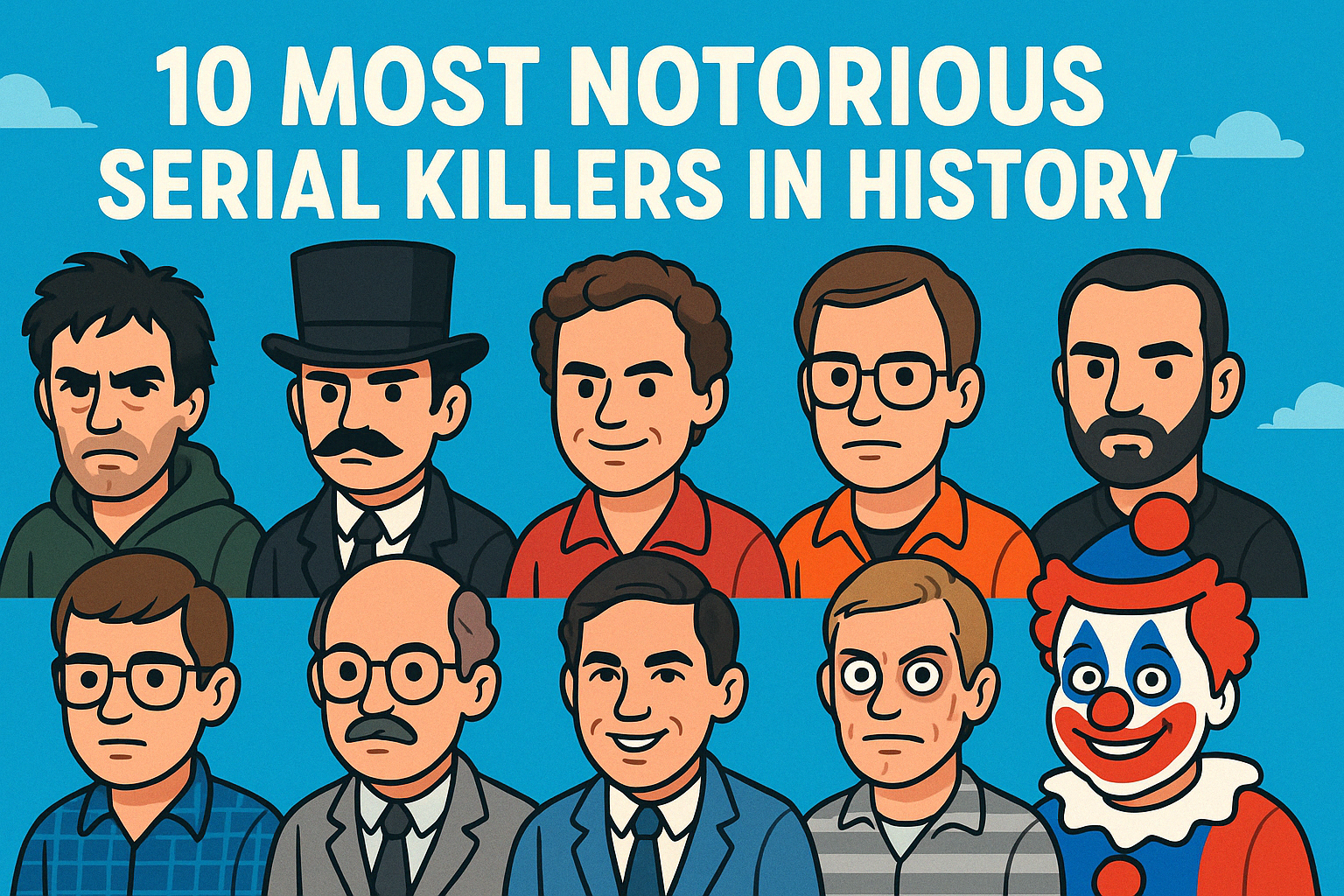
10 Most Notorious Serial Killers in History
By Alan Lloyd

This Parent Q&A page is designed to give you clear, honest answers to the kinds of questions curious learners aged 8 to 16 often ask. You don’t need a background in history or psychology — everything here is explained in plain English. It’s also written with home learning in mind, not the classroom, so you can go through it at your own pace. There’s no pressure to cover it all at once — just use the parts that feel most relevant to your child’s interests and questions.

Some parents may also choose to use our structured lesson plan alongside this Parent Q&A. That’s completely up to you. What matters most is helping your child engage critically and confidently with a tough but meaningful topic — and giving them space to ask “why” as much as “what.”


This topic is part of our Info Zone collection. You can read the full topic, once logged in, here: 10 Most Notorious Serial Killers in History

You’ll also find a full Lesson Plan and a handy Parent Q & A sheet, for this topic, ready to use..

Printable Parent Q&A


Tip for Parents: Children may feel uneasy learning about murder, so it’s okay to pause and check how they’re feeling. Let them lead with questions and focus on the historical, scientific, or psychological side if that helps them stay grounded.


What is a serial killer?

A serial killer is someone who murders three or more people at different times, often with gaps between the crimes. These killings usually follow a pattern in method, motive, or victim type. They’re different from one-time or spontaneous killers because their actions are repeated and often planned.


Why are they called “notorious killers”?

The word “notorious” means widely known — often for something bad. These killers became infamous because of the number of people they hurt, how they did it, or how long they avoided being caught. Their names are remembered because their crimes shocked society.


Is it appropriate for children to learn about serial killers?

Yes, with care. For children aged 8 to 16, learning about these topics can help them understand justice, psychology, and real-world dangers in a safe way. Focus on facts, ask how they’re feeling, and avoid graphic details. The goal is learning — not fear.


What makes someone become a serial killer?

There’s no single answer. Some have mental health issues, others had traumatic childhoods, and a few simply enjoy power and control. Most experts believe it’s a mix of factors — not just one cause. But not everyone with a troubled life becomes violent.


How are serial killers caught?

Detectives use clues like fingerprints, DNA, witness accounts, and patterns in behaviour. Profilers (specialists in criminal psychology) also help predict who the killer might be. Today, technology like CCTV and phone data often plays a big part too.


Who was Jack the Ripper?

Jack the Ripper was an unidentified killer active in London in 1888. He murdered at least five women and was never caught. The case became famous because of the gruesome nature of the crimes and the mystery around his identity.


Did any notorious killers work in ordinary jobs?

Yes — some of them lived very normal-looking lives. Harold Shipman was a doctor, John Wayne Gacy ran a business and dressed as a clown for parties. That’s part of what made them so dangerous — they didn’t seem suspicious at first.


Why do we still talk about these crimes today?

We study these cases to understand how to stop similar crimes in the future. Each case teaches police, psychologists, and even the public important lessons about warning signs, safety, and how justice systems can improve.


What’s the role of forensic science in catching killers?

Forensic science involves collecting and analysing evidence like blood, hair, fingerprints, or digital data. It’s one of the main ways police link a suspect to a crime — especially when the killer is careful or tries to hide their identity.


Is psychology used to study serial killers?

Yes — psychology is key. It helps explain how people think, what drives them, and what patterns exist in violent behaviour. Criminal profilers often use psychology to build profiles of likely suspects and understand what motivates them.


Can someone be born a killer?

That’s a big debate. Some scientists believe genetics can play a small role, especially in how people handle emotions. But most agree that environment — like abuse, neglect, or head injuries — plays a bigger part. It’s rarely one single cause.


Are there female serial killers?

Yes, though they’re less common. Aileen Wuornos, for example, killed several men in the 1990s in the US. Female serial killers often have different motives — sometimes revenge, money, or distorted beliefs rather than control or cruelty alone.


Why do some people admire or obsess over killers?

Some people are drawn to the mystery or the drama of these stories, especially through books or films. Others want to understand how such minds work. But admiration can become unhealthy, so it’s worth discussing how to approach the topic with care.


How can I keep this topic age-appropriate?

Focus on facts, not fear. Avoid graphic details and stick to how crimes were solved or what we’ve learned from them. Check in with your child often and follow their lead. If they seem uncomfortable, it’s okay to stop or shift focus.


Where can I find trustworthy information?

You can use our main topic page — 10 Most Notorious Serial Killers in History — to explore the facts. Stick with sources that focus on history, psychology, or crime prevention rather than entertainment.


Why are some cases still unsolved?

Some killers were active before modern forensics, so evidence was limited. Others worked in different areas, making it hard to connect their crimes. Some were just very clever at avoiding detection — though modern science is helping solve cold cases today.


Can this topic link to other subjects?

Absolutely. It connects with psychology, history, biology (brain science), and even technology. You could explore how the justice system works, how forensic tools like DNA matching are developed, or how public reactions shape the news and laws.


What should I do if my child finds the topic upsetting?

Take a break, reassure them that they’re safe, and remind them the goal is learning — not fear. It’s okay to leave difficult topics until later or approach them from a scientific rather than emotional angle. Every child is different.


Is it normal for children to be curious about dark topics?

Yes — curiosity doesn’t mean something is wrong. Asking “why would someone do that?” is part of how children explore morality and human behaviour. It’s a great chance to guide them in thinking critically and ethically.


Leave a comment


'; // Add header content for print html += '

Lenara Learning

Get more learning resources at www.lenara.uk

'; // Insert the worksheet content html += '
' + content + '
'; html += ''; printWindow.document.write(html); printWindow.document.close(); printWindow.focus(); // Trigger printing and auto-close the popup printWindow.print(); printWindow.onafterprint = function() { printWindow.close(); }; setTimeout(function() { printWindow.close(); }, 1500); }