Hello Alan Lloyd - Your Scores - Logout

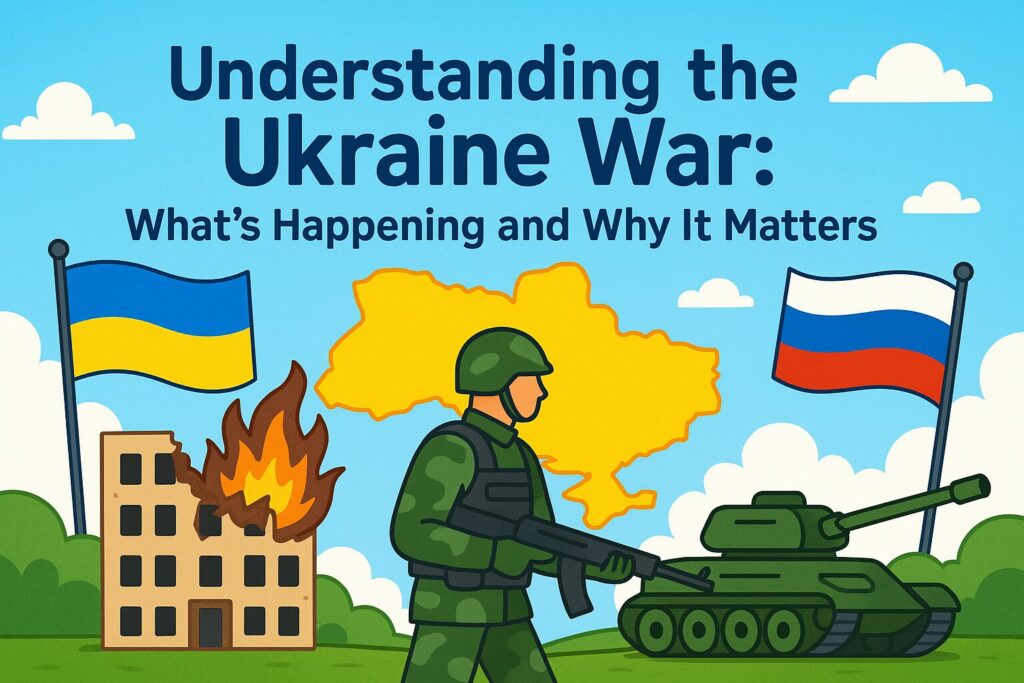
Understanding the Ukraine War: What’s Happening and Why It Matters

Understanding the Ukraine War: What’s Happening and Why It Matters

The Ukraine War is one of the biggest conflicts in Europe since World War II. It began in 2014 but became a full-scale invasion in 2022. This war has affected millions of people and changed how countries around the world interact. In this guide, we’ll explore what started it, what’s happening now, and why it matters.

Understanding the Ukraine War: What’s Happening and Why It Matters
By Alan Lloyd

You might have heard terms like “Russia-Ukraine conflict” or “Eastern European war” in the news. But what do they really mean? Why are Russia and Ukraine even fighting? And how is it possible that a disagreement between two countries affects things like petrol prices or food supplies where you live?

It’s a complicated situation, but don’t worry — we’re going to break it down. We’ll explain how the war started, who’s involved, and how it impacts everyday people around the world. By the end, you’ll understand why this conflict matters, even if you live far away.

Whether you’ve been following the war in Ukraine or this is all new to you, this guide is designed to help. We’ll look at facts, history, and real-world effects. Along the way, we’ll ask questions and explain tricky terms to help you think more deeply about what’s really going on.


This topic is part of our Info Zone collection. You can read the full topic, once logged in, here: Understanding the Ukraine War: What’s Happening and Why It Matters

You’ll also find a full Lesson Plan and a handy Parent Q & A sheet, for this topic, ready to use..

What Is the Ukraine War?

The Ukraine War is a military conflict between Ukraine and Russia. It officially began in 2014 when Russia took control of Crimea, a region in southern Ukraine. But the war became much larger in February 2022 when Russia invaded Ukraine with thousands of soldiers and tanks. This move shocked the world and triggered international reactions.

Ukraine is a country in Eastern Europe that was once part of the Soviet Union, like Russia. Since becoming independent in 1991, Ukraine has grown closer to Europe and the West. Russia, on the other hand, wants to keep influence over Ukraine. This clash in ideas is part of what led to the war.

At the heart of the conflict is power, territory, and national identity. Russia claims to protect Russian-speaking people in Ukraine. But Ukraine says it’s defending its independence and freedom. It’s a complex situation with deep historical roots.

Many other countries are involved indirectly. Nations like the UK, USA, and those in the European Union have supported Ukraine with weapons, money, and training. Meanwhile, Russia has faced economic punishments called sanctions.

The Ukraine War is not just about two countries — it’s about global politics, borders, and the rules that shape how nations behave.


How Did the Conflict Start?

The roots of the Russia-Ukraine conflict go back a long way. For centuries, Ukraine was ruled by larger empires like Russia and the Soviet Union. When the Soviet Union broke apart in 1991, Ukraine became an independent country. But not everyone in Russia accepted that.

In 2014, protests in Ukraine led to the removal of a president who supported closer ties with Russia. Soon after, Russia took control of Crimea. This act was widely condemned by the international community. It also sparked fighting in Eastern Ukraine, where some people wanted to join Russia.

This fighting continued for years in the Donbas region, even though a peace deal (called the Minsk agreement) was signed. The situation stayed tense. Then, in 2022, Russia launched a full-scale invasion across many parts of Ukraine.

Russia claimed this invasion was to “protect” people and stop Ukraine from joining NATO (a defence group of Western countries). But most of the world saw it as an attack on Ukraine’s independence.

The conflict started because of old disputes, modern politics, and Russia’s desire to control the region.


What Is NATO and Why Does It Matter?

NATO stands for the North Atlantic Treaty Organization. It’s a group of countries (including the UK, US, and others) that agree to protect each other if one is attacked. Think of it like a group of friends who promise to stand up for each other.

Ukraine is not a member of NATO, but it has said it wants to join. Russia strongly opposes this. Russia sees NATO as a threat, especially if it includes countries close to its borders. That’s one reason Russia gave for invading Ukraine.

However, NATO says it’s a peaceful group that helps defend its members. It has supported Ukraine with weapons and training but hasn’t directly joined the fight. This is because NATO doesn’t want to start a larger war with Russia.

Understanding NATO helps us see why the war in Ukraine is not just about those two countries. It involves global power, military alliances, and fears about safety and control.

So even though NATO isn’t fighting directly, it plays a big role in how the war has unfolded and how countries have responded.


Life Inside Ukraine During the War

Life for people in Ukraine has changed drastically since the invasion. Cities have been damaged by bombs, and millions of people have left their homes. Many have become refugees in other countries.

Imagine having to leave school, your friends, and your house with just a small suitcase. That’s the reality for many Ukrainian children. Some schools have moved online, while others have been destroyed completely.

Families live in basements to stay safe from attacks. Electricity and water don’t always work. Hospitals are overwhelmed. Yet, people keep going — they show incredible courage and strength.

Many Ukrainians have joined defence groups or volunteered to help others. They cook meals, deliver supplies, or help rebuild damaged buildings. The spirit of survival and community is strong.

Living in a war zone is scary and hard, but Ukraine’s people are showing the world what resilience really means.


How the World Has Reacted

Countries around the world responded quickly to the Ukraine invasion. Most nations, including the UK, USA, and those in the European Union, condemned Russia’s actions. They imposed sanctions — economic punishments meant to hurt Russia’s government and economy.

Sanctions include things like banning trade, stopping banks from doing business, or blocking travel. The idea is to pressure Russia to stop the war without using weapons.

Many countries also sent military aid to Ukraine. This means weapons, tanks, and supplies — but not soldiers. They also gave money and shelter to Ukrainian refugees.

Other countries, like China or India, have taken a more neutral position. They call for peace but haven’t punished Russia. This shows how different parts of the world view the war differently.

The world’s reaction has shaped how the war has continued — and whether peace is even possible.


The Role of Propaganda and Misinformation

In any war, information is a powerful weapon. Russia and Ukraine both use media to tell their side of the story. But sometimes, this information is false or misleading. That’s called propaganda.

Propaganda tries to make people believe one version of events, even if it’s not fully true. Russia has used state-run TV to spread ideas about why the war is justified. Ukraine, in return, shares stories that boost national pride and global support.

Social media also plays a big role. Videos and posts spread fast — but they’re not always accurate. It’s important to question where information comes from and to check sources.

Think of it like this: if five people describe a football match differently, who do you believe? That’s why learning to spot misinformation is a vital skill today.

Understanding propaganda helps us think more critically — and stay closer to the truth.


Why the Ukraine War Matters to Everyone

You might wonder — if I don’t live in Ukraine, why should I care? The truth is, the Ukraine War affects the whole world in surprising ways.

First, there’s the economy. Ukraine grows lots of wheat. When war stops farming and trade, food prices go up everywhere. That includes bread, pasta, and even animal feed.

Then there’s energy. Europe gets much of its gas from Russia. When Russia cuts supply, fuel prices rise. That affects heating, travel, and electricity bills in many countries.

Finally, there’s the principle. If countries can attack others and take land by force, it sets a dangerous example. That’s why so many nations are standing with Ukraine.

The war reminds us how connected our world is. What happens in one place can ripple out and affect everyone.


Could This Conflict Lead to World War III?

It’s a scary question — and many people have asked it. The Ukraine War involves powerful countries with strong militaries. Some people worry it could spread and become a bigger global war.

However, most experts say this is unlikely. NATO countries have tried hard not to send soldiers into Ukraine. Russia, too, hasn’t attacked NATO members. Everyone understands that a larger war could be devastating.

Still, accidents can happen. A misfired missile or false information could make things worse. That’s why communication and diplomacy (talking between leaders) is so important.

So far, leaders on all sides have avoided a direct clash. But the risk reminds us that peace is fragile — and must be protected.

It’s not about panic. It’s about paying attention and learning from the past.


Paths to Peace: What Could End the War?

Everyone wants the war to end — but it’s not that simple. For peace to happen, both sides have to agree. Ukraine wants to keep all its land and independence. Russia wants guarantees and control.

Some experts suggest peace talks, where both countries agree to compromise. Others say outside countries (like Turkey or the UN) could help make a deal. So far, most peace attempts have failed.

Another option is a ceasefire — when both sides stop fighting but don’t end the war. That could save lives, even if it’s temporary. It’s like pressing pause on a video game to stop more damage.

Peace is possible, but it takes trust, patience, and fairness. History shows that even long wars can end — if people keep trying.

Maybe one day, this war will be part of history lessons — and not the daily news.


How You Can Learn More and Help

You might feel powerless watching events like the Ukraine invasion. But learning is the first step toward action. The more you understand, the more you can share with others.

Talking about the war with friends or family helps keep awareness high. You can also read trusted news sources, follow charities, or even raise money for relief efforts.

Some people write letters to leaders asking for peace. Others create art or videos to spread hope and support. Small actions still matter.

Understanding the Ukraine War means caring about justice, peace, and freedom. Those are values we all share — no matter where we live.

The world is watching. And every voice counts, including yours.


A Final Thought

The Ukraine War is a reminder of how complex and connected our world is. By learning about it, we begin to understand not just global politics, but also courage, leadership, and the fight for freedom.


Quick Quiz

  • When did the Ukraine War begin?
  • Why is NATO important to this conflict?
  • What are sanctions and how are they used?
  • How has life changed for people in Ukraine?
  • What are some paths that could lead to peace?
Write your answers in the comment section below.

Related Wikipedia Links

For more in-depth information, here are two helpful articles to explore:


What Do You Think?

Should more countries be involved in helping Ukraine, or should they stay out of the conflict? What would you do if you were a world leader?


Leave a comment

'; // Add header content for print html += '

Lenara Learning

Get more learning resources at www.lenara.uk

'; // Insert the worksheet content html += '
' + content + '
'; html += ''; printWindow.document.write(html); printWindow.document.close(); printWindow.focus(); // Trigger printing and auto-close the popup printWindow.print(); printWindow.onafterprint = function() { printWindow.close(); }; setTimeout(function() { printWindow.close(); }, 1500); }