The End of Everything: How the Universe Might Die (Q&A)
Q & A - The End of Everything: How the Universe Might Die
The end of the universe isn’t just science fiction—it’s a real topic that scientists study using evidence, logic, and imagination. This universe parent Q&A page is here to help you answer the tricky questions your child might ask about what happens to everything in space one day. From galaxies and black holes to the idea of time itself stopping, it’s a chance to explore some of the most fascinating ideas in astronomy together.
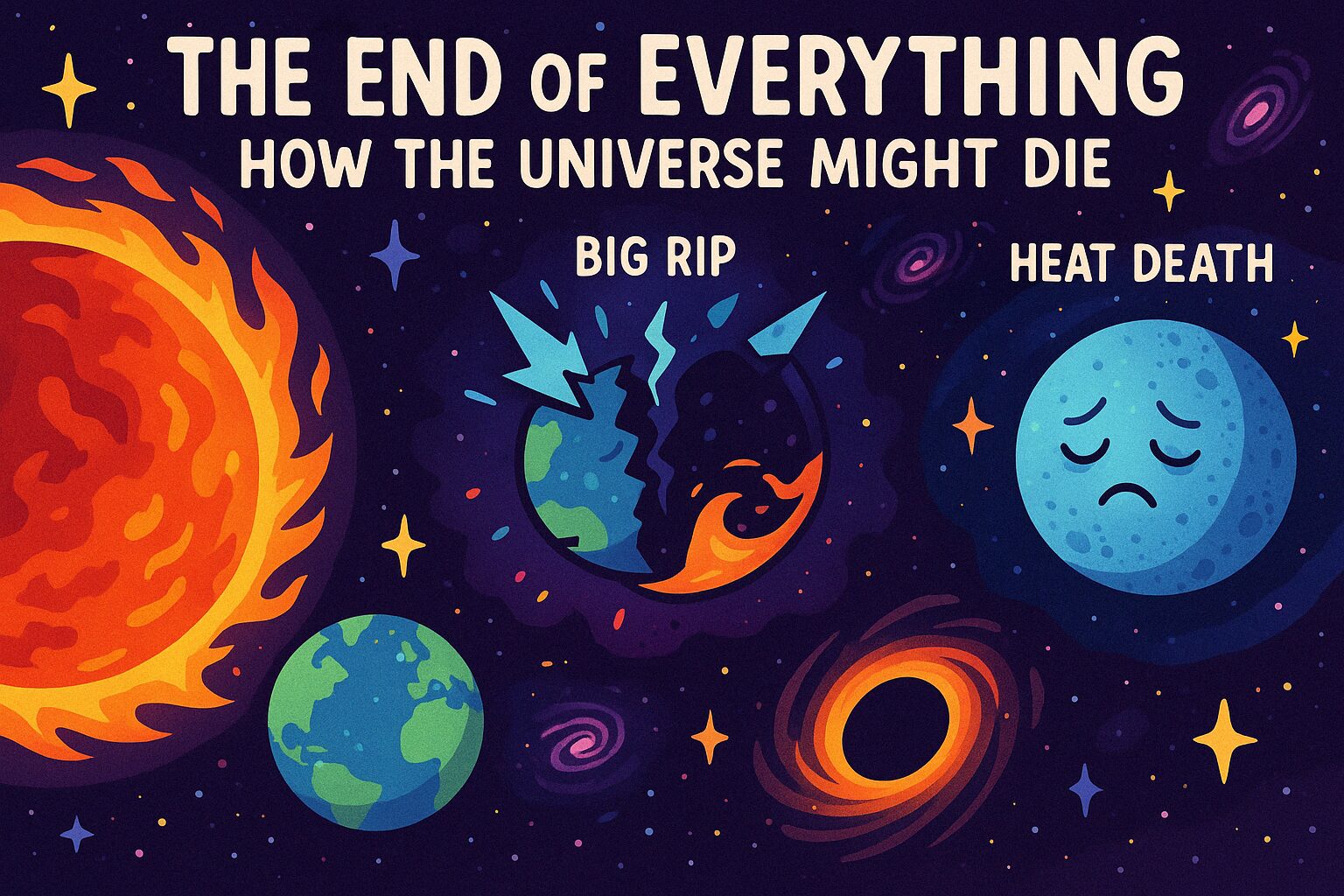
You don’t need to be a physicist to help your child learn at home. This universe parent Q&A explains complex theories clearly using everyday language and examples. It’s written to guide you through big topics like the Big Rip, Heat Death, and the possible collapse of the cosmos. You’ll also find questions about dark energy, entropy, and what it all means for the future of space.
We know science at home can sometimes feel overwhelming, especially when your child asks something you’ve never thought about before. That’s exactly why this page exists. If you’d like to take things further, there’s also a full lesson plan available—but this Q&A gives you the basics to get started and have meaningful conversations at home.
This topic is part of our Info Zone collection. You can read the full topic, once logged in, here: The End of Everything: How the Universe Might Die
You’ll also find a full Lesson Plan and a handy Parent Q & A sheet, for this topic, ready to use..
Tip for Parents: These questions are based on real curiosity from home-educated learners. Use them to guide relaxed conversations and follow your child’s interest. You don’t need to cover everything at once—take your time and revisit any tricky ideas later.
What does “the end of the universe” actually mean?
It means a point in the very distant future when everything in the universe—galaxies, stars, even atoms—might stop existing or functioning. Scientists don’t mean the end of just planets or stars, but the end of space, time, and all matter as we know it.
Is the universe going to explode?
No. There’s no evidence that the universe will explode. In fact, current science suggests the opposite—space is expanding and might eventually fade into a cold, empty state called Heat Death.
What are the main ideas about how the universe could end?
There are three leading theories: the Big Rip, where everything is torn apart by dark energy; the Big Crunch, where the universe collapses back in; and Heat Death, where energy runs out and everything freezes forever.
What is dark energy?
Dark energy is a mysterious force that causes the universe to expand faster over time. It’s invisible and makes up about 70% of everything in the universe, but we don’t fully understand what it is yet.
How far away is the end of the universe?
It’s incredibly far in the future—trillions of years from now, depending on the theory. Nothing we do now affects it, but studying it helps us understand the universe better today.
What’s the Big Rip?
The Big Rip is the idea that dark energy keeps growing stronger until it tears galaxies, stars, and even atoms apart. It’s one possible way the universe could end, though it depends on how dark energy behaves in the future.
What’s Heat Death?
Heat Death is when the universe expands so much that everything spreads out and cools down. Stars burn out, black holes disappear, and energy runs out, leaving a silent, frozen universe.
What’s the Big Crunch?
The Big Crunch is the opposite of the Big Bang. It suggests the universe could stop expanding and collapse in on itself, crushing everything into a tiny point again. Most scientists no longer think this is likely, but it’s still studied.
Could time itself stop?
Maybe. If nothing moves or changes anymore—no energy, no particles, no space—then time might not have any meaning. Some theories suggest time could end in a Big Rip or collapse with a Big Crunch.
What happens to black holes?
Black holes might slowly vanish by losing energy through something called Hawking radiation. Over extremely long timescales, they could disappear completely in a cold, empty universe.
Is the universe shrinking or growing?
It’s growing—space itself is expanding, which means galaxies are getting farther apart over time. That’s one reason scientists think the end could involve freezing rather than collapsing.
Could a new universe form after this one ends?
It’s possible. Some scientists think a new Big Bang might happen after a collapse, or that other universes could exist outside of ours—a concept called the multiverse. We don’t have proof, but it’s an exciting idea.
Why do scientists study the end of the universe?
Because it helps us understand how the universe works now. The laws that control space, time, and energy shape how things might end, so studying the future teaches us about the present.
Is this something we should worry about?
No. These events are trillions of years away. Nothing we do can speed them up or stop them. It’s not about fear—it’s about learning and curiosity.
How can I explain this to younger children?
Try using analogies. For example, think of the Big Rip like a balloon stretching until it pops. Heat Death is like a battery slowly running out. Focus on the ideas, not the scary parts, and let them ask questions at their own pace.
What’s the real-world use of this knowledge?
It builds scientific thinking, encourages big-picture questions, and connects ideas from physics, space, and time. It’s less about practical use and more about learning how the universe works.
Is this covered in school science?
Only a little—often as part of space or physics units. But home education gives you the freedom to explore it more deeply and link it to other topics like energy, time, and matter.
Where can I find a full activity-based resource on this?
We’ve created a full home education lesson plan linked to this topic if you want something more structured. This *universe parent Q&A* is designed for quick help when questions pop up.
Why is this topic so hard to imagine?
Because it deals with huge time spans, invisible forces, and ideas beyond everyday life. That’s normal—it’s okay not to understand it all at once. Keep asking questions and learning alongside your child.

