Hello Alan Lloyd - Your Scores - Logout

Post-Scarcity Economy: How Technology Could Make Everything Free (Q&A)

Q & A - Post-Scarcity Economy: How Technology Could Make Everything Free

If your child is asking big questions about the future—like what would happen if everything was free—you’re in the right place. This post-scarcity economy parent Q&A page helps you talk through some fascinating ideas at home. It explains how technology like AI, robotics, and 3D printing might one day make goods and services so cheap to produce that they become widely available to everyone, even for free.
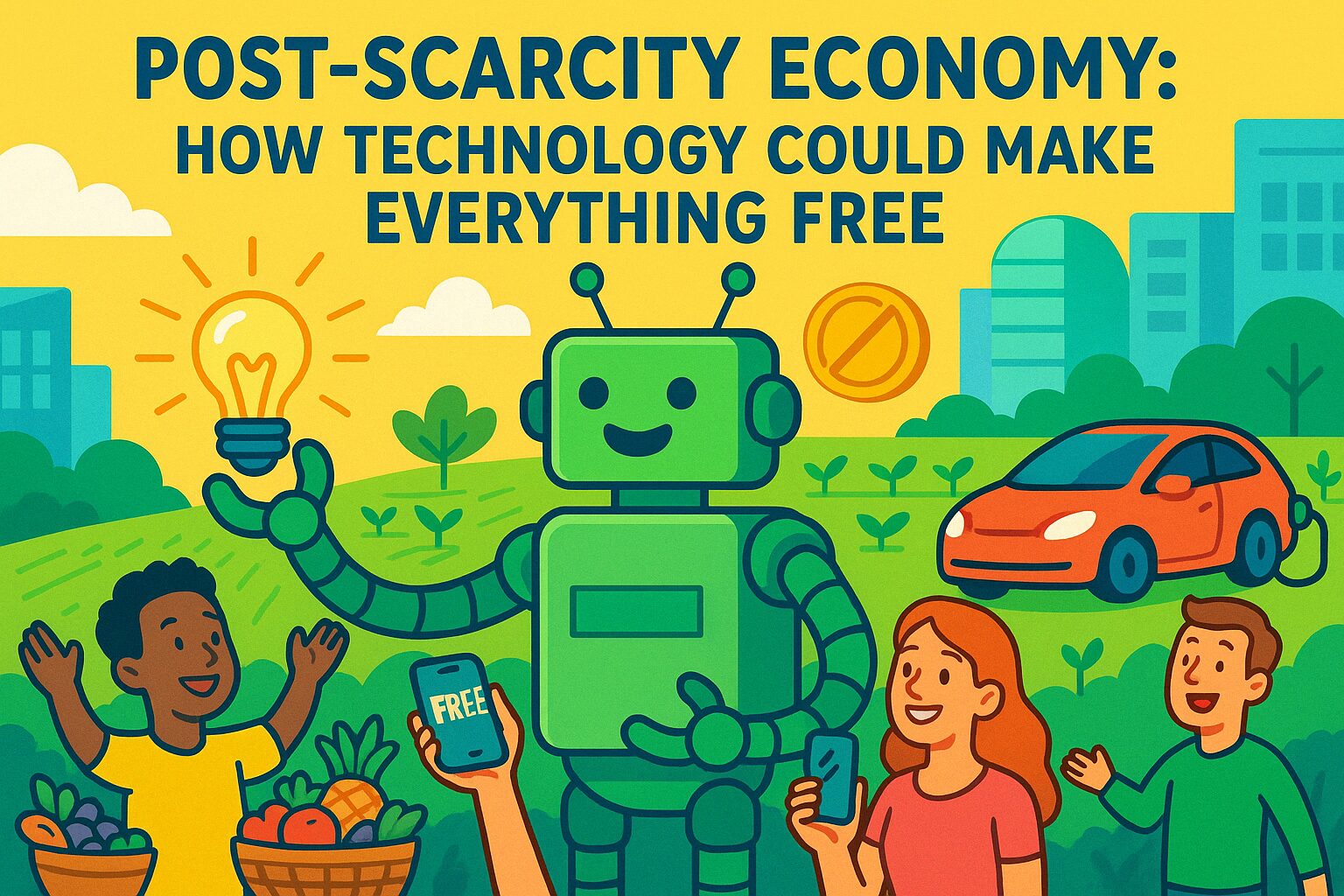
Post-Scarcity Economy: How Technology Could Make Everything Free
By Alan Lloyd

This topic matters because it links science, economics, and real-world decision-making. It gets children thinking about the future of work, how we use resources, and whether our systems are fair or sustainable. And let’s face it—these are hard things to explain on the spot! That’s why we’ve created this parent Q&A page, so you feel confident answering the kinds of tricky questions that curious children often ask.

The page uses clear, everyday language with helpful comparisons and definitions, so even if you’ve never heard of the post-scarcity economy before, you’ll be fine. It’s designed for use at home, and it works well alongside conversations or creative projects. If you’d like something more structured, we also offer a full lesson plan on the topic. But this Q&A is perfect for everyday chats that get your child thinking about science, fairness, and the future.


This topic is part of our Info Zone collection. You can read the full topic, once logged in, here: Post-Scarcity Economy: How Technology Could Make Everything Free

You’ll also find a full Lesson Plan and a handy Parent Q & A sheet, for this topic, ready to use..

Printable Parent Q&A


Tip for Parents: These questions are based on what curious kids aged 8–16 might genuinely ask. You don’t need to know everything—just use these answers to guide an honest, engaging discussion together.


What is a post-scarcity economy?

A post-scarcity economy is an idea where goods and services are so easy and cheap to make that they become free—or nearly free—for everyone. It doesn’t mean we have endless supplies, but that we use technology so well that we can meet everyone’s needs without running out.


How could technology make things free?

Machines like robots and 3D printers can produce things without needing breaks, wages, or long hours. Once you’ve paid for the machine, making more copies of something costs very little—this is called zero marginal cost. Over time, this could make everyday things almost free.


Does this mean money would disappear?

Not completely, at least not right away. Money might still be used for rare items or luxuries. But for basics—like food, water, energy, and transport—people might not need money if the post-scarcity economy becomes a reality.


What kind of technology would we need?

We’d need advanced automation, clean energy like solar power, artificial intelligence to manage systems, and ways to reuse or recycle resources. Technologies like 3D printing and lab-grown food are examples of tools that make production cheaper and faster.


Would people still have jobs?

Yes—but jobs might look very different. Instead of working just to survive, people might do things they enjoy or that help others. Some roles may disappear, but new ones will appear in creative, social, and technical fields.


Could this system help stop poverty?

That’s the goal. A post-scarcity economy could reduce poverty by making essentials free or easy to get. But it only works if access is fair. That means building systems that include everyone—not just those with money or power.


What is resource abundance?

It means having more than enough of something to meet everyone’s needs. Technology can help by recycling materials, using renewable energy, or creating new resources like lab-grown meat. It’s about using what we have in smarter ways.


How does zero marginal cost work?

Once you’ve made the first version of a product—say a digital file or 3D model—it costs almost nothing to make more copies. There’s no need for extra materials or workers each time. That’s what zero marginal cost means.


Would everything really be free?

Probably not everything. Luxury items, rare materials, or personal services might still cost something. But basic things like food, clothes, and clean water could become free if the right systems and technology are in place.


Why don’t we already live in a post-scarcity world?

Technology is still developing, and current systems are built around profit and ownership. Some powerful groups might resist change if it affects their income. Moving to a post-scarcity economy takes time, planning, and cooperation.


Is this just science fiction?

No—it’s based on real science and technology that already exists. Some parts feel futuristic, but many tools we need—like solar panels or AI—are already in use. It’s not about fantasy, but about what’s possible with smart planning.


How could this affect the environment?

Done well, a post-scarcity economy could help the planet. It encourages clean energy, reduces waste, and avoids overusing resources. But if technology is used carelessly, it could still cause harm—so it has to be done responsibly.


What happens to ownership in this system?

We might move from owning things to just accessing them when needed. Like streaming films instead of buying DVDs. This reduces clutter and waste, but it also means new rules are needed to make access fair and open to all.


How could this change school or learning?

If resources are freely available, children could learn whatever they want, whenever they want. Learning might focus more on curiosity and creativity, and less on exams or tests. It would be a more flexible, learner-led experience.


Could this work in every country?

Eventually, yes—but it would take time. Some countries have more access to technology and clean energy than others. International sharing of tools, ideas, and systems would be needed to make it global.


How can I explain this to a younger child?

You could say: “Imagine if robots made everything we needed—like food, clothes, or toys—and we could all use them without paying. That’s what people mean by a post-scarcity economy. It’s a way to make sure no one goes without.”


What are the biggest challenges?

Changing habits, laws, and economic systems is hard. Some people fear losing jobs or money. Others don’t trust new technology. The biggest challenge is building a fair system that includes everyone and doesn’t harm the planet.


How can I encourage critical thinking on this?

Ask questions like: What would you want to be free? Who might be left out? What rules would keep things fair? Encourage your child to imagine different futures and think through what would work and what wouldn’t.


Leave a comment

'; // Add header content for print html += '

Lenara Learning

Get more learning resources at www.lenara.uk

'; // Insert the worksheet content html += '
' + content + '
'; html += ''; printWindow.document.write(html); printWindow.document.close(); printWindow.focus(); // Trigger printing and auto-close the popup printWindow.print(); printWindow.onafterprint = function() { printWindow.close(); }; setTimeout(function() { printWindow.close(); }, 1500); }