Hello Alan Lloyd - Your Scores - Logout

Why Did Henry VIII Start His Own Church?

Why Did Henry VIII Start His Own Church?

Why did Henry VIII start his own church? This bold move by the English king wasn’t just about religion — it was about love, power, and control. Henry’s wish to divorce Catherine of Aragon was denied by the Pope, leading him to break away from the Roman Catholic Church and form the Church of England.

This major decision changed the course of British history and shaped the future of religion in the country. Understanding why Henry VIII started his own church helps us see how personal choices can lead to massive national changes.
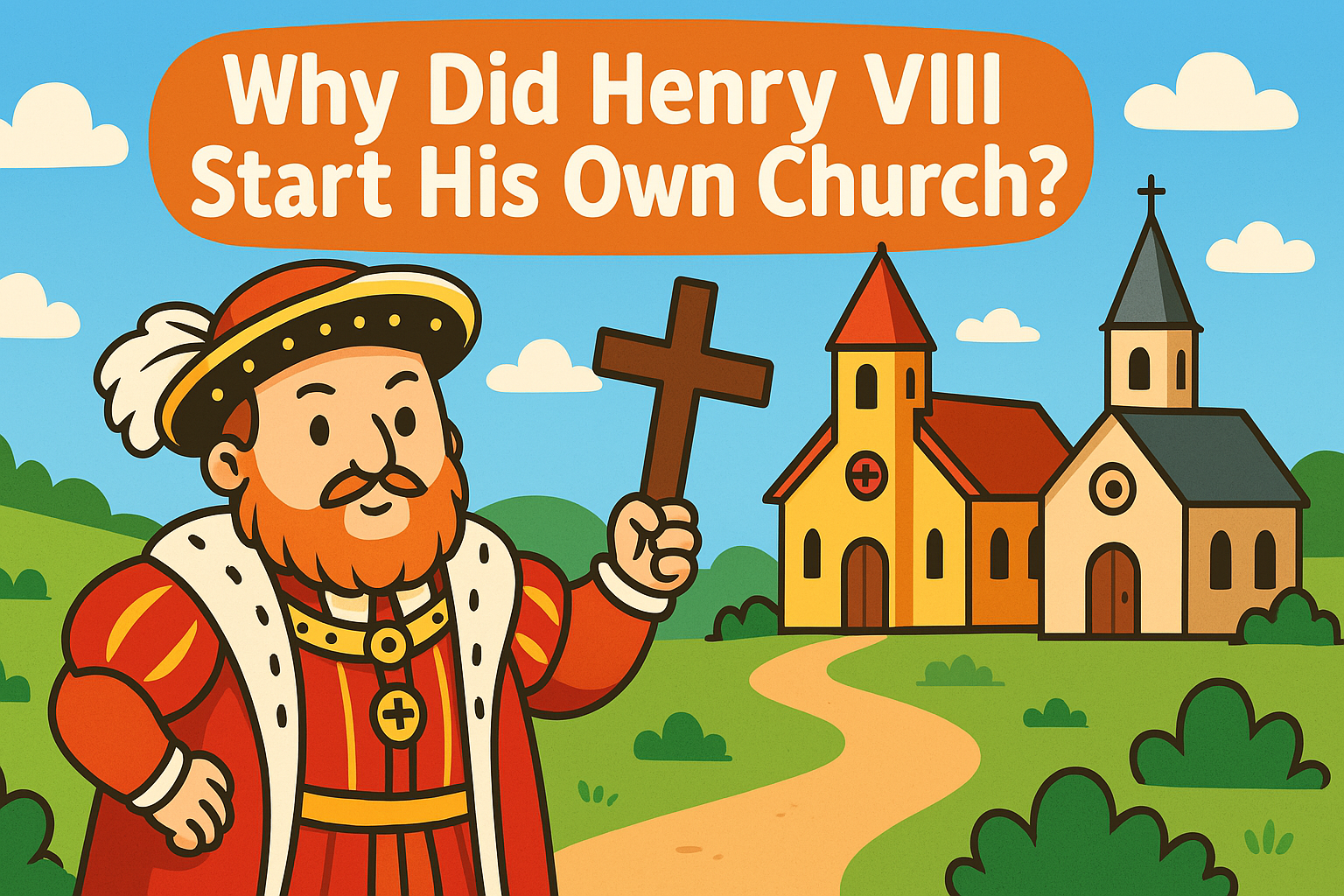
Why Did Henry VIII Start His Own Church?
By Alan Lloyd


This topic is part of our Info Zone collection. You can read the full topic, once logged in, here: Why Did Henry VIII Start His Own Church?

You’ll also find a full Lesson Plan and a handy Parent Q & A sheet, for this topic, ready to use..

Why Did Henry VIII Start His Own Church?

Henry VIII started his own church because the Pope refused to let him divorce his first wife, Catherine of Aragon. But there’s more to the story than a royal disagreement. Creating the Church of England gave Henry the power to control religious matters and gain access to church wealth and land. The decision allowed him to rule without interference from the Pope and became a turning point in British religious history. Knowing why Henry VIII started his own church helps explain later conflicts and changes in the monarchy.


Who Was the King Behind the New Church?

Henry VIII was the second Tudor king of England, ruling from 1509 to 1547. He is most famous for his six marriages and for creating the Church of England. Henry was a strong-willed ruler who believed kings should have full control over their own kingdoms — including religion.

In the early years of his reign, Henry actually supported the Catholic Church. He even wrote a book defending the Pope’s authority. But everything changed when his personal life didn’t go according to plan.

This shift from loyal Catholic to church founder happened slowly — and for very personal reasons.


Why Did Henry VIII Want a Divorce?

Henry’s first wife, Catherine of Aragon, had failed to produce a male heir, and Henry desperately wanted a son to keep the Tudor line strong. Catherine had several pregnancies, but only one daughter, Mary, survived.

Henry argued that their marriage was cursed because Catherine had once been married to his older brother. He believed God was punishing him by not giving him a son.

To make matters more complicated, Henry had fallen in love with Anne Boleyn. She refused to be his mistress and wanted to be queen — so Henry was determined to end his marriage legally and religiously.


Why Didn’t the Pope Agree?

Under Catholic law, only the Pope could grant a divorce. Henry asked Pope Clement VII to annul his marriage to Catherine, but the Pope said no. The Pope was under pressure from Catherine’s nephew, Emperor Charles V, a powerful European leader.

Political reasons stopped the Pope from giving Henry what he wanted. This made Henry feel angry and powerless in his own kingdom.

That frustration led him to make a radical decision — one that would break ties with the Roman Catholic Church forever.


How Did Henry VIII Start His Own Church?

Henry used Parliament to pass a series of laws that removed the Pope’s authority in England. The most important was the Act of Supremacy in 1534. This law made Henry the official head of the Church of England.

This meant he no longer had to listen to the Pope. He could control church teachings, give himself a divorce, and appoint bishops loyal to him.

The Church of England was born — and Henry VIII had finally got what he wanted: power, freedom, and a new wife.


What Happened to Catherine and Anne?

After splitting from the Pope, Henry married Anne Boleyn. Catherine was removed from court and separated from her daughter, Mary. She lived alone until her death in 1536, still believing she was Henry’s true wife.

Anne Boleyn gave birth to a daughter, Elizabeth, but no son. Eventually, she too fell out of favour with Henry and was executed for false charges of treason and adultery.

Both women’s stories show how dangerous it could be to be close to Henry VIII when things didn’t go his way.


Did the Church of England Look Different?

At first, the new church looked very similar to the Catholic Church. Services were in Latin, and many traditions stayed the same. The main difference was who was in charge — now it was Henry, not the Pope.

Later on, during his son Edward VI’s reign, the Church of England became more Protestant. Services were done in English, and decorations in churches were removed.

But when Henry started his own church, the main goal wasn’t to change beliefs — it was to change control.


What Was the Dissolution of the Monasteries?

Henry closed down monasteries across England and took their wealth and land. This was known as the Dissolution of the Monasteries, and it happened between 1536 and 1541.

The money made Henry richer and helped reward nobles who supported him. It also got rid of church leaders who might oppose his new power.

Many people, especially in the north, were angry about this. Monasteries had provided food, shelter, and help for the poor — and now they were gone.


How Did People React to the New Church?

Some people welcomed the change. Others were confused or angry. A rebellion called the Pilgrimage of Grace broke out in 1536, where thousands protested against the closure of monasteries and the new church.

Henry crushed the rebellion and punished its leaders harshly. He made it clear that no one could challenge his authority.

From that point on, people had little choice but to accept the changes — or risk their lives.


What Happened After Henry’s Death?

Henry’s religious changes didn’t end with his death. His son Edward VI made the Church of England more Protestant. Then Mary I, a Catholic, became queen and tried to reverse everything.

Mary’s reign saw Protestants punished and even executed, earning her the nickname “Bloody Mary.”

After her came Elizabeth I, who found a middle way. She kept the Church of England but allowed some Catholic traditions to continue — creating the religious settlement that shaped the future of England.


Why Did Henry VIII Start His Own Church — And What Does It Teach Us?

Henry VIII started his own church to gain control over his marriage and his kingdom. The story shows how personal decisions can change a nation. Religion, power, and politics are often connected — and Henry’s actions prove that.

His bold choices gave birth to the Church of England and reshaped British history. The effects are still felt today in our monarchy, our laws, and even our school lessons!

History isn’t just about dates — it’s about people, power, and decisions that leave a mark for centuries.


What Do You Remember?

  • Why did Henry VIII want to start his own church?
  • What role did the Pope play in Henry’s divorce problems?
  • What law made Henry the head of the Church of England?
  • What were the Dissolution of the Monasteries?
  • How did people react to the religious changes?

Write your answers in the comment section below.


Related Topics

Now that you know why Henry VIII started his own church, you might want to explore more about the Tudors, the Reformation, and religious change in history. These topics help us understand how beliefs and power shaped the world we live in today.


What Do You Think?

If you found this to be an interesting topic, why not have your say. Or if you can think of ways we could improve it. We would love to know what you learned and more importantly, what you think. So now is your chance, use the comments section below to let us know your thoughts.


Leave a comment


'; // Add header content for print html += '

Lenara Learning

Get more learning resources at www.lenara.uk

'; // Insert the worksheet content html += '
' + content + '
'; html += ''; printWindow.document.write(html); printWindow.document.close(); printWindow.focus(); // Trigger printing and auto-close the popup printWindow.print(); printWindow.onafterprint = function() { printWindow.close(); }; setTimeout(function() { printWindow.close(); }, 1500); }