
Who Built the Great Pyramids?
Who Built the Great Pyramids?
The Great Pyramids of Egypt are some of the most incredible buildings in the world. But have you ever stopped to ask, “Who built the Great Pyramids?” These giant structures were made thousands of years ago, long before machines existed.
They still rise high above the desert sands today. In this article, you’ll discover who really built them, how they worked together, and why these pyramids mattered so much.
This topic is part of our Info Zone collection. You can read the full topic, once logged in, here: Who Built the Great Pyramids?
You’ll also find a full Lesson Plan and a handy Parent Q & A sheet, for this topic, ready to use..
Who Built the Great Pyramids?
When most people think about the Great Pyramids, they picture tall stone structures in Egypt’s dry desert. The most famous one is the Great Pyramid of Giza. It was built around 4,500 years ago during the time of Pharaoh Khufu.
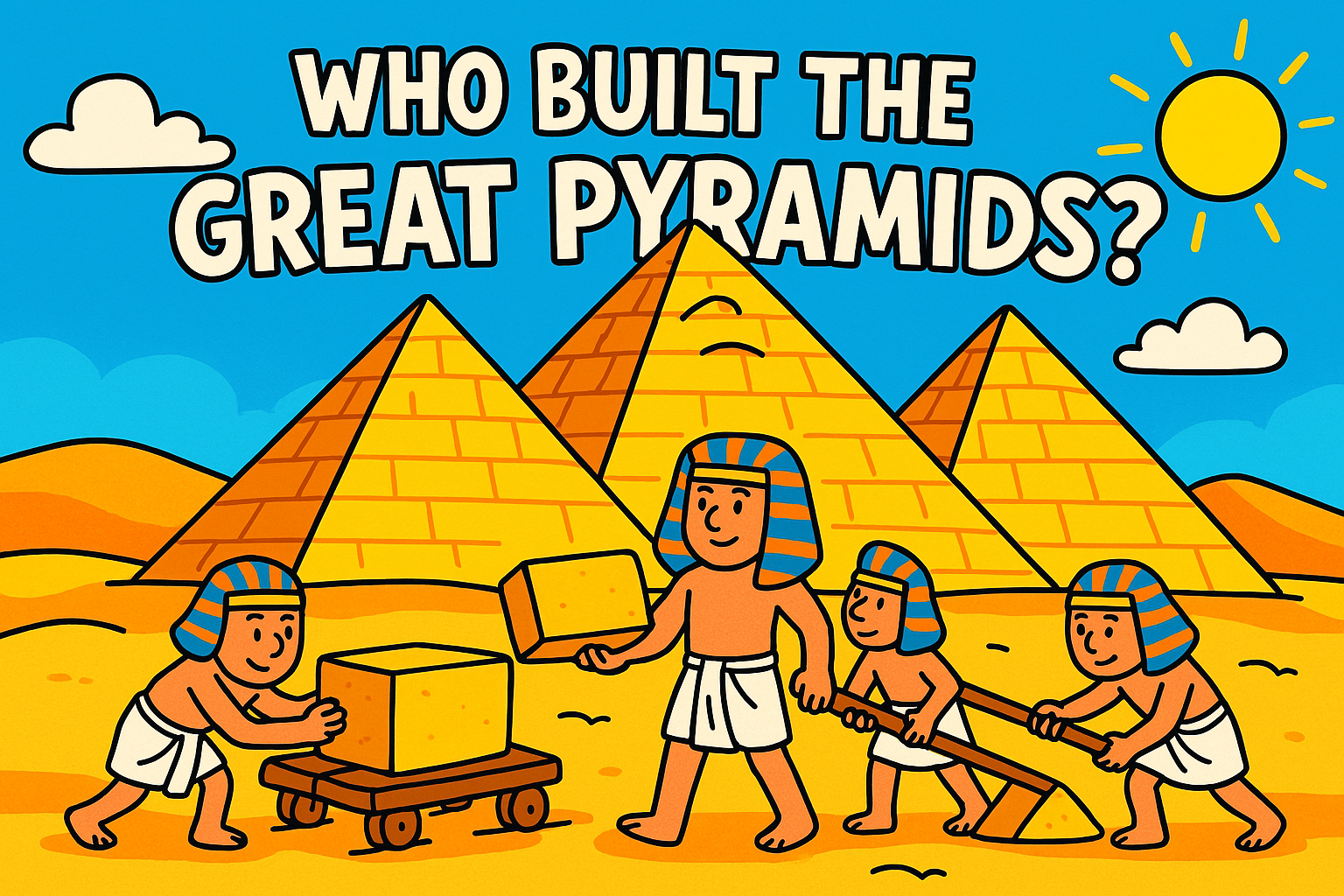
For many years, people believed that slaves built the pyramids. However, archaeologists now know that isn’t true. Skilled workers, farmers, and craftsmen took part in the construction. They worked in teams and earned food, clothing, and a place to live. Many even felt proud to be part of such an important project.
Each group had a role. Some shaped stone blocks. Others dragged them into place. Cooks, doctors, and builders worked together like a big machine—powered by people!
Why Were the Pyramids Built?
Ancient Egyptians believed that their pharaohs became gods after death. So, they needed grand tombs filled with treasures, food, and special items for the journey to the afterlife. The pyramids were designed to be those tombs.
The shape of a pyramid also mattered. Egyptians believed it helped the pharaoh’s soul travel to the heavens. The point at the top stretched towards the sky like a divine staircase.
Besides being tombs, pyramids showed off the power of the pharaoh and his kingdom. Building something so massive proved how strong and organised the country was.
How Big Are the Pyramids?
The Great Pyramid of Giza is the largest of them all. When it was first finished, it stood at about 146.6 metres (481 feet) tall. Today, it’s around 138.8 metres (455 feet) because some stones have fallen away.
Each side of its base is about 230 metres (755 feet) long—more than three football pitches! Builders used over two million blocks of limestone and granite. Most of the blocks weighed about 2.5 tonnes, but some were even heavier.
It took about 20 years to finish the pyramid, and the workers only used simple tools. No cranes, no engines—just clever thinking and hard work.
Where Did the Builders Live?
Experts found the remains of a workers’ village near the Giza pyramids. This discovery included houses, bakeries, and even a hospital. Builders didn’t live in poor conditions—they had homes, care, and meals during their time on the job.
Alongside the builders, support teams baked bread, brewed beer, and cooked meat and vegetables. Together, they created a mini town built just for pyramid workers.
Because archaeologists found proper graves for the workers, they now know the builders weren’t slaves. They were respected members of society who played a vital role in history.
What Tools Did They Use?
Even though metal tools were rare back then, builders used copper chisels and stone hammers to shape the blocks. They also had wooden mallets and saws to help with the job.
To move the stones, workers dragged them on wooden sledges. Interestingly, they poured water on the sand to reduce friction. This clever trick made the stones easier to pull.
In addition, workers used levers, ropes, and ramps to lift and place the blocks. These ancient methods still amaze modern engineers today.
What Were the Pyramids Made Of?
The main material used was limestone, which came from nearby quarries. Builders used smoother, white limestone for the outer layer to make the pyramid shine under the sun.
They brought granite from Aswan, a city over 800 kilometres away. This strong rock was used in special rooms deep inside the pyramid.
Even though most of the shiny outer layer has disappeared, some blocks remain. These give us a clue to how beautiful the pyramids once looked.
What Happened to the Builders?
Many workers were laid to rest in honourable graves near the pyramids. Their tombs included tools and personal items for the afterlife, just like the pharaohs.
In fact, messages and graffiti found inside the pyramids show the workers’ pride. They named their teams things like “Friends of Khufu,” showing their connection to the king and his project.
Archaeologists have studied these tombs to learn about what the builders ate, how they lived, and what their daily lives were like. Their story is as amazing as the pyramids themselves.
Are There Other Pyramids in Egypt?
Yes—Egypt has more than 100 pyramids! Many of them were built as tombs for other pharaohs and royal family members.
One of the first was the Step Pyramid at Saqqara, designed by an architect called Imhotep for King Djoser. This early pyramid looked like a staircase and was built before the smooth-sided versions we see in Giza.
Over time, pyramid design improved. Builders learned from earlier mistakes and created better structures like the Bent Pyramid and the Red Pyramid.
Did Aliens Build the Pyramids?
Some people believe aliens built the pyramids, but there is no proof of that. All the evidence shows that humans did the job using skill, teamwork, and creativity.
Archaeologists have found tools, records, and housing that clearly explain how the Egyptians managed the work. There’s no need for alien help when humans were this clever!
In fact, believing in aliens takes away the credit from the real people who built something truly incredible with their own hands.
Why Are the Pyramids Still Standing?
The pyramid shape is one of the strongest in the world. That’s part of the reason why these structures have lasted for thousands of years. They sit on strong rock foundations and were made with care and precision.
Builders lined up the pyramids with the stars and the compass points, using clever maths and tools. These smart choices helped protect the pyramids from earthquakes and time itself.
The fact that the pyramids still stand today shows just how brilliant ancient Egyptian builders really were.
Can You Visit the Pyramids Today?
Yes, you can! The Great Pyramids stand just outside Cairo, Egypt’s capital city. Tourists come from all over the world to see them up close.
You can walk around the site, enter some of the pyramids, and visit the Great Sphinx. This famous statue has a lion’s body and a human face, thought to be Pharaoh Khafre’s.
Because they’re so important, the pyramids are protected by UNESCO. Egypt works hard to keep them safe so future generations can enjoy their greatness too.
What Do You Remember?
- Who were the pyramids built for?
- What tools did workers use to cut and move stone?
- Why do we know the builders were not slaves?
- What is the name of the biggest pyramid?
- What shape are pyramids, and why was that important?
Write your answers in the comment section below.
Related Topics
Want to learn more? Dive into other exciting topics like ancient Egyptian gods, how mummies were made, or the wonders of ancient architecture. These subjects help bring the past to life and show how clever humans have always been!
What Do You Think?
If you found this to be an interesting topic, why not have your say. Or if you can think of ways we could improve it. We would love to know what you learned and more importantly, what you think. So now is your chance, use the comments section below to let us know your thoughts.