Hello Alan Lloyd - Your Scores - Logout

Domesday Book and William the Conqueror: How He Controlled England

Domesday Book and William the Conqueror: How He Controlled England

The Domesday Book and William the Conqueror are a powerful part of British history. After William became King of England in 1066, he faced a tough challenge. England was full of people who did not trust him, and many still wanted an Anglo-Saxon king.

William needed to take control quickly and make sure he knew exactly who owned the land, who owed taxes, and who could be trusted. His solution was one of the most famous books in history — the Domesday Book. This wasn’t just a book, it was a tool that helped William the Conqueror rule the entire country effectively and with confidence.
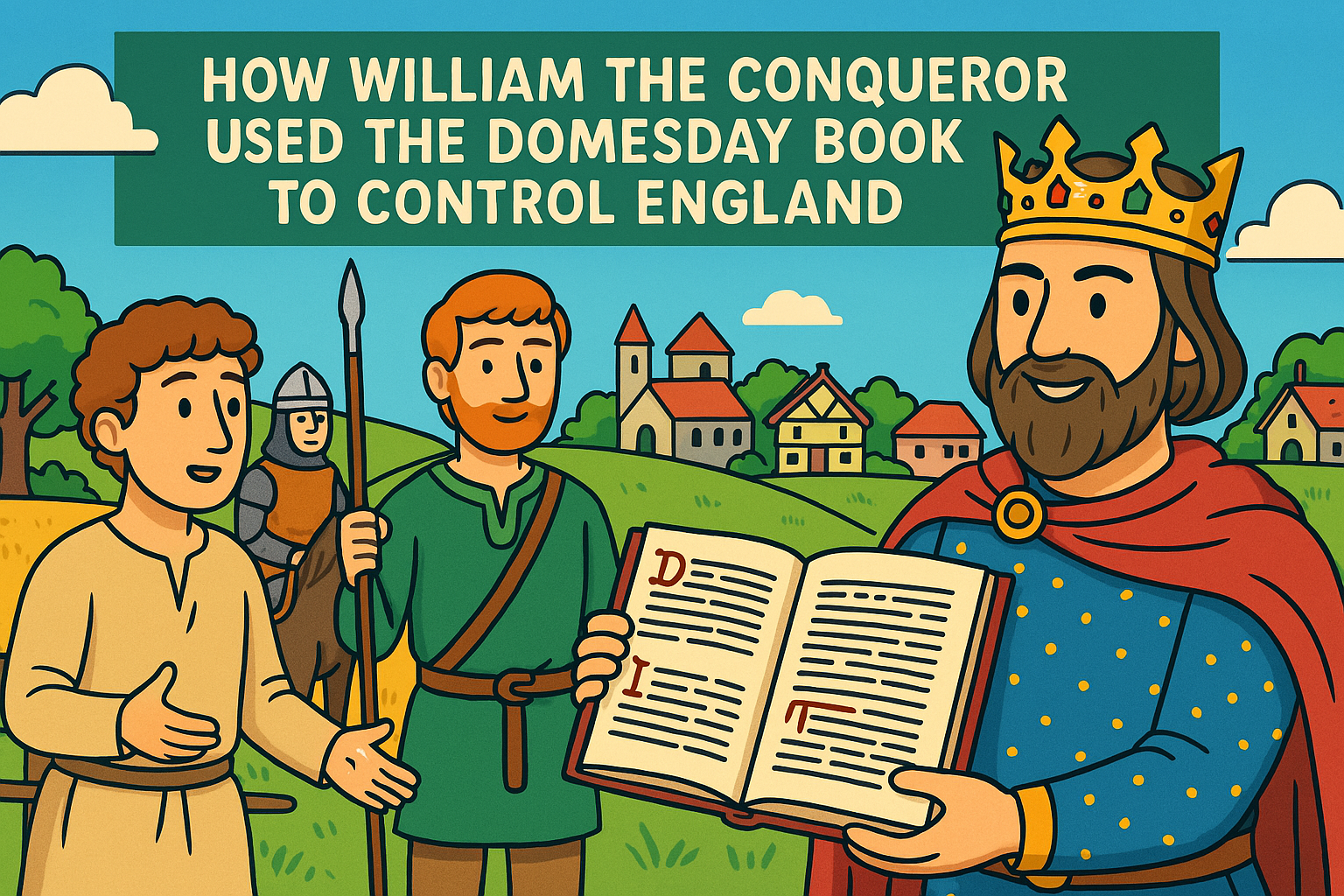
Domesday Book and William the Conqueror: How He Controlled England
By Alan Lloyd


This topic is part of our Info Zone collection. You can read the full topic, once logged in, here: How William the Conqueror Used the Domesday Book to Control England​

You’ll also find a full Lesson Plan and a handy Parent Q & A sheet, for this topic, ready to use..

What Was the Domesday Book and Why Did William the Conqueror Create It?

William the Conqueror created the Domesday Book to solve a real problem. England had just been conquered, but it was far from calm. Villagers and nobles remained angry. Many still wanted the Anglo-Saxon kings back. William needed more than just castles and soldiers to secure his power. He needed information.

The Domesday Book was William’s solution. This huge record listed villages, towns, landowners, fields, forests, mills, and even pig pens. It wasn’t just a curiosity — it was the kingdom’s most detailed survey. William ordered it in 1085, and by 1086, it was completed. The book earned its name because people feared it was as final and unchangeable as Judgement Day. Once written down, no one could argue with its contents.

With this information, William could tax fairly (or at least fairly in his opinion), reward loyal Norman followers, and punish rebels. He no longer had to rely on rumours or complaints — the book told him the truth.


How Did William’s Officials Gather the Information?

William acted quickly. He sent royal officials called commissioners into every shire (county). They held meetings, sometimes called ‘inquests’, where they gathered information straight from the people. Landowners, villagers, and churchmen all had to answer their questions. Local juries, usually made up of villagers themselves, made sure people gave honest answers.

The commissioners didn’t miss a thing. They asked who owned each plot of land, what crops grew there, how many ploughs were used, how many animals lived there, and even if there were mills, woods, or fishponds. They wanted to know if the taxes had been paid properly under King Edward (the last Anglo-Saxon king) and how much could now be demanded.

After finishing their work, they returned to William’s scribes. These scribes carefully organised the notes and turned them into the official Domesday Book. William now had a complete picture of his kingdom’s wealth and land ownership.


What Did the Domesday Book Record?

The Domesday Book recorded more than most people imagine. It included over 13,000 settlements. Large towns like London and Winchester were listed, but so were tiny villages with only a handful of families. Nothing escaped the commissioners’ questions.

It detailed the amount of land people owned, the number of workers available, the animals raised, and the resources available. Forests, rivers, beehives, and even salt-making areas appeared in the records. The officials even counted plough teams to know how much land could be farmed.

William now knew exactly what he could demand in taxes. He could see who was wealthy, who might be hiding wealth, and which lands could be rewarded to loyal Norman knights. The Domesday Book became his most powerful tool, just as important as his army.


How Did the Domesday Book and William the Conqueror Work Together?

William gained more than information — he gained control. Whenever people argued about who owned a piece of land, the king could simply check the Domesday Book. Its records settled disputes immediately.

The book also helped him reward his supporters. Norman knights who had fought at the Battle of Hastings received land taken from Anglo-Saxons. William could make sure these gifts were fair and official by using the book. It prevented arguments between lords about who owned which land.

With the Domesday Book in hand, William reduced rebellion risks. People could no longer claim to own land unless the book said so. Tax collectors knew exactly what people owed. Everyone understood that William was fully in control.


How Did Ordinary People Feel About the Domesday Book?

Villagers and farmers mostly disliked the Domesday Book. Many saw it as proof that the Normans had won and that there was no going back. Anglo-Saxon landowners watched their lands recorded under new Norman names. Others realised they now had no chance to hide from taxes.

William’s officials could now check exactly how much people should pay. Tax collectors had no trouble proving who owed what. For many villagers, this meant higher taxes and less freedom. They knew that William’s officials would soon come knocking, demanding payment based on the book’s records.

However, the book also offered some protection. Villagers could use it to defend themselves against unfair landlords who tried to take more land or charge extra taxes. If the Domesday Book said it belonged to the villagers, it did.


What Happened After William’s Death?

When William died in 1087, the Domesday Book remained important. His sons William Rufus and Henry I used it regularly. Later kings also relied on it to manage taxes and sort out land disputes.

The Domesday Book kept its value for centuries. Kings trusted it to check land ownership. Courts used it to settle arguments. It became one of the most useful records for ruling medieval England. Even long after William’s death, his Domesday Book helped England stay organised and controlled.

Historians and archaeologists still use the book today. It helps them understand what life was like during the 11th century. Many forgotten villages and farms have been rediscovered thanks to its detailed information.


Where is the Domesday Book Today?

The Domesday Book is still safe. It is kept at The National Archives in Kew, London. Modern technology allows anyone to view parts of it online. It is now over 900 years old, but people still study it carefully.

Historians learn how people lived, what food they produced, and how they used the land. The Domesday Book has even helped archaeologists find lost villages and trace ancient farms. Without it, we would know much less about medieval England.

William the Conqueror’s great survey survives today because it mattered. It helped him control England then, and it helps us understand England now.


What Do You Remember?

  • Why did William the Conqueror create the Domesday Book?
  • How did commissioners gather the information?
  • What kinds of things did the book record?
  • How did the Domesday Book help William control England?
  • Why is the Domesday Book still useful today?

Write your answers in the comment section below.


Related Topics

If you enjoyed learning about the Domesday Book and William the Conqueror, you might also want to discover more about the Battle of Hastings, medieval castles, or the Norman Conquest. These topics will help you explore medieval life even more.


What Do You Think?

If you found this to be an interesting topic, why not have your say? We would love to know what you learned and what you think. So now is your chance — use the comments section below to let us know your thoughts.


Leave a comment


'; // Add header content for print html += '

Lenara Learning

Get more learning resources at www.lenara.uk

'; // Insert the worksheet content html += '
' + content + '
'; html += ''; printWindow.document.write(html); printWindow.document.close(); printWindow.focus(); // Trigger printing and auto-close the popup printWindow.print(); printWindow.onafterprint = function() { printWindow.close(); }; setTimeout(function() { printWindow.close(); }, 1500); }