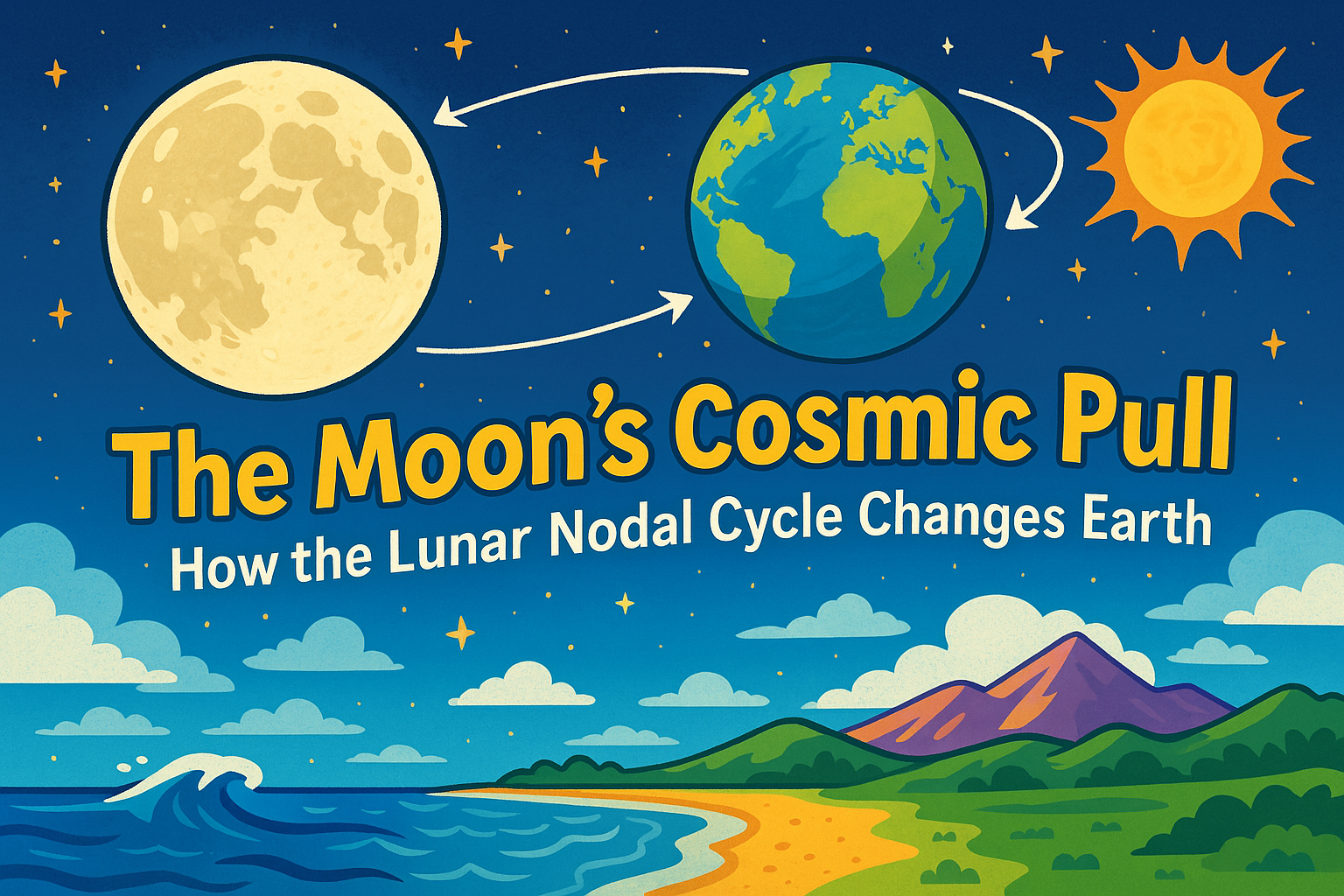
The Moon’s Cosmic Pull: How the Lunar Nodal Cycle Changes Earth (Q&A)
Lunar Nodal Cycle: How the Moon’s Cosmic Pull Changes Earth
The Moon plays a much bigger role in life on Earth than many people realise. This Parent Q&A sheet is designed to give you, as a home educator, a clear and simple guide to understanding the lunar nodal cycle and how it affects tides, weather, animals, and even Earth’s tilt.
This resource provides easy-to-follow explanations and ready-made conversation starters to help you discuss the topic confidently with your learner. It is especially helpful for families choosing Elective Home Education, offering a flexible and supportive tool for guiding discussions, answering tricky questions, and encouraging deeper thinking.
This topic is part of our Info Zone collection. You can read the full article here: The Moon’s Cosmic Pull: How the Lunar Nodal Cycle Changes Earth
You’ll also find a full Lesson Plan and a handy Parent Q & A Sheet ready to use.
|
Parent Q&A Sheet The Moon’s Cosmic Pull – How the Lunar Nodal Cycle Changes Earth |
|
|---|---|
| Tips for Parents | This Q&A sheet is designed to help you confidently guide your child through learning about the Moon's influence on Earth. Use these questions and answers to steer conversations, explain ideas in simple ways, and encourage your learner to think deeply. The sheet is fully suitable for Elective Home Education and can be adjusted to suit your family's needs. |
| 1. What is the lunar nodal cycle? | The lunar nodal cycle is the slow movement of two invisible points, called nodes, where the Moon's orbit crosses Earth's orbit around the Sun. These nodes move backward along Earth's orbit, completing a full circle every 18.6 years. |
| 2. Why does the lunar nodal cycle happen? | It happens because the Moon’s orbit is tilted slightly (about 5 degrees) compared to Earth's orbit. This tilt means the crossing points (the nodes) slowly shift backwards over time, causing the cycle. |
| 3. How does this cycle affect tides? | The cycle influences how strong the tides are. When the lunar nodal cycle is in its maximum phase, tides are stronger (called amplified tides). When it's in the minimum phase, tides are weaker than usual. |
| 4. Can people see the lunar nodal cycle happening? | No, the nodes themselves are invisible, and the cycle is very slow. However, its effects on tides and climate patterns are noticeable when studied over many years. |
| 5. How long does one full lunar nodal cycle take? | It takes about 18.6 years for the cycle to complete. This means patterns in tides and some climate effects slowly repeat over this period. |
| 6. Why is it important for people to know about this cycle? | It helps scientists, builders, farmers, and anyone working with the sea to plan ahead. For example, higher tides during the maximum phase could affect flooding risks, coastal defences, or habitats. |
| 7. How does the lunar nodal cycle connect to weather and climate? | It doesn’t cause climate change directly but can strengthen or weaken existing weather patterns. For example, it may affect rainfall, storm strength, and ocean currents over time. |
| 8. What is precession, and how is it linked to the Moon? | Precession is the gentle wobble of Earth's axis, like a spinning top. The Moon helps keep this wobble stable, and the lunar nodal cycle plays a small role in slightly adjusting it over thousands of years. |
| 9. Does this cycle affect animals? | Yes, some animals, especially those that rely on tides, like shorebirds, sea turtles, and some fish, are affected by changes in tidal patterns caused by the lunar nodal cycle. |
| 10. How is this cycle connected to eclipses? | Solar and lunar eclipses can only happen when the Sun, Earth, and Moon line up near the lunar nodes. The cycle explains why eclipses don’t happen every month but instead follow repeating patterns. |
| 11. What tools do scientists use to study the lunar nodal cycle? | Scientists use satellites, ocean buoys, and computer models to track how the Moon’s orbit affects Earth’s tides, shape, and weather over long periods. |
| 12. Is this cycle something new? | No, the lunar nodal cycle has been known about for centuries. Ancient astronomers tracked eclipse patterns, and modern scientists now understand its full impact much more clearly. |
| 13. What does the term 'amplified tides' mean? | Amplified tides are simply tides that are higher than normal. They happen during the maximum phase of the lunar nodal cycle when the Moon’s gravitational pull has its strongest effect on tides. |
| 14. Can the lunar nodal cycle cause floods? | It doesn't directly cause floods, but stronger tides during the cycle’s maximum phase can make coastal flooding more likely during storms or unusually high tides. |
| 15. Why does the cycle take 18.6 years? | It takes this long because the tilt and movement of the Moon's orbit cause the nodes to move very slowly around Earth's orbit. This slow change results in the 18.6-year cycle. |
| 16. Could life on Earth exist without the Moon? | It would be very different! Without the Moon, tides would be much weaker, Earth’s tilt might wobble more, and some animals that rely on tides for breeding or feeding might struggle to survive. |
| 17. How could this topic connect to other learning areas? | This topic links well to geography (coasts, tides), biology (animal behaviour), and history (ancient knowledge of the Moon and tides). It also encourages maths skills when looking at cycles and patterns. |
| Creative Thinking Prompts |
|
[cl_logged_out]
Members Only
You need to be registered and logged in to access this Q and A sheet and all other learning resources, games and quizzes.
[/cl_logged_out]