Hello Alan Lloyd - Your Scores - Logout

World War II: Meet the Man Who Led Britain to Victory!

World War II: Meet the Man Who Led Britain to Victory!

Who was the man who led Britain to victory during its darkest hour? During World War II, when Nazi Germany was taking over Europe, Britain needed a strong, determined leader. That man was Winston Churchill — a figure who would inspire the nation and stand firm when things looked hopeless. He became the face of British resistance and one of the most famous World War II leaders in history.
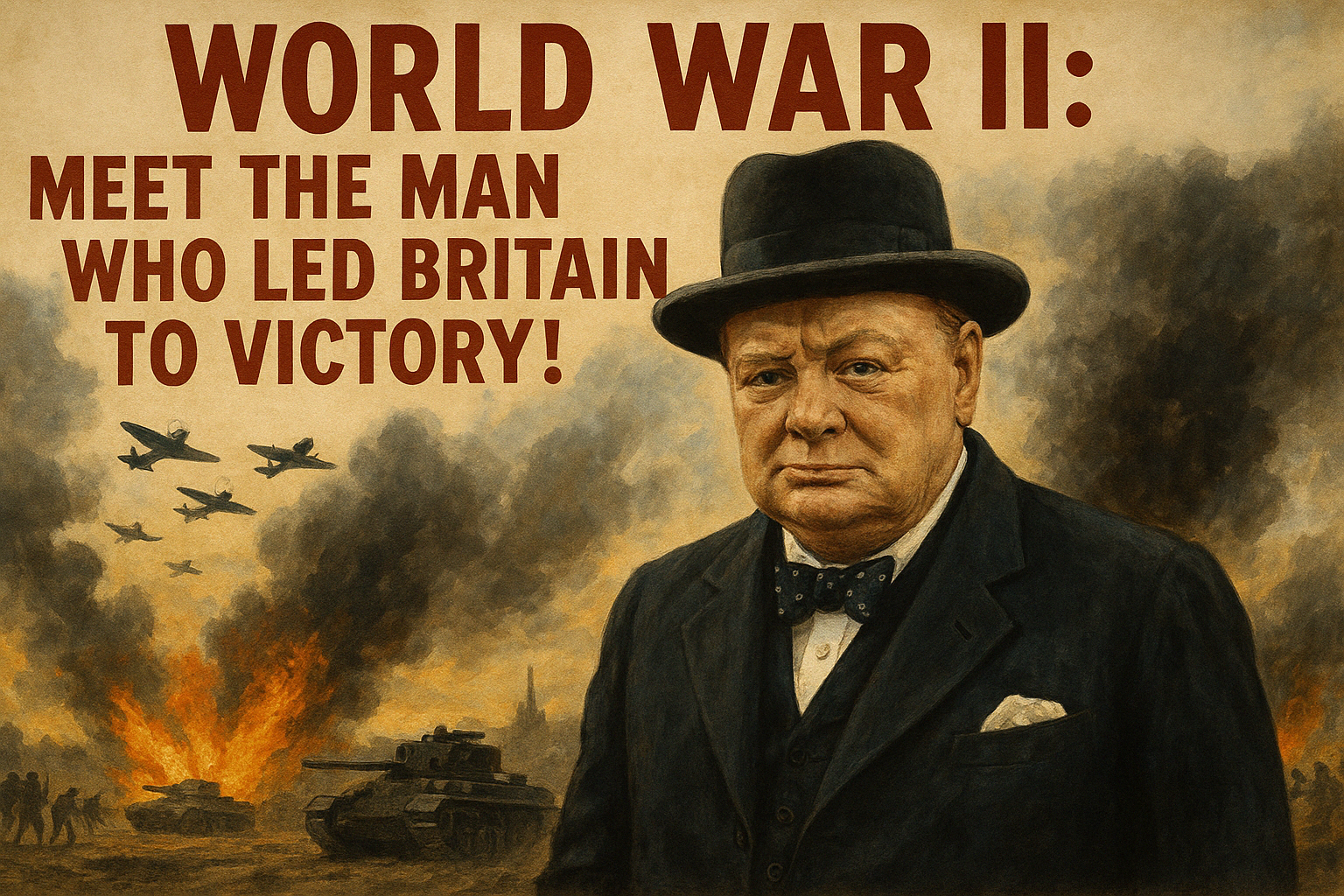
Winston Churchill was the man who led Britain to victory in World War II
By Alan Lloyd

This topic explores Churchill’s rise to power, his leadership during the war, and the powerful words that gave people hope. We’ll also take a closer look at what made him different from other leaders, and why his wartime speeches still matter today. Let’s dive into the life of the British Prime Minister in WW2 who wouldn’t give up — no matter what.


This topic is part of our Info Zone collection. You can read the full topic, once logged in, here: World War II: Meet the Man Who Led Britain to Victory!

You’ll also find a full Lesson Plan and a handy Parent Q & A sheet, for this topic, ready to use..

The Man Who Led Britain to Victory

In May 1940, with Nazi Germany sweeping across Europe, Britain turned to a new leader: Winston Churchill. At the time, the country was in deep trouble. France was falling, and many feared that Britain would be next. But Churchill, who had just become Prime Minister, refused to even consider surrender. His words and decisions would soon rally the entire nation.

Churchill wasn’t new to politics. In fact, he’d been in government for decades. But he’d made mistakes before, and not everyone trusted him right away. Still, he brought something the country needed — boldness, grit, and a powerful voice that said, “We will never give in.”

Churchill believed in standing up to bullies. He saw Hitler’s plans clearly and warned others long before war began. When the time came, he was ready. His leadership gave people strength when bombs were falling and food was scarce.

He was more than just a politician. He became a symbol of hope. Churchill showed the world that Britain would fight on, no matter how tough things got.

But how exactly did he lead? And what made him different from other leaders? Let’s find out.


Churchill’s Early Life and Political Struggles

Winston Churchill was born in 1874 into an upper-class British family. His father was a politician, and his mother was American. He went to elite schools but didn’t do well in most subjects. He was stubborn, independent, and often got into trouble. Yet, he loved reading and writing, especially about history and war.

Before becoming Prime Minister, Churchill had a rocky career. He switched political parties more than once and made big mistakes — especially during World War I. The worst was the Gallipoli campaign in 1915, which cost thousands of lives. He was blamed for it and had to resign.

But Churchill never gave up. He kept writing and speaking, warning people about Hitler in the 1930s. Many ignored him. Still, he kept pushing, saying Britain had to prepare for war.

His return to power came at a critical moment. When Prime Minister Neville Chamberlain resigned in 1940, Churchill was chosen to take his place. It wasn’t a popular choice — many thought he was reckless. But soon, he would prove them wrong.

This was the start of a journey that would make him one of the most important leaders of the 20th century.


What Made Churchill a Unique World War II Leader?

Churchill had something rare — the ability to lead in a crisis. While other leaders tried to avoid war, Churchill knew that some fights couldn’t be avoided. He believed freedom was worth defending, even if the cost was high.

He also understood the power of language. His speeches stirred emotions and made people feel brave. He used simple words but strong images. For example, he once said, “We shall fight on the beaches…” and “Their finest hour” — phrases people still remember today.

Another key strength? He was honest. He didn’t pretend things were easy. He told people the truth — that the road ahead would be hard. But he also promised that Britain would stand firm. That mix of honesty and hope kept the country going.

Churchill also built strong alliances. He worked closely with American President Franklin D. Roosevelt and later with Soviet leader Joseph Stalin. He knew Britain couldn’t win alone — it needed help. And his ability to negotiate was crucial.

Leadership isn’t just about giving orders. It’s about vision, trust, and timing. Churchill had all three, and that’s why he made such a difference.


Churchill’s Wartime Speeches: Words That Changed History

Winston Churchill’s speeches weren’t just talks — they were weapons. During the war, people tuned in to the radio to hear his voice. His words helped them believe they could win, even when the news was bad.

One of his most famous speeches came in 1940. France had just surrendered, and Britain stood alone. Churchill said: “Let us therefore brace ourselves to our duties, and so bear ourselves that if the British Empire and its Commonwealth last for a thousand years, men will still say, ‘This was their finest hour.’”

Another iconic speech was: “We shall fight on the beaches…” In that moment, he made it clear that Britain would never surrender. His voice carried strength — not just in what he said, but how he said it.

Churchill prepared each speech carefully. He read them aloud, timed his pauses, and even edited words for rhythm. He once said that the English language was his greatest weapon.

Churchill’s wartime speeches are still studied today because they show how words can move people to action, even in the darkest times.


The Challenges of Leading a Nation at War

Being a leader in wartime isn’t easy. Churchill had to deal with military decisions, food shortages, bombings, and political critics — all at once. Every choice had consequences.

During the Blitz, German planes bombed British cities almost every night. Churchill visited the ruins in person, comforting people and inspecting damage. That mattered. It showed that he wasn’t hiding — he was facing the danger with everyone else.

He also had to keep morale high. When people were scared or tired, he reminded them what they were fighting for: freedom, home, and future generations.

But Churchill wasn’t perfect. Some of his military choices were risky. And not all of his views were fair or modern. Still, during wartime, his strengths outshone his weaknesses.

It’s easy to forget how close Britain came to defeat. Without steady leadership, the outcome could’ve been very different.


Alliances and the Global War Effort

Churchill knew Britain couldn’t win World War II alone. That’s why he worked hard to form strong partnerships. His closest ally was the United States, led by President Roosevelt.

Before America entered the war in 1941, Churchill convinced Roosevelt to send supplies under a plan called Lend-Lease. That help made a huge difference.

Later, the Allies (Britain, the USA, the Soviet Union, and others) coordinated massive attacks against Nazi Germany. Churchill attended important meetings like the Tehran and Yalta Conferences, helping shape post-war plans.

Even though Churchill and Stalin had very different beliefs, they worked together to defeat a common enemy. That shows Churchill’s skill in diplomacy — working with people you don’t always agree with, for a bigger goal.

These global efforts led to the turning point of the war — when the tide began to turn in favour of the Allies.


D-Day and the Road to Victory

D-Day was one of the biggest military operations in history. On 6 June 1944, Allied forces landed in Normandy, France, to begin pushing back German forces. Churchill helped plan it — but it was a huge gamble.

Everything had to go just right. Weather, timing, secrecy — all of it mattered. Churchill even considered joining the troops on the ships, but his advisers stopped him. He had to stay safe to lead the country.

The landings were successful, and they marked the beginning of the end for Nazi Germany. British, American, and Canadian troops moved inland, liberating towns and pushing the enemy back.

By May 1945, Germany surrendered. Europe celebrated. Churchill gave a radio speech announcing victory. The war in Europe was over — thanks to the courage of millions and the leadership of a man who never gave up.

But what happened to Churchill after the war? That’s a story in itself.


After the War: A Mixed Legacy

Even though Churchill led Britain through victory, he lost the election just months after the war ended. Surprising, right? But people were tired of hardship and wanted change — new leaders, new ideas.

Churchill remained active in politics and returned as Prime Minister in the 1950s. He also wrote books about the war and even won a Nobel Prize in Literature for his writing.

Today, Churchill is remembered as a hero by many. But historians also study his flaws — including his views on empire and race, which were common at the time but are now seen as outdated.

Understanding history means looking at both the strengths and the weaknesses. Churchill was a powerful figure, but not a perfect one.

Even so, his leadership during World War II changed the course of history — and that’s why his name still matters today.


A Final Thought

The man who led Britain to victory — Winston Churchill — wasn’t flawless, but he was the leader Britain needed in its darkest hour. His courage, words, and determination helped shape the outcome of World War II.


Quick Quiz

  • What year did Churchill become Prime Minister?
  • Why was Churchill criticised during World War I?
  • Name one famous line from Churchill’s speeches.
  • What was D-Day, and why was it important?
  • Why did Churchill lose the election after the war?

Write your answers in the comment section below.


Related Wikipedia Links

Want to learn more about Churchill and his role in World War II? These pages are a great place to start:


What Do You Think?

If you were in Churchill’s shoes, what would you have done differently? Do you think his speeches would still inspire people today?


Leave a comment

'; // Add header content for print html += '

Lenara Learning

Get more learning resources at www.lenara.uk

'; // Insert the worksheet content html += '
' + content + '
'; html += ' '; printWindow.document.write(html); printWindow.document.close(); printWindow.focus(); // Trigger printing and auto-close the popup printWindow.print(); printWindow.onafterprint = function() { printWindow.close(); }; setTimeout(function() { printWindow.close(); }, 1500); }