What Happens If You Fall Into a Black Hole?
Falling into a black hole is one of the most mind-blowing things you could imagine. These strange objects are so powerful that not even light can escape them! If you got too close, you’d be stretched like spaghetti and crushed beyond anything you can picture. Luckily, black holes are far away and not a danger to Earth.
[cl_logged_in]
What Exactly Is a Black Hole?
A black hole is what’s left when a massive star dies in a big explosion called a supernova. After the explosion, gravity pulls all the leftover stuff into a tiny, incredibly heavy point. This point is called a singularity, and it has such strong gravity that not even light can escape it. That’s why black holes look… well, black! You can’t actually see a black hole, but we know they exist because of how they affect stars and space around them. They can pull things towards them, bend light, and even mess with time itself. Sounds like science fiction, right? But it’s all real! Imagine an invisible space hoover — that’s basically what a black hole is.
The Point of No Return – The Event Horizon
The edge of a black hole is called the event horizon. Once you cross this invisible line, there’s no turning back. It’s like walking through a doorway that locks behind you forever. Outside the event horizon, you might still escape if you have enough speed. But once you’re in, not even a rocket can save you. Scientists say time and space start behaving very strangely around this edge. If you were watching someone fall into a black hole, they’d appear to slow down and freeze right at the event horizon. Spoiler alert: they wouldn’t be waving for long!
Spaghettification: A Real Thing
If you fell into a black hole feet first, your feet would feel a much stronger pull than your head. That’s because gravity is more intense the closer you are. This stretching effect is called “spaghettification” — yes, that’s the actual scientific term! You’d be stretched into a long, thin noodle of atoms. Not a great way to travel, but probably the weirdest-sounding way to go! Scientists believe this stretching would happen quickly and painfully. And unfortunately, there’s no way to survive it. So, no – you won’t be writing a postcard from inside a black hole!
What Would You See on the Way In?
Before you get stretched into spaghetti, you might see some truly strange sights. Light from stars behind you would be bent into a ring called the “photon sphere.” You might see the entire universe behind you in a glowing circle! Colours would get distorted. Time would seem to slow down. It’s like entering a warped carnival mirror room, except there’s no exit and a lot more physics. If this sounds confusing, don’t worry — even scientists are still figuring it out. One thing’s certain: the view would be out of this world. Just don’t expect to take selfies!
Can You Travel Through a Black Hole?
Some theories say black holes might be portals to other parts of the universe. These ideas come from maths and science fiction, but we haven’t seen any proof yet. There’s something called a wormhole, which could link two black holes and allow space travel. But so far, this is just an idea — like imagining dragons without ever seeing one. The truth is, if you fall into a black hole, you’re not going anywhere… except down. Joke’s on you if you packed for a round trip!
Do Black Holes Move Around?
Yes, black holes can travel through space. Some are in the middle of galaxies, staying put, while others drift through the galaxy. When two black holes get close, they can even crash into each other and form a bigger one. This creates something called gravitational waves, which scientists have detected using special machines. It’s like space having a little earthquake — and we can feel it from Earth! But don’t worry, our solar system isn’t in danger. No space traffic jams with black holes here!
What Happens to Stuff That Falls In?
Once something falls into a black hole, it’s gone — at least, that’s what we used to think. Some scientists now believe the information about what fell in might still exist in some way. It’s a huge mystery known as the “information paradox.” Does a black hole delete stuff like a cosmic bin? Or is it stored in some weird way? This question has puzzled even the greatest scientists, including Stephen Hawking. If black holes had a motto, it might be: “We take it all, but we won’t tell you what we’ve got!”
How Big Are Black Holes?
Black holes come in different sizes. Some are only a few kilometres wide, but have the mass of a few suns. These are called stellar black holes. Others are millions or even billions of times heavier than the Sun and sit in the centre of galaxies. These are called supermassive black holes — like the one in the middle of our Milky Way. Scientists even think there could be tiny black holes smaller than atoms! Just imagine a black hole that could sit on your desk — but don’t try to bring one to school!
Could Earth Be Sucked In?
Nope! Black holes don’t just roam the universe gobbling up planets like space monsters. They only pull in things that come really, really close. Our planet is nowhere near a black hole, and we’re not heading towards one either. Even if our Sun magically turned into a black hole (which it won’t), Earth would just keep orbiting like normal. So, no need to hide under the bed! Unless your room’s messy — in which case, a black hole might actually help suck up those socks.
How Do Scientists Spot Black Holes?
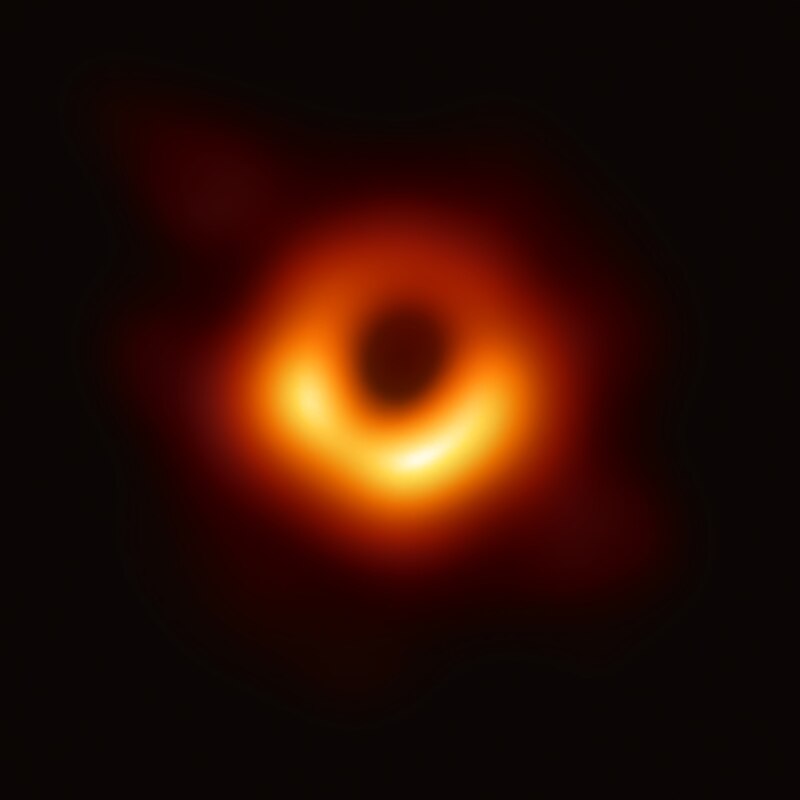
Since black holes don’t give off light, scientists look for clues. They watch how stars move near an invisible point. If a star is spinning around nothing, that “nothing” might be a black hole. They also look for X-rays from stuff being pulled in. In 2019, we even got the first picture of a black hole’s shadow — a glowing ring of gas around the event horizon. It was a massive moment in space science! Even though it looked blurry, it was clearer than any photo of Bigfoot.
Time Gets Weird Near a Black Hole
If you hung out near a black hole’s edge (without falling in), time would pass slower for you than for someone far away. This is called time dilation. Imagine going near a black hole for what feels like an hour, then returning to Earth and finding that years had passed! It’s a bit like Narnia, but with more maths. Time travel fans love black holes for this reason. But don’t plan a holiday just yet — it’s a one-way trip and luggage fees are terrible.
What’s Inside a Black Hole?
We honestly don’t know. The laws of physics break down inside a black hole. Scientists think there’s a singularity, a tiny point with infinite density. But what that actually means is still unclear. It might be a doorway to another universe. Or maybe it just squashes everything into nothingness. Until we find a way to explore one (without getting crushed), the inside of a black hole remains one of space’s biggest mysteries. It’s the ultimate “no entry” zone!
Do Black Holes Die?
Yes! According to Stephen Hawking, black holes can slowly lose energy and shrink over time. This is called Hawking radiation. Eventually, they might vanish in a burst of energy. But this takes a very long time — far longer than the age of the universe so far. So we won’t be seeing black holes popping like popcorn anytime soon. But it’s cool to know that even these cosmic giants don’t last forever. Everything in space has a life cycle — even the scariest bits!
Why Are Black Holes Important?
Black holes might sound scary, but they help us understand the universe better. They teach us about gravity, space, time, and the limits of science. Studying black holes has even led to new ideas about how everything works at the tiniest and biggest scales. Without them, we might never ask some of the biggest questions in science. Plus, they make science lessons a lot more exciting than just measuring how fast a ball rolls down a slope!
What Happens If You Fall Into a Black Hole?
Let’s sum it up: if you fall into a black hole, you’d stretch into spaghetti, disappear forever, and probably see some seriously wild sights on the way in. You wouldn’t survive, and you wouldn’t be able to send a message back. But your fall would help scientists learn more — in theory, at least! It’s the ultimate “you had to be there” experience… except no one ever comes back. So best not to try it. Stick to watching documentaries!
What Do You Remember?
What is the event horizon of a black hole?
Why do scientists call it “spaghettification” when you fall in?
Can anything, even light, escape a black hole?
What’s the name of the type of black hole in the centre of galaxies?
How do scientists detect black holes if they can’t see them?
Related Topics
If you found black holes fascinating, you might also enjoy learning about how stars are born and die, or the mysteries of gravity and time. There’s also lots to explore about wormholes, galaxies, and the idea of multiverses. The universe is full of wild and wonderful things!
Learn More
https://en.wikipedia.org/wiki/Black_hole
https://en.wikipedia.org/wiki/Spaghettification
What Do You Think?
If you found this to be an interesting topic, why not have your say. Or if you can think of ways we could improve it. We would love to know what you learned and more importantly, what you think. So now is your chance, use the comments section below to let us know your thoughts.
[/cl_logged_in]
[cl_logged_out]
Members Only
You need to be registered and logged in to access this learning resource and other member only content. It only costs £1.99
[/cl_logged_out]

