Hello Alan Lloyd - Your Scores - Logout

What Would Happen If All the Ice Melted?

What Would Happen If All the Ice Melted?

What would happen if all the ice on Earth melted? It sounds like a wild science fiction story, but scientists have actually studied this very question. From rising seas to vanishing cities and disrupted weather patterns, the effects would be massive.

In this topic, we’ll explore the science of melting ice, what causes it, and what the future might look like if global ice continues to disappear. Don’t worry — we’ll explain everything clearly and simply. Let’s dive in (but hopefully not underwater)!
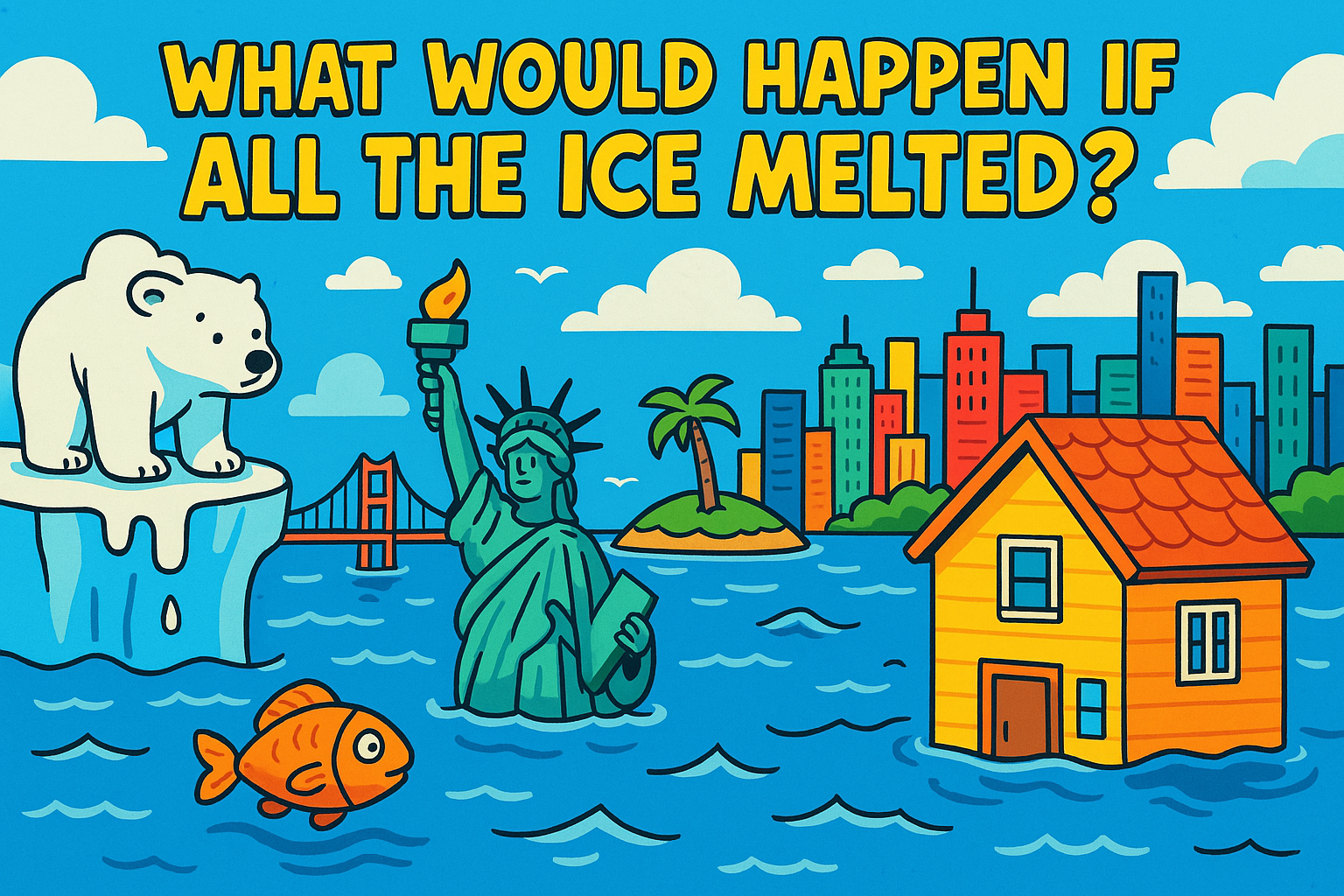
What Would Happen If All the Ice Melted?
By Alan Lloyd

What Would Happen If All the Ice Melted?

Our planet is home to enormous amounts of ice. It’s locked away in glaciers, ice sheets, frozen ground, and floating sea ice. If all of it melted, sea levels could rise by around 66 metres. That would change life on Earth forever. It wouldn’t just affect people near the sea – it would change the weather, destroy habitats, and even alter how the planet reflects sunlight. Scientists agree this scenario would take thousands of years to happen, but parts of it are already beginning. Let’s find out how.


Where Is Earth’s Ice Stored?

Most of Earth’s ice is found in two places: Antarctica and Greenland. Antarctica holds about 90% of all ice and around 70% of the world’s fresh water. Greenland contains another 10% of global ice. Together, they act like massive frozen reservoirs.

There are also thousands of glaciers in mountain ranges, from the Himalayas to the Alps and Andes. These glaciers store ice at high altitudes and slowly feed rivers as they melt.

Finally, there’s permafrost — permanently frozen ground found in areas like Siberia and Alaska — and floating sea ice, especially in the Arctic Ocean.


How Does Ice Melt Affect Sea Levels?

When land ice like glaciers and ice sheets melt, they add water to the oceans and cause sea levels to rise. Sea ice, which is already floating, doesn’t raise sea levels when it melts — just like ice in a glass of water.

If all land-based ice melted, sea levels would rise by about 66 metres (216 feet). That’s enough to flood most coastal cities and wipe out entire islands. Places like London, New York, Shanghai, and Mumbai would be completely underwater.

Even a small rise — just one or two metres — would have a huge impact on millions of people living near the coast.


How Fast Is Ice Melting Right Now?

According to satellite data, the world is losing ice at an increasing rate. Greenland alone is currently losing about 270 billion tonnes of ice every year. Antarctica is losing around 150 billion tonnes annually.

This isn’t just natural. Most of the melting is caused by human activity, mainly the burning of fossil fuels like coal, oil, and gas. This releases greenhouse gases, which trap heat in the Earth’s atmosphere and warm up the planet.

Warmer temperatures mean more melting — especially at the poles, where the climate is changing fastest.


What Would Happen to the UK?

If all the ice melted and seas rose by 66 metres, large parts of the UK would disappear. London would be gone. So would Liverpool, Hull, Portsmouth, and large parts of East Anglia.

The Fens would return to being a swamp. Scotland’s Highlands might become islands. Wales would shrink, and even Birmingham might find itself with a beachfront!

It would be the biggest change to the map of Britain in history — all because of melting ice thousands of miles away.


Would It Change the Weather?

Yes, and dramatically. Melting ice affects more than sea levels — it can change the whole planet’s weather systems. Ice helps reflect sunlight, keeping the planet cool. When the ice melts, darker water and land absorb more heat, making Earth even warmer.

This can cause stronger storms, longer heatwaves, heavier rainfall, and harsher droughts. Areas that once had mild weather could face new extremes.

Even the winds and jet streams that move weather around the globe could shift, making forecasts more unpredictable.


How Does Ice Melting Affect Animals?

Some of the world’s most iconic animals rely on ice to survive. Polar bears hunt on sea ice. Penguins breed on ice shelves. Seals give birth there. As the ice disappears, these animals are losing their homes, their food, and their future.

But it’s not just polar animals. Melting ice affects ocean temperatures and currents, which impacts fish and plankton — the base of the marine food chain.

Less food in the ocean means trouble for seabirds, dolphins, whales, and eventually… us.


What Is the Albedo Effect?

The “albedo effect” is a fancy name for something simple: how much sunlight is reflected by Earth’s surface. Ice and snow reflect most sunlight. Darker surfaces like ocean water or rock absorb it.

When ice melts, it exposes darker ground or sea. This absorbs more heat, which causes more melting — and so on. It’s a dangerous loop scientists call a “positive feedback cycle”.

Basically, the more ice we lose, the faster the planet heats up.


Could Melting Ice Disrupt Ocean Currents?

Yes — especially in the North Atlantic. Melting ice from Greenland pours cold freshwater into the ocean. This could weaken or even stop the Atlantic Meridional Overturning Circulation (AMOC), which helps regulate the climate in Europe and North America.

If this current slows down, the UK could face colder winters and hotter, wetter summers. Some regions might suffer droughts; others could flood more often.

This kind of climate shift would affect farming, fishing, and entire ways of life.


Will It Happen All at Once?

No — thankfully! Ice melting at that scale would take thousands of years, even under extreme global warming. But that doesn’t mean we can relax.

Sea levels are already rising, and ice is melting faster every year. If we don’t take action, we could see metres of sea level rise in just the next few centuries.

What we do now decides what the future looks like for the generations to come.


Can We Stop the Ice from Melting?

We can’t stop it completely, but we can slow it down. Reducing greenhouse gas emissions is the best way to protect our planet’s ice. That means using clean energy like solar and wind, driving electric vehicles, and planting trees.

International agreements like the Paris Agreement aim to limit global warming to under 1.5°C. Every degree counts when it comes to saving the ice.

Even small actions, like using less energy or eating more plant-based meals, can make a difference when millions of people take part.


What Do You Remember?

  • How much would sea levels rise if all the ice melted?
  • Which two places hold most of Earth’s ice?
  • What is the albedo effect?
  • How does melting ice affect ocean currents?
  • Can we do anything to slow down the melting?

Write your answers in the comment section below.


Related Topics

If you found this topic interesting, you might enjoy learning more about how climate change works, or how the oceans help regulate our planet’s temperature. These topics connect to weather, science, and geography in really cool ways (pun intended!).


What Do You Think?

If you found this to be an interesting topic, why not have your say. Or if you can think of ways we could improve it. We would love to know what you learned and more importantly, what you think. So now is your chance, use the comments section below to let us know your thoughts.


Leave a comment