
Who Discovered Gravity? (And Was It Really an Apple?)
Who Discovered Gravity? (And Was It Really an Apple?)
Isaac Newton formulated the universal law of gravitation, inspired by observing an apple fall. While the apple story is partly legendary, it illustrates his quest to understand why objects fall toward Earth. Newton’s work revolutionized our understanding of gravity and motion.
[cl_logged_in]
The Curious Case of the Falling Apple
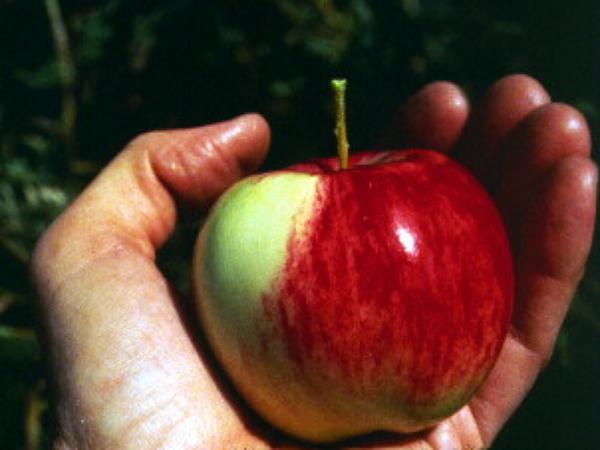
Once upon a time, in the 17th century, a young man named Isaac Newton was sitting in his garden when he noticed an apple fall from a tree. This simple event sparked a question in his mind: Why do objects always fall straight down to the ground? This curiosity led Newton to explore the forces at play, eventually formulating the universal law of gravitation.
Was It Really an Apple?
The story of the apple is one of the most famous anecdotes in science. While it’s true that Newton used the falling apple as a thought experiment, there’s no evidence that an apple actually hit him on the head. The tale serves as a metaphor for his realization that the same force causing the apple to fall also governs the motion of the Moon and planets.
Gravity: The Invisible Force
Gravity is the force that pulls objects toward each other. It’s why we stay grounded on Earth and why planets orbit the Sun. Newton’s law of universal gravitation states that every mass attracts every other mass with a force proportional to their masses and inversely proportional to the square of the distance between them. In simple terms, larger objects have a stronger gravitational pull, and the farther apart they are, the weaker the attraction.
Newton’s Legacy
Newton’s discovery was ground-breaking. It not only explained why objects fall but also described the motion of planets and moons. His work laid the foundation for classical mechanics and has been instrumental in advancements in physics, engineering, and astronomy.
Beyond Newton: Einstein’s Contribution
Centuries later, Albert Einstein expanded upon Newton’s work with his theory of general relativity, providing a more comprehensive understanding of gravity, especially in extreme conditions like those near massive stars or black holes. However, for everyday experiences and most practical purposes, Newton’s laws remain incredibly accurate and useful.
Gravity in Our Daily Lives
Gravity affects everything we do. It’s the reason why we can walk, why rain falls, and why we don’t float off into space. Understanding gravity has allowed us to develop technologies like airplanes, rockets, and even the devices we use to measure time.
Fun Experiments to Understand Gravity
Drop Objects: Hold two objects of different weights and drop them simultaneously. Observe how they hit the ground at the same time, demonstrating that gravity accelerates all objects equally, regardless of mass.
Pendulum Swing: Create a simple pendulum using a string and a weight. Notice how the length of the string affects the swing period, illustrating the principles of gravitational acceleration.
Gravity and Space Exploration
Understanding gravity has been crucial for space exploration. It allows scientists to calculate spacecraft trajectories, ensuring they reach their destinations, whether it’s the Moon, Mars, or beyond. Gravity assists, or slingshot manoeuvres, use a planet’s gravity to accelerate spacecraft, saving fuel and time.
The Ongoing Mystery of Gravity
Despite centuries of study, gravity still holds mysteries. Scientists continue to research its role in the universe’s expansion and its relationship with other fundamental forces. Who knows what future discoveries await?
Learn More:
[/cl_logged_in]
[cl_logged_out]
Members Only
You need to be registered and logged in to access this learning resource and other member only content. It only costs £1.99
[/cl_logged_out]