Printable Lesson Plan
Overview
This structured Pompeii lesson plan explores the eruption of Mount Vesuvius and the ancient Roman city it buried. Perfect for learners aged 8 to 16, it offers hands-on activities, creative writing, and historical discovery. Your child will explore Roman life, volcanoes, and the science behind what happened in Pompeii.
Learning Objectives
By the end of this Pompeii lesson plan, your child will be able to:
- Locate Pompeii on a map and describe its importance
- Explain the causes and effects of the eruption in 79 CE
- Understand how archaeologists uncover ancient history
- Use critical thinking to explore life in ancient times
- Express their ideas through writing and creative tasks
Estimated Time
You can complete this Pompeii lesson plan in one day or spread it out over the week. It includes 2–3 hours of flexible activities and discussion.
Starter Activity
Ask: “Would you live near a volcano?” Show your child Mount Vesuvius on a map. Explore the surrounding area using Google Earth. Are there people living nearby today? Why might they stay? This opens a discussion on risk, geography, and curiosity.
Read and Learn
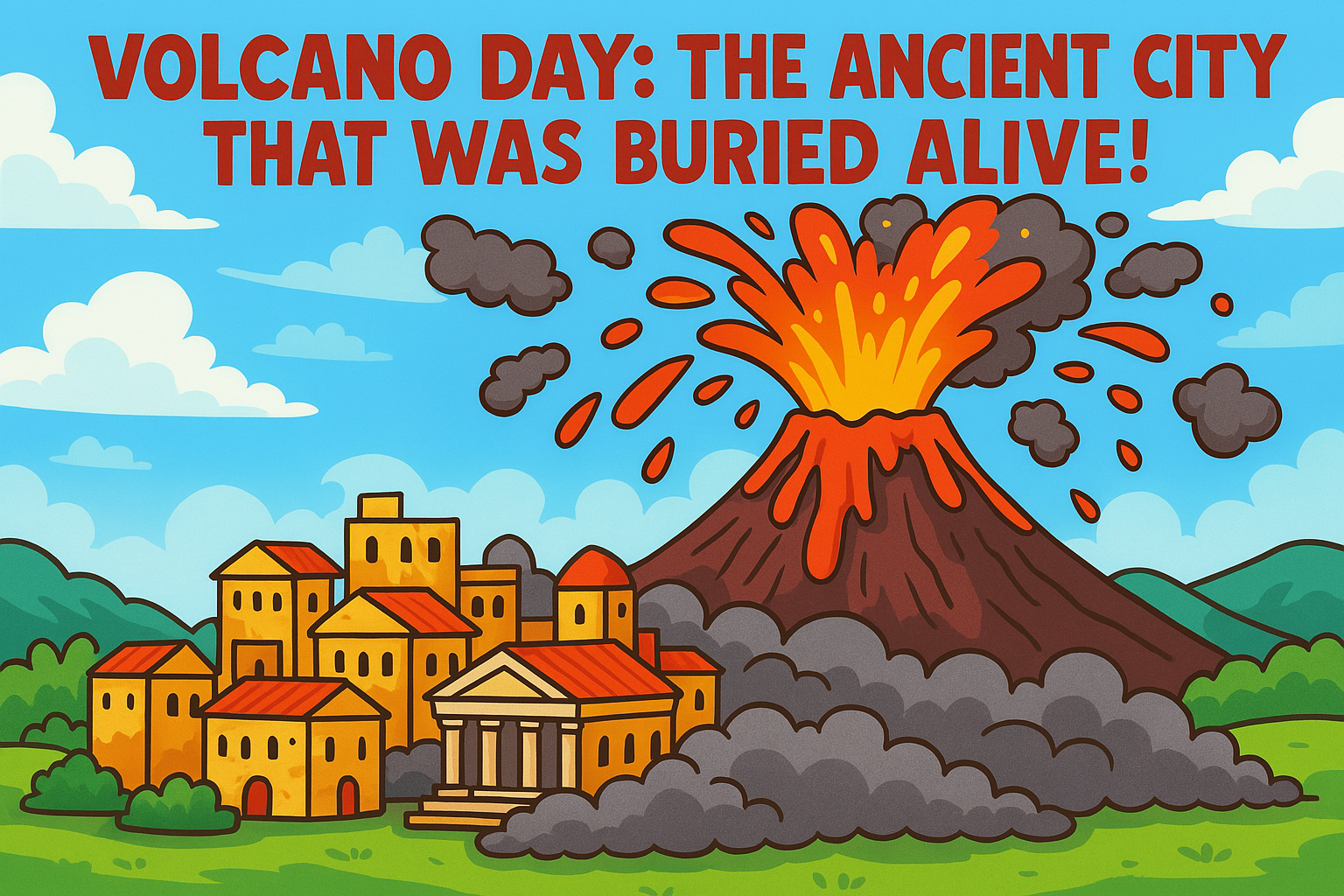
Read Volcano Day: The Ancient City That Was Buried Alive! together. Pause to explain words like “archaeology” or “preserved.” Ask your child to summarise each section in their own words to check understanding.
Guided Learning
Use these discussion questions to help your child think more deeply:
- Why didn’t more people escape Pompeii?
- What do the ruins teach us about Roman life?
- How do archaeologists know what happened?
Let them answer out loud or in writing. You can record their responses or turn them into a mini oral report.
Activities (with comprehension questions)
Pick one or more of these hands-on tasks:
- Draw Mount Vesuvius and label the eruption stages
- Create a diary entry from a child living in Pompeii
- Make a timeline showing the events of the eruption
Then ask:
- What clues warned people about the eruption?
- What happened to the city and its people?
- What did archaeologists discover in the ruins?
Deeper Thinking
Challenge your child’s reasoning with these questions:
- Should people live near volcanoes today?
- What can we learn from past disasters?
- How would you feel if your own city were buried and studied in 2,000 years?
Encourage thoughtful, open-ended answers and talk through their ideas.
Creative Projects
Let creativity take over!
- Build a model of Pompeii using craft materials or Lego
- Write and illustrate a comic strip about a family’s escape
- Design a warning poster in Latin (with translations!)
Display the results or send photos to family to share the learning journey.
Review & Reflect
Wrap up by asking: “What surprised you the most?” Have your child list 5 new facts they’ve learned. You could quiz each other or create a simple Kahoot together.
Continuation Of The Topic (Homework)
Keep the spark alive with optional follow-ups:
- Watch a documentary like BBC’s “Pompeii: The Last Day”
- Read a historical story such as “Escape from Pompeii”
- Research other volcanoes around the world and compare them to Vesuvius
Keep asking questions — curiosity drives great learning!