The Blitz: When Bombs Fell on Britain

The Blitz: When Bombs Fell on Britain

The Blitz was when German planes bombed British cities. Families sheltered underground, cities were lit up by fires, and thousands of buildings were destroyed. But through bravery and teamwork, the British people never gave up, showing the world their strength and determination during this terrible time.
Have a look at our dedicated lesson plan for this topic The Blitz: When Bombs Fell on Britain

[cl_logged_in]

The Blitz Begins

In September 1940, Britain faced one of its most frightening moments — the start of The Blitz. German bombers crossed the English Channel almost every night, dropping explosives on towns and cities.

The word “Blitz” comes from the German word “Blitzkrieg,” meaning lightning war, because the attacks were fast and fierce. The bombing began after Germany failed to defeat the Royal Air Force during the Battle of Britain.

Hitler wanted to force Britain to surrender by terrifying its people and destroying its factories and ports. What he didn’t expect was that the British people would become even more determined to resist. From that moment, ordinary streets, parks, schools, and shops suddenly became dangerous places, as bombs could fall anywhere.


Why Did Germany Bomb Britain?

After losing the Battle of Britain, Hitler was frustrated. His plan to invade Britain had failed, so he switched tactics. Instead of trying to beat Britain’s air force, he ordered his planes to bomb the cities directly.

The Germans thought that if they destroyed enough houses, factories, and docks, the British people would panic and demand surrender. The plan was to weaken Britain’s industries and break the spirit of the people. Instead, it had the opposite effect.

Many people became even more determined to carry on. The famous words of Prime Minister Winston Churchill, “We shall never surrender,” were repeated in homes and shelters across the country, inspiring people to keep going.


Blackout Britain

When night came, the cities became pitch black. To make it harder for German bombers to find targets, the government ordered a strict blackout. People covered windows with thick black curtains or blackout paper so no light could escape.

Even car headlights were fitted with covers to reduce their glow. Streetlights were turned off, leaving streets in total darkness. This made walking around at night tricky — many people walked into lamp posts or tripped over kerbs!

But no one minded the bruises if it meant they were safer. The blackout lasted for the entire war and became part of daily life.


Air Raid Sirens and Shelters

The wailing sound of air raid sirens became a dreadful but familiar sound during The Blitz. As soon as people heard it, they knew they had to get to safety.

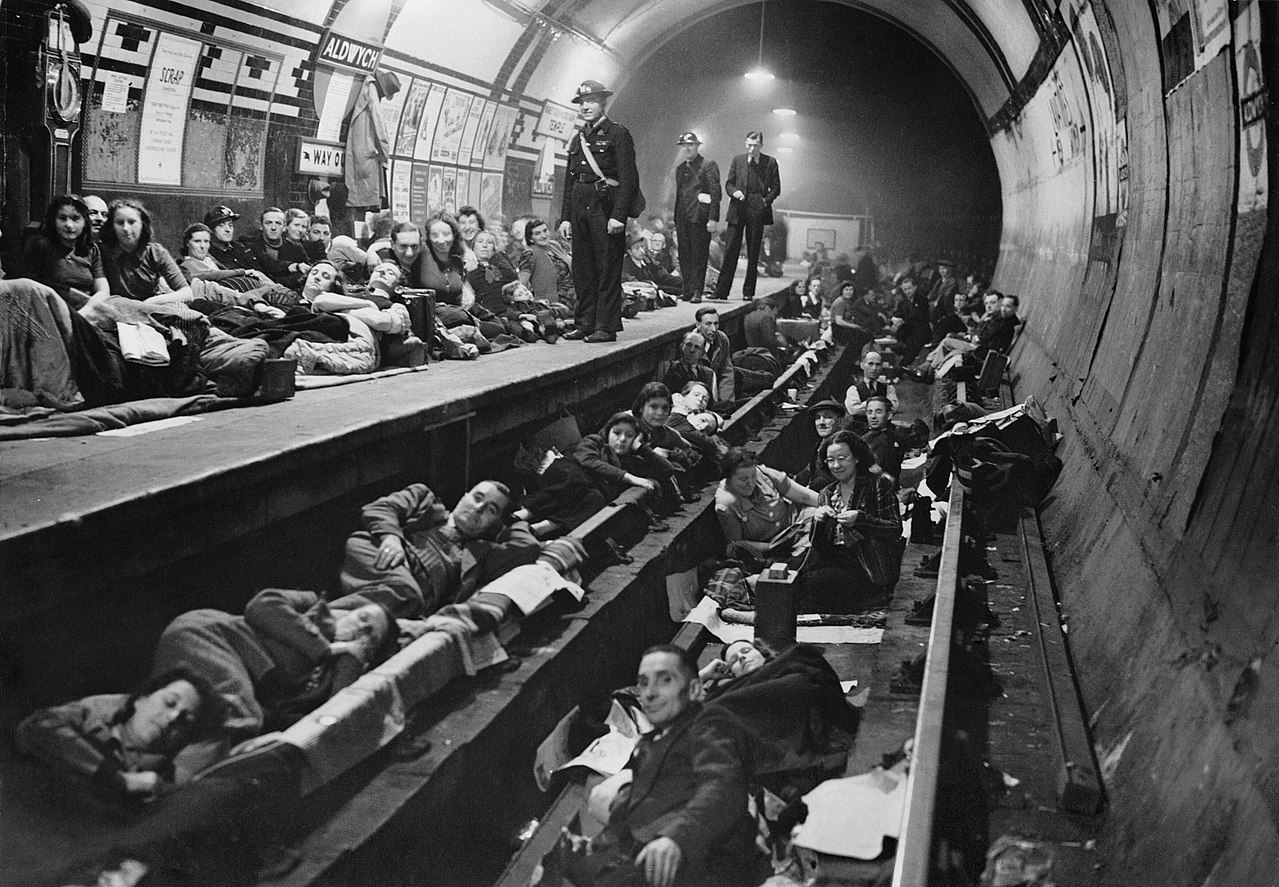
Many families built Anderson shelters in their gardens, which were made of corrugated steel and half-buried underground. These shelters were small and damp but offered good protection from bombs. In the cities, people often sheltered in underground stations or larger public shelters.

Families brought blankets, pillows, and food with them, sometimes staying all night until the ‘all clear’ siren sounded. Although cramped and uncomfortable, the shelters saved thousands of lives.


The London Blitz

London was hit the hardest during The Blitz. Starting on 7th September 1940, the capital was bombed for 57 nights in a row. The city’s docks, factories, and railways were the main targets, but bombs fell on homes, schools, and even famous landmarks.

The dome of St Paul’s Cathedral famously survived and became a symbol of hope for the people. Despite the fear, Londoners showed great courage, often referred to as the “Blitz Spirit.”

They worked together to rescue trapped neighbours, put out fires, and keep going despite the constant threat overhead. Many even managed to find time for a cup of tea between raids!


The Blitz Across Britain

While London was badly damaged, it wasn’t the only city affected. Industrial cities like Coventry, Liverpool, Plymouth, Birmingham, Sheffield, and Glasgow also suffered heavy bombing.

Coventry faced one of the most destructive raids on 14th November 1940, where much of the city was left in ruins overnight. Portsmouth, a naval base, was bombed repeatedly.

Even smaller towns and villages weren’t always safe. In every part of the country, people faced destruction and danger, but everywhere you looked, there were stories of bravery, kindness, and determination.


Fires and Firefighters

The bombs not only exploded but also started massive fires, especially when they hit buildings filled with flammable materials. Streets could become rivers of fire in minutes.

Firefighters, often volunteers, worked tirelessly to put out the flames with hoses, sandbags, and buckets of water. In some areas, water supplies were cut off, so they had to use whatever water they could find, even from ponds or canals.

Children helped too, joining fire-watching teams and stamping out small fires with buckets of sand. Firefighters were heroes, risking their lives night after night to save homes and lives.


Evacuees: Children on the Move

One of the saddest but most important parts of The Blitz was the evacuation of millions of children. Before the bombing even started, the government organised Operation Pied Piper, sending children away from cities to live with families in the countryside, where it was safer.

Some children travelled with their mothers or teachers, while others went alone. They carried gas masks and small suitcases, often with a label tied to their coats like a parcel. Life as an evacuee was strange — some children were welcomed with love, while others were treated unkindly.

Homesickness was common, and many longed to return home, even if home wasn’t safe.


Life for Children Who Stayed

Not all children were evacuated. Some families chose to stay together in the cities. These children lived through blackouts, air raids, and nights in shelters.

Many schools were closed or damaged, so lessons were often held in unusual places like church halls or underground shelters. Despite the danger, children still found time to play games, tell stories, and help their parents.

They became experts at spotting different types of planes and learned what to do during an air raid. Some children said that nights in shelters felt like camping, but without the toasted marshmallows.


Pets and Animals in The Blitz

Pets were part of the story too. Many families took their dogs, cats, or even rabbits with them into shelters. Sadly, some families had to leave their pets behind or give them to animal charities, which tried their best to care for them.

There are heart-warming stories of animals saving lives — one dog, Rip, became famous for helping to rescue people trapped in rubble. Animals gave people comfort during the scariest nights, making them feel less alone in the dark.


Women’s War Work

Women played a massive part during The Blitz. With many men away fighting, women took on roles that were usually done by men. They worked in factories making bombs, planes, and tanks.

Women became ambulance drivers, air raid wardens, and even joined the fire service. Their work was dangerous and tiring, but they kept going.

The war changed people’s ideas about what women could do, proving that they were just as brave, skilled, and hardworking as men.


The Role of the Royal Air Force (RAF)

The RAF remained vital even after the Battle of Britain. Pilots patrolled the skies night after night, trying to shoot down enemy bombers before they could reach their targets.

Although they couldn’t stop every bomb, the RAF saved many lives by forcing German planes to drop their bombs early or miss their targets.

Radar technology helped the RAF track the bombers, giving people precious minutes to get to shelters. These brave pilots became heroes to the people below.


How The Blitz Ended

The main phase of The Blitz ended in May 1941, when Germany shifted its focus to attacking Russia. The bombing didn’t stop completely, but the worst was over. Sadly, over 40,000 people had died, and hundreds of thousands of homes were destroyed.

Although cities were left in ruins, the people’s determination to rebuild was stronger than ever. Streets were cleared, houses repaired, and shops reopened. People tried to return to normal life, even though the memories of those terrible nights would stay with them forever.


The V1 and V2 Attacks

The Blitz wasn’t the end of bombing. Later in the war, Germany launched V1 flying bombs and V2 rockets. These new weapons were terrifying because they were faster, harder to stop, and caused huge damage.

The V1, known as the “doodlebug,” made a buzzing sound until its engine stopped — and then it fell. The V2 came without warning. Still, the British people kept calm and carried on. By then, they were battle-hardened and determined not to let fear win.


Blitz Spirit: The Strength of Ordinary People

What is remembered most about The Blitz is not just the damage, but the people. The Blitz Spirit means courage, kindness, and helping others, even when scared. Neighbours shared food and shelter. Volunteers rescued trapped families.

People went to work even if their factory had been bombed the night before. The British people refused to give in. This spirit of sticking together and never giving up became one of the most important lessons from The Blitz.


What Happened After The Blitz?

Once the bombing stopped, Britain faced the huge task of rebuilding. Many cities looked completely different. Entire streets had disappeared. But slowly, new houses, shops, and schools were built.

The war had changed people’s lives forever, but it had also shown them the power of bravery, kindness, and community. People remembered The Blitz not just as a time of fear, but as a time when they stood side by side and refused to give up.


What Do You Remember?

  1. What does the word “Blitz” mean?

  2. What was the purpose of the blackout?

  3. Who were the evacuees and where did they go?

  4. How did children and pets cope during The Blitz?

  5. What is meant by the Blitz Spirit?

Write your answers in the comment section below.


Related Topics

If you enjoyed learning about The Blitz, you might also want to discover more about the Battle of Britain, which happened just before the bombing started, or about the evacuation of children, one of the biggest movements of young people in British history.

Learn more:
https://en.wikipedia.org/wiki/Battle_of_Britain
https://en.wikipedia.org/wiki/Evacuation_of_children_in_the_United_Kingdom_during_World_War_II


What Do You Think?

If you found this to be an interesting topic, why not have your say? We would love to know what you learned and, more importantly, what you think. So now is your chance, use the comments section below to let us know your thoughts.


[/cl_logged_in]

[cl_logged_out]

Members Only

You need to be registered and logged in to access this learning resource and other member only content. It only costs £1.99

[/cl_logged_out]

Leave a comment