Mars: The Red Planet – But Why?

Mars: The Red Planet – But Why?

If you’ve ever looked up at the night sky and spotted a glowing red dot, chances are you were looking at Mars. Known as the Red Planet, Mars has fascinated scientists, storytellers, and sky-watchers for centuries. But why is it red? What makes this dusty world so different from Earth, and what can it teach us about space?

In this article, we’ll dive into the real reasons Mars looks the way it does. From rusty rocks and wild dust storms to giant volcanoes and ancient mysteries, there’s a lot to uncover. We’ll also explore how Mars has inspired myths, books, and space missions—and what future explorers might find there. Get ready for a colourful journey to our fiery neighbour!
Wave Properties: Amplitude, Frequency, and Wavelength
[cl_logged_in]

What Makes the Red Planet Mars So Red?

Let’s start with the basics. Mars is often called the “Red Planet” because of its rusty appearance. If you’ve seen photos of Mars, you’ve probably noticed it looks like a dusty desert bathed in orange and red. This colour comes from something called iron oxide—also known as rust.

On Earth, when metal gets wet and is exposed to air, it rusts. Mars has iron-rich dust and rocks all over its surface, and even though it doesn’t rain there, the oxygen in its thin atmosphere reacts with the iron over time. This creates a red, powdery coating that makes the whole planet look rusty.

It’s like Mars has been sitting outside for billions of years, slowly changing colour. And because the surface is dry and dusty, the rust doesn’t wash away—it just builds up.

So, next time you hear “Red Planet Mars,” remember it’s not just a nickname—it’s a clue to what’s happening on the surface.

But there’s more to the story than just rust…

[br][br]

The Role of the Martian Atmosphere

Mars’s atmosphere is super thin—about 100 times thinner than Earth’s. It’s made mostly of carbon dioxide, with just a tiny bit of oxygen. Because it’s so thin, it doesn’t scatter sunlight like Earth’s thicker atmosphere does.

On Earth, sunlight hits the atmosphere and spreads out in all directions, which is why the sky looks blue. On Mars, that doesn’t happen. Instead, light hits the rusty surface and bounces back straight into space, making the red colour even more obvious.

The thin air also allows tiny dust particles to stay suspended for ages. When strong winds kick up, massive dust storms can blanket the planet for weeks—even months!

These storms move rusty particles into the atmosphere, tinting the skies and adding to that famous red glow. Sometimes, from space, Mars even looks more yellowish or brownish during one of these storms.

Still, once the dust settles, Mars returns to its usual red disguise.

[br][br]

Volcanoes That Changed the Landscape

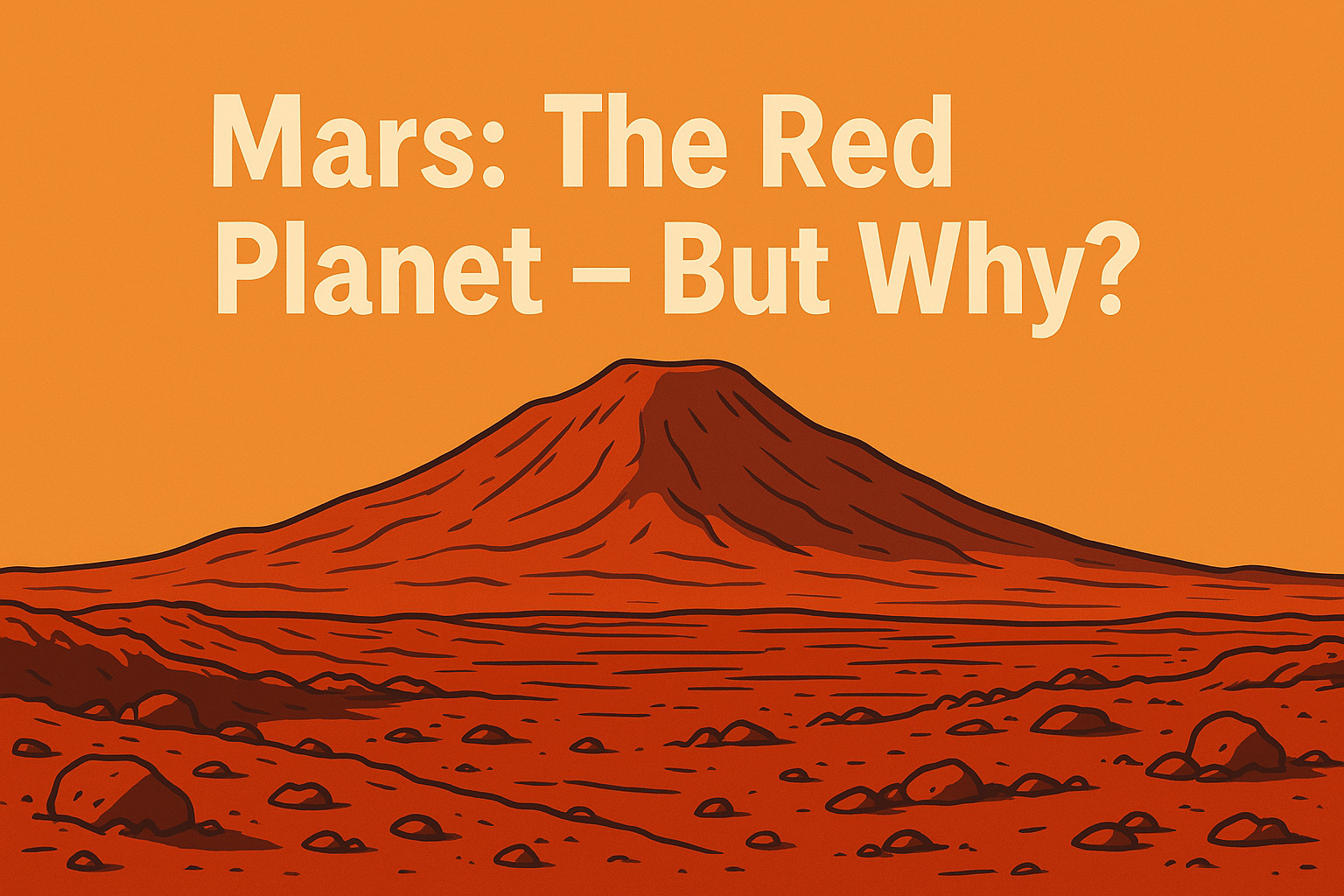
Did you know Mars is home to the biggest volcano in the solar system? It’s called Olympus Mons, and it’s about three times taller than Mount Everest!

Millions of years ago, huge volcanic eruptions spread iron-rich lava all over the planet’s surface. As the lava cooled and broke apart, it added even more iron to the Martian soil.

Over time, this iron reacted with what little oxygen there is, creating—yep, you guessed it—more rust.

These volcanoes helped shape the surface of Mars into the one we see today. They didn’t just make mountains—they helped colour the whole world.

So, in a way, Mars got its red look thanks to some pretty explosive activity.

[br][br]

Storms, Seasons, and Shifting Colours

Although Mars is known for its red colour, it doesn’t always look exactly the same. The planet has seasons, just like Earth. And these seasons bring change.

Sometimes, during spring or summer, dust storms swirl across the planet, covering its surface with fine yellowish or grey particles. These storms can grow so large they cover the entire planet!

During those times, Mars might appear lighter, almost peach or yellow when viewed from Earth.

Then, once the wind settles and the dust drops back to the ground, that familiar reddish colour returns. It’s like Mars is always putting on a new coat of paint depending on the season.

Pretty stylish for a cold, dusty world, right?

[br][br]

What Iron Oxide Really Is

Iron oxide might sound fancy, but you’ve seen it before—probably on an old bicycle or a rusty nail. It’s just a chemical reaction between iron and oxygen that makes metal flake and turn reddish.

On Mars, there’s loads of iron in the rocks and soil. Even though the air is thin and dry, it still has enough oxygen to slowly react with the iron over time.

Because there’s so much iron on the planet, and nothing to wash it away, the rust builds up and stays. That’s why Mars looks red from space.

Earth has iron oxide too—but rain and plants constantly change the landscape. Mars, however, just sits there rusting, day after day, for billions of years.

It’s like a giant, planet-sized iron sculpture left out in the weather forever.

[br][br]

What Ancient Civilisations Thought

Long before telescopes or space missions, people noticed Mars shining red in the sky. Ancient Egyptians called it “The Red One.”

To the Romans, it reminded them of blood and battle, so they named it after their god of war—Mars.

In many cultures, Mars was seen as mysterious and powerful. Some people thought it predicted danger or change. Others believed it was a home for gods or even otherworldly creatures.

It wasn’t just a dot in the sky—it was part of legends, stories, and even calendars.

Pretty impressive for a rusty ball millions of kilometres away!

[br][br]

How Modern Science Uncovered the Truth

Thanks to satellites and rovers, we now know so much more about Mars than we did just 50 years ago. Machines like the Curiosity and Perseverance rovers have taken samples and photos of the Martian surface.

They’ve shown us close-ups of rusty rocks, dry riverbeds, and dusty red plains. Even tiny grains of sand have been tested to reveal what they’re made of.

All of this has helped scientists understand why Mars is red—and how it’s changed over time.

We’ve even used lasers to study the soil and found proof of ancient water. That means Mars didn’t always look like it does today!

It might have once had blue skies and flowing rivers. Imagine that.

[br][br]

A Final Thought

So, why is Mars red? It’s a mix of iron-rich soil, a thin atmosphere, ancient volcanoes, and endless time. Together, they’ve created one of the most recognisable planets in our solar system.

And even though we now understand the science, there’s still something magical about looking up and seeing that glowing red light in the sky.

It reminds us that there’s always more to discover—even in places we think we know well.

[br][br]

What Do You Remember?

  • What causes Mars’s red colour?
  • How does the Martian atmosphere affect how we see the planet?
  • What role did volcanoes play in shaping Mars’s surface?
  • How have dust storms changed how Mars looks?
  • Why did ancient people think Mars was special?

Write your answers in the comment section below

[br][br]

Related Wikipedia Links

Want to keep learning about space and our solar system? These links are a great place to start:

[br][br]

What Do You Think?

Do you think humans will ever live on Mars? Would you want to visit the Red Planet someday? Share your thoughts below—we’d love to hear what you imagine the future of Mars might look like!

[br][br] [/cl_logged_in]

[cl_logged_out]

Members Only

You need to be registered and logged in to access this learning resource and other member only content. It only costs £1.99

[/cl_logged_out]

Leave a comment