
10 Most Notorious Serial Killers in History (Lesson Plan)
Lesson Plan - 10 Most Notorious Serial Killers in History
Understanding the dark side of history can help young learners grasp how society responds to danger and injustice. This notorious killers lesson plan covers ten of the most disturbing serial killers in history, helping your child explore psychology, crime, and criminal investigation in a safe, guided way. The focus keyword “notorious killers lesson plan” sets the stage for meaningful conversations around justice, morality, and how science helps catch criminals.
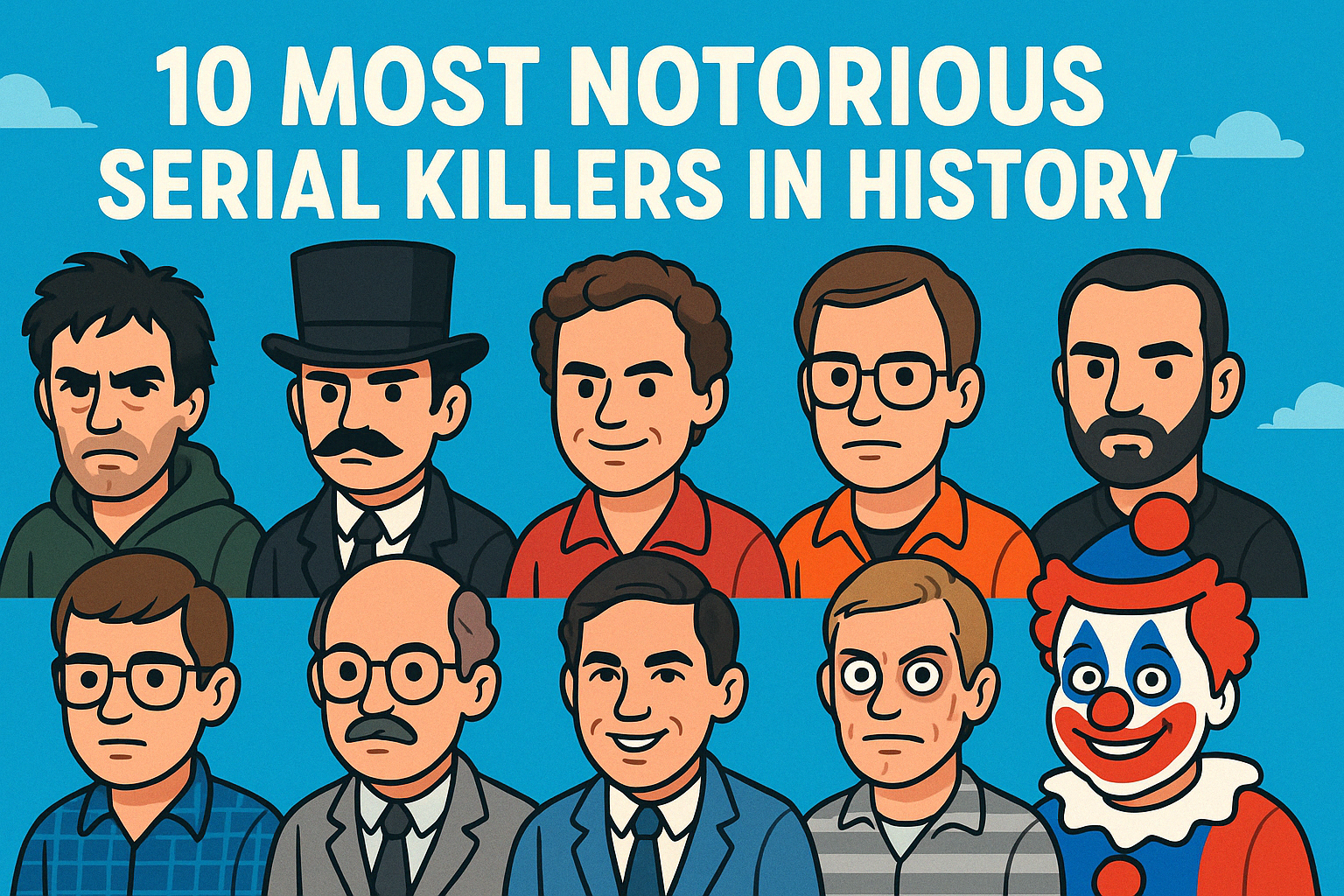
This structured home education resource includes key information on historical cases like Jack the Ripper and Harold Shipman. It also explores how law enforcement uses forensic science and psychology to track down dangerous individuals. Even though the subject is serious, the content is handled carefully to help your child think critically and ask deep questions.
You don’t need a background in psychology or criminology to use this lesson plan. Each part breaks down the information in manageable steps, using real-world examples and age-appropriate language. From understanding motives to recognising behavioural patterns, this plan encourages thoughtful learning and curiosity — not fear. With discussion questions and engaging tasks, you’ll guide your child in exploring one of history’s darkest subjects with care, clarity, and confidence.
This topic is part of our Info Zone collection. You can read the full topic, once logged in, here: 10 Most Notorious Serial Killers in History
You’ll also find a full Lesson Plan and a handy Parent Q & A sheet, for this topic, ready to use..
10 Most Notorious Serial Killers in History
This lesson plan is designed to help you support your child with this topic: 10 Most Notorious Serial Killers in History
Learning Objectives (What You’ll Learn Today)
- Identify and describe 10 of the most notorious killers in history
- Understand how forensic science and psychology help solve serial crimes
- Explore how society responds to violent crime and investigates patterns
- Develop critical thinking by asking why people commit such acts
Estimated Time
Approximately 90–120 minutes
Let’s Get Started
Ask your child: “Why do you think some criminals become well-known in history while others are forgotten?”
The Main Lesson
What is a Serial Killer?
A serial killer is someone who murders three or more people in separate incidents, often with a “cooling off” period in between. These crimes usually follow a pattern, whether in motive, method, or victim type.
Serial killers are different from mass murderers or contract killers. Their motives are rarely money — more often it’s about control, rage, or psychological obsession. Learning how to recognise these patterns is one way that law enforcement connects related cases.
Mini-Task: Make a list of other types of criminals (e.g. thief, fraudster) and compare how they are different from serial killers.
How Criminal Profilers Catch Notorious Killers
Criminal profiling is like creating a “character sketch” of a killer, based on crime scene clues. Behavioural science helps investigators predict what the person is like — their habits, age range, or even job type.
Profilers use evidence like location, method, and timing to build their profiles. These tools are especially useful when dealing with serial killers, who often follow patterns but hide in plain sight.
Mini-Task: Draw a mind map showing what kind of clues could help create a criminal profile.
Meet 5 Notorious Serial Killers
Some of the most well-known killers in history include Jack the Ripper (UK), Harold Shipman (UK), Ted Bundy (USA), John Wayne Gacy (USA), and Aileen Wuornos (USA). Each had a unique method, victim type, and motivation.
For example, Shipman used his position as a doctor to murder patients over decades. Jack the Ripper sent taunting letters to police. Gacy performed as a clown while secretly killing dozens of young men. These disturbing contrasts show how evil can hide behind normal roles.
Mini-Task: Choose one killer and write 3 bullet points: what made them dangerous, how they were caught, and what their crimes taught us.
Science Behind Solving Serial Crimes
Modern forensic science plays a big role in solving serial homicide cases. Tools like DNA testing, fingerprint analysis, and computer tracking help detectives gather reliable evidence.
Even tiny clues — a hair, a footprint, or a piece of fabric — can connect multiple crimes to the same person. As technology improves, old cases are being reopened and solved years later. These breakthroughs can finally bring closure to families.
Mini-Task: Research how DNA helped solve a real-life crime. Share your findings in 3 short sentences.
Why Do People Kill?
Understanding what drives a person to kill isn’t easy. Psychologists study childhood trauma, brain injuries, mental health, and personality disorders to find answers. But not all people with difficult lives become killers — so what’s the tipping point?
Serial killers often feel disconnected from normal emotions. Some enjoy the power of control. Others believe they’re doing something justified. These are called “rationalisations”, even if their thinking is seriously flawed.
Mini-Task: Write down 3 things that might stop someone from becoming violent — such as strong friendships or access to therapy.
Think and Discuss
- Why do you think some serial killers become famous?
- Is it right to study these criminals in detail, or should we focus more on the victims?
- How could we stop future serial killers before they act?
Wrap-Up Summary
This lesson plan has explored ten notorious killers and how they were caught. We looked at the role of forensic science, psychology, and criminal profiling — and asked why people commit such terrible crimes.
Quiz
- What is the minimum number of victims needed to be classed as a serial killer?
- True or False: Harold Shipman was a police officer.
- Which killer sent letters to the media? A) Ted Bundy B) Jack the Ripper C) John Wayne Gacy
- What is criminal profiling used for?
- True or False: All serial killers act alone.
- Name one modern forensic tool that helps solve crimes.
- Why was Gacy known as the “Killer Clown”?
- How can psychology help us understand serial killers?
- Which profession did Shipman use to hide his crimes?
- True or False: Serial killers usually kill for money.
Answers
- Three
- False
- B) Jack the Ripper
- To help identify likely traits of the killer
- False
- DNA testing
- He dressed as a clown for parties
- By studying thoughts, motives, and past trauma
- Doctor
- False
Short Essay Prompt
Write a short essay in 3 paragraphs explaining how forensic science helped solve at least one serial killer case. Include the method used and the result.
Extra Learning
Choose one serial homicide case from history and make a timeline of the key events, including the killer’s background, crimes, and how they were caught.
Final Reflection (What Did You Learn?)
Ask your child: “What part of this topic surprised you the most — and why do you think it’s important to study these crimes?”