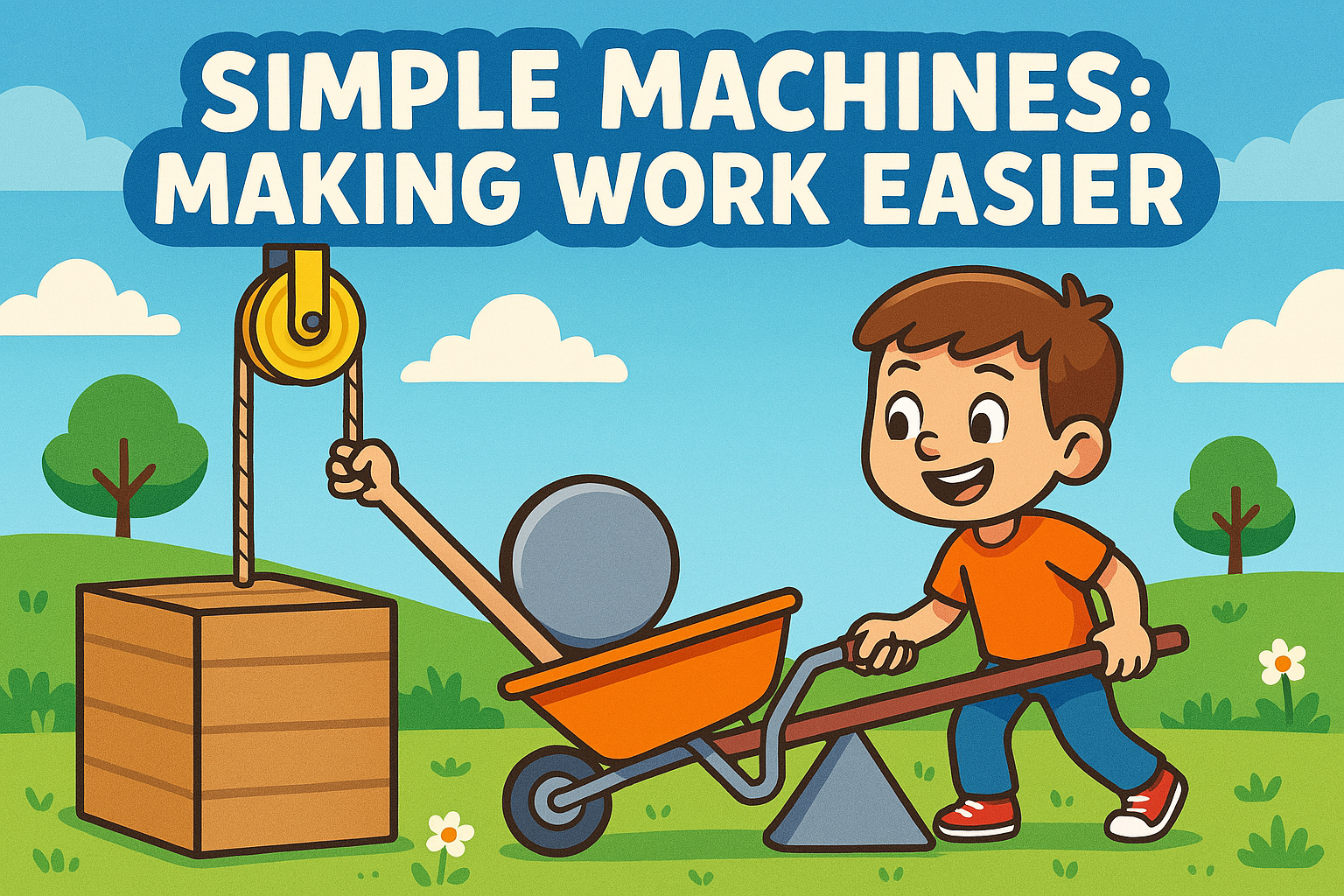
Work Smarter, Not Harder: The Science of Simple Machines Explained (Lesson Plan)
Lesson Plan - Work Smarter, Not Harder: The Science of Simple Machines Explained
Teaching physics at home can feel overwhelming, especially if you’re not confident with scientific terms. But this lesson plan makes it simple, practical, and fun. It focuses on “simple machines” – basic tools like levers, pulleys, and wheels that help us do things more easily. These machines may seem basic, but they are everywhere – from kitchen tools to playground equipment – and they help explain how we make everyday tasks easier.
This structured lesson walks you and your child through each type of simple machine in a clear, friendly way. It includes discussion ideas, creative tasks, and practical challenges suitable for children aged 8–16. You’ll learn how each machine works, where it appears in real life, and why it still matters. We explain any complex words (like “mechanical advantage”) in plain English to help you feel confident leading the session.
Even if science wasn’t your favourite subject in school, this guide gives you everything you need. From hands-on activities to deeper thinking questions, your child will be learning physics without even realising it. So, roll up your sleeves – you’re about to explore the clever world of simple machines together, all while keeping it engaging, age-flexible, and suitable for your home learning routine.
This topic is part of our Info Zone collection. You can read the full topic, once logged in, here: Work Smarter, Not Harder: The Science of Simple Machines Explained
You’ll also find a full Lesson Plan and a handy Parent Q & A sheet, for this topic, ready to use..
|
Lesson Plan Work Smarter, Not Harder – The Science of Simple Machines Explained | |
|---|---|
| Overview | This home education lesson introduces the six types of simple machines – levers, pulleys, wheels and axles, inclined planes, wedges, and screws. Children explore how these machines help us do everyday tasks with less effort. They’ll discover real-life examples, ask thoughtful questions, and engage in fun, hands-on activities that suit a wide age range. |
| Learning Objectives |
- Understand what simple machines are and how they work - Identify real-life uses of simple machines in homes and daily life - Learn key terms like “mechanical advantage” (how machines make things easier) - Develop thinking and problem-solving skills through discussion and activities |
| Estimated Time | 60–90 minutes (adjustable by age and depth of discussion) |
| Starter Activity |
Ask: “What’s the heaviest thing you’ve ever tried to lift?” Discuss different ways people make hard jobs easier (like using trolleys, ramps, or ropes). Show a toolbox or kitchen drawer and ask which items might be simple machines. |
| Read and Learn |
Read the article “Work Smarter, Not Harder – The Science of Simple Machines Explained” together or individually. Then discuss:
|
| Activities | Comprehension Questions:
Hands-On Task: Use building blocks, books, or household items to create your own simple machine (e.g., a ramp or lever). Test it out with a toy or small object. |
| Deeper Thinking | Big Question: “Could humans have built the pyramids without simple machines?” Discuss or write down your thoughts. What tools might they have used? What would have been hardest to do without machines? |
| Creative Projects |
- Design a poster explaining each type of simple machine - Write a comic strip where a superhero only uses simple machines to save the day - Invent your own tool using two or more simple machines and draw how it works |
| Review & Reflect | Ask the learner:
|
| Extensions & Homework |
- Watch a video explaining simple machines in real-life examples - Go on a “simple machine scavenger hunt” around the house and record what you find - Research the Archimedes screw or ancient building methods using levers and pulleys |