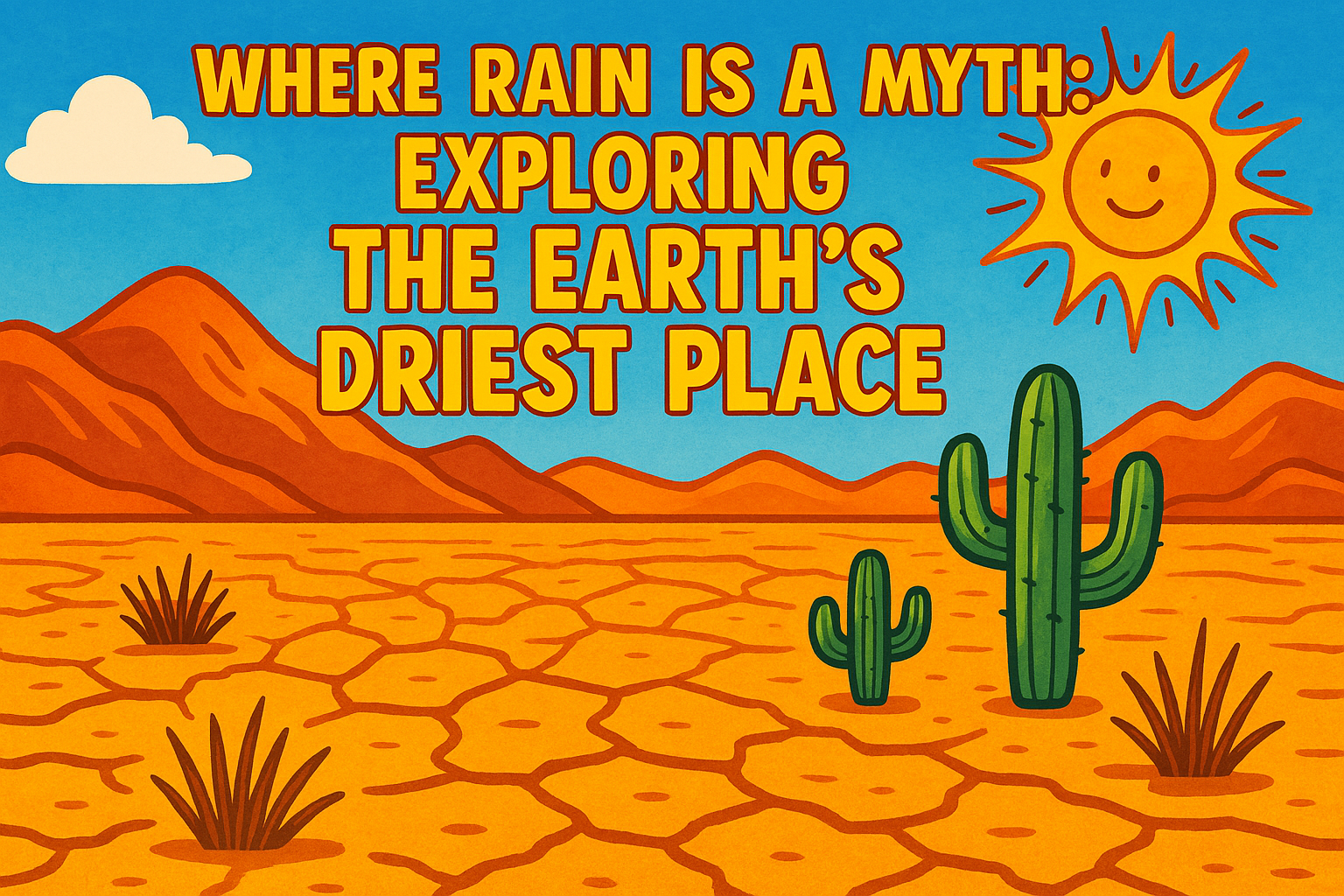
Where Rain Is a Myth: Exploring the Earth’s Driest Place
Where Rain Is a Myth: Exploring the Earth's Driest Place
This topic is part of our Info Zone collection. You can read the full topic, once logged in, here: Where Rain Is a Myth: Exploring the Earth’s Driest Place
You’ll also find a full Lesson Plan and a handy Parent Q & A sheet, for this topic, ready to use..
Where Rain Is a Myth: Exploring the Earth’s Driest Place
Imagine living in a place where it almost never rains. Not just for a few months or even a year—but for centuries! This might sound impossible, but it’s true for the Atacama Desert, the driest place on Earth. The Atacama stretches across northern Chile and is famous for its almost total lack of rain.
Some weather stations in the Atacama have never recorded a single drop of rain since they were built. The desert covers about 1,000 kilometres along the Pacific Coast, and its dry air and dusty landscapes make it look like the surface of another planet.
Scientists love to visit the Atacama because its dry conditions are like Mars. They even test space robots there to prepare them for real missions to the Red Planet! This makes the Atacama not just Earth’s driest place but one of its most important scientific sites too.
Why Is It So Dry?
So, why doesn’t it rain in the Atacama Desert? The answer is all about geography. The desert sits between two big natural barriers: the Andes Mountains and the Pacific Ocean. These work together to block the rain.
Moisture from the ocean gets stopped by the Andes Mountains, which are very tall and create a rain shadow. This means the rain can’t pass over them easily. On the other side, cold ocean currents cool the air so much that clouds don’t even form!
With no clouds and no way for moist air to get through, the Atacama Desert stays bone dry. Even when nearby places get showers, the Atacama remains thirsty and dusty, as if the rain forgot it even exists!
Life in the Desert
It might seem like nothing could live in such a dry place, but the Atacama is full of surprises. Small plants like tough shrubs and cacti have adapted to survive with almost no water at all.
Some insects, lizards, and birds also call this desert home. They have special ways of surviving. For example, some beetles collect tiny drops of water from the morning fog using their bodies!
Scientists have even found microbes—tiny life forms—that live deep underground, surviving on salt and minerals. These tiny creatures give hope that similar life might exist on Mars or other planets.
Does It Ever Rain at All?
Believe it or not, the Atacama does sometimes get rain, but it’s very rare. When it does rain, even a small shower can cause huge changes. Dry riverbeds suddenly flow with water, and seeds that have waited for years quickly bloom into colourful flowers.
This event is called a “desierto florido” or “flowering desert.” For a few short weeks, the desert is covered in pinks, purples, and yellows as plants rush to make the most of the water.
Locals and tourists often gather to see this magical transformation, knowing it might not happen again for many years. It’s like nature is throwing a rare and wonderful party!
Deserts That Are Like Aliens
Because of its extreme dryness, the Atacama Desert is one of the best places on Earth to study space. NASA and other space agencies use it to practice searching for life and testing equipment for Mars missions.
Some areas are so dry and lifeless that they closely match what scientists expect to find on Mars. They even call these parts “Mars on Earth” because of how similar they look and feel.
Experiments here have helped scientists design rovers, cameras, and scientific tools that are now exploring the Red Planet itself. Who would have thought a desert on Earth could help us study space?
People of the Atacama
Although it might seem like an impossible place to live, people have called the Atacama home for thousands of years. Indigenous groups, such as the Atacameño people, have adapted to the desert’s harsh conditions.
They built villages near water sources and learned how to grow crops using clever irrigation systems. Even today, small communities live in the desert, preserving ancient traditions and stories about their unique environment.
Tourists often visit these villages to learn about Atacama culture and how people live in the driest place on Earth. It’s a fascinating blend of history, survival, and resilience.
Is the Atacama Hot?
Many people think deserts are always hot, but that’s not entirely true for the Atacama. While it does get hot during the day, it can also be surprisingly cold at night.
With no clouds to trap the heat, the desert loses warmth very quickly after sunset. Temperatures can drop sharply, making it chilly or even freezing overnight.
So, if you ever visit, pack both sunscreen and a warm jacket! The Atacama isn’t just dry—it’s full of surprises.
Stargazing Paradise
Because of its clear skies, the Atacama Desert is one of the best places in the world to see the stars. Many observatories have been built there, taking advantage of the clean, dry air and almost no light pollution.
At night, you can see thousands of stars, the Milky Way, and even distant planets. The desert’s high altitude also helps, as you’re closer to the stars than in lower areas.
People come from all over the world just to see the night sky here. It’s like having a front-row seat to the universe!
Weird and Wonderful Facts
The Atacama Desert isn’t just dry — it’s full of strange and surprising facts. For example, some parts of the desert have gone without rain for over 500 years! That’s longer than many countries have even existed. Yet, somehow, life still manages to hang on in this harsh place.
Another strange thing about the Atacama is its soil. Scientists studying it found that it is very similar to soil on Mars. In fact, NASA has tested some of its Mars rovers right here to see if they could handle the conditions. The desert looks so much like Mars that if you saw a photo, you might not even realise it was Earth!
Also, although it is dry, the Atacama sometimes gets fog. This fog is called “camanchaca,” and it helps plants and animals survive by giving them tiny drops of water to drink. This fog is like a secret water source that many desert creatures rely on.
Where Is the Atacama Desert?
The Atacama Desert is located in South America, mainly in the country of Chile. It sits right along the Pacific Ocean, squeezed between the ocean and the Andes Mountains. This special spot is one of the reasons why it is so dry.
The cold ocean current, known as the Humboldt Current, brings cool air from the south, which prevents rain clouds from forming over the desert. At the same time, the tall Andes Mountains block moist air coming from the Amazon rainforest. Together, these forces trap the desert in a dry zone where rain struggles to arrive.
Even though it’s so dry, the Atacama is not empty. There are small towns and villages where people have learned how to live with very little water, using clever tricks to collect fog and moisture for drinking and farming.
Why Is It So Dry?
The Atacama Desert is extra dry because of a combination of natural forces. The cold Humboldt Current cools the air, which makes it hard for water to evaporate and turn into clouds. Less water in the air means fewer chances for rain.
Then there’s the Andes Mountains, which act like a giant wall. They stop warm, wet air from moving into the desert from the east. Any clouds that do make it past the ocean currents get blocked by the mountains, leaving the desert bone-dry.
Even when it does rain, it’s usually just a drizzle. In some rare years, a little more rain might fall, but this is so unusual that people talk about it for years afterwards. These rare rains sometimes cause incredible changes in the desert.
The Desert That Blooms
Believe it or not, when the Atacama does get a bit of rain, something magical happens. The desert blooms with thousands of colourful flowers! Seeds hidden deep in the dry soil suddenly spring to life, covering the desert floor in pink, purple, yellow, and white flowers.
This rare event is called the “Desierto Florido” or “flowering desert.” It usually happens once every few years, but it needs just the right amount of rain. When it does occur, people travel from all over Chile and beyond to witness this spectacular sight.
It only lasts a few weeks, but the sight of flowers stretching for miles across what is usually dry and dusty land is unforgettable. It reminds everyone that even in the harshest places, life finds a way.
Plants of the Atacama
Although the Atacama Desert looks empty at first glance, it is home to some amazing plants. These plants have special ways of surviving without much water. Some can soak up moisture directly from the fog, while others store water inside their thick leaves, like natural water bottles.
Cacti are among the most famous plants in the Atacama. Their prickly spines help protect them from hungry animals and also shade the plants from the hot sun. Some desert plants only open their flowers at night to avoid losing water in the heat of the day.
Scientists study these plants to learn more about how life can survive in extreme environments. What they discover could even help us figure out how to grow food in dry places around the world or on future space missions!
Animals of the Atacama
It might seem like animals couldn’t survive here, but many clever creatures call the Atacama Desert home. Some animals, like the viscacha, a fluffy rabbit-like rodent, are experts at hiding during the hottest parts of the day and coming out when it’s cooler.
Other animals, such as desert foxes and lizards, hunt at night when it is much cooler and safer. Some insects and birds drink water from the fog that rolls in from the Pacific Ocean, just like the plants.
These animals have all adapted to life in a place where every drop of water is precious. They have become masters of survival, showing just how tough nature can be.
People of the Atacama
People have lived in the Atacama for thousands of years. Long before modern cities, ancient people known as the Atacameños learned how to find and store water. They built stone houses, farmed in dry valleys, and traded with nearby tribes.
Today, small towns still exist in the desert, like San Pedro de Atacama. The people living there use modern and traditional methods to collect water from the fog and underground springs. Tourists visit to learn about their culture and explore the desert’s beauty.
These communities show how humans can adapt to even the harshest environments, using clever ideas to turn a dry and dusty desert into a place to call home.
Space Scientists Love the Atacama
Because the air is so dry and there is very little light pollution, the Atacama is one of the best places in the world to look at the stars. That’s why there are several giant observatories there, like the Very Large Telescope and ALMA (Atacama Large Millimeter Array).
Astronomers come from around the globe to study the night sky here. They can see planets, distant galaxies, and even stars being born. The sky above the Atacama is so clear that it almost feels like you could reach out and touch the stars.
Some scientists say the Atacama is the closest place on Earth to conditions on Mars, which is why it’s also used to test space equipment before it is sent to other planets. It’s like a real-life science lab under the stars!
How Do People Get Water?
One of the biggest challenges of living in the Atacama Desert is finding water. Since rain is so rare, people have found creative ways to collect water. One clever method is to “catch” the fog using fog nets, which are large nets that collect tiny drops of water from the air.
When the fog passes through the nets, small water droplets stick to them and drip down into tanks, where people can collect the water for drinking, cooking, and farming. This amazing idea has helped many communities get the water they need.
Some places also use underground water that collects in natural springs. Even in such a dry place, people have found ways to make the most of the little water they can find.
Why Scientists Study the Atacama
Scientists from all over the world come to the Atacama Desert to study how plants, animals, and people survive in such an extreme place. They hope to learn important lessons about climate change, drought, and even how to grow food in deserts.
Because the desert is so similar to Mars, scientists also study it to prepare for space missions. They test robots, rovers, and spacesuits here, and practise exploring just like astronauts will one day do on Mars.
Studying the Atacama can help us understand how life might survive on other planets and how humans can cope with harsh conditions here on Earth as climates change.
What Makes the Atacama Special?
The Atacama Desert is special not just because it’s dry, but because it shows how strong and clever life can be. Plants, animals, and people all find ways to survive even when it seems impossible.
It is also special because of its beauty. The desert landscapes are stunning, with salt flats, colourful rock formations, and valleys that glow red and orange at sunset. At night, the sky is packed with stars, shining brighter than almost anywhere else on Earth.
Visitors to the Atacama often say they feel like they’ve stepped onto another planet. It’s a place full of surprises, mysteries, and lessons about survival.
Would You Survive in the Atacama?
Could you live in a place where it almost never rains? In the Atacama, people have learned how to survive by working with nature instead of against it. They use fog nets, store water, and grow special plants suited for dry conditions.
Animals and plants have also found clever ways to survive. From cactus plants that store water like sponges to foxes and rodents that hide from the heat, everyone has a survival trick.
It might be hard, but with some creativity and teamwork, people have shown that life is possible even in one of the toughest places on Earth.
Why We Should Care About the World’s Driest Places
Dry places like the Atacama Desert might seem far away and empty, but they are important to our planet. They teach us about how life adapts and show us the effects of climate change and droughts.
Scientists use the Atacama to test equipment that might one day help us explore other planets, including Mars. The people who live there inspire others by showing how we can work with nature instead of fighting it.
By learning about deserts, we also learn more about the challenges people face in dry parts of the world and how we can help them by protecting the environment and sharing ideas.
What Do You Remember?
- 1. Why is the Atacama Desert so dry?
- 2. What is special about the desert’s soil?
- 3. How do plants and animals get water in the Atacama?
- 4. What happens when it does rain in the Atacama?
- 5. Why do scientists like to study the Atacama Desert?
Write your answers in the comment section below.
Related Topics
If you enjoyed learning about the Atacama Desert, you might also like to read about other deserts like the Sahara, or explore more about Mars and space exploration. Deserts are full of fascinating secrets, and so is space!
Learn more
What Do You Think?
If you found this to be an interesting topic, why not have your say. Or if you can think of ways we could improve it. We would love to know what you learned and more importantly, what you think. So now is your chance, use the comments section below to let us know your thoughts.