
Understanding Forces and Motion in Everyday Life
Understanding Forces and Motion in Everyday Life
Some prisons around the world are so dangerous that even the guards are scared! From overcrowding and gangs to harsh punishments and daring escapes, these prisons are not the kind of places you’d want to end up. Let’s explore ten of the deadliest prisons you’ll be glad you only read about!
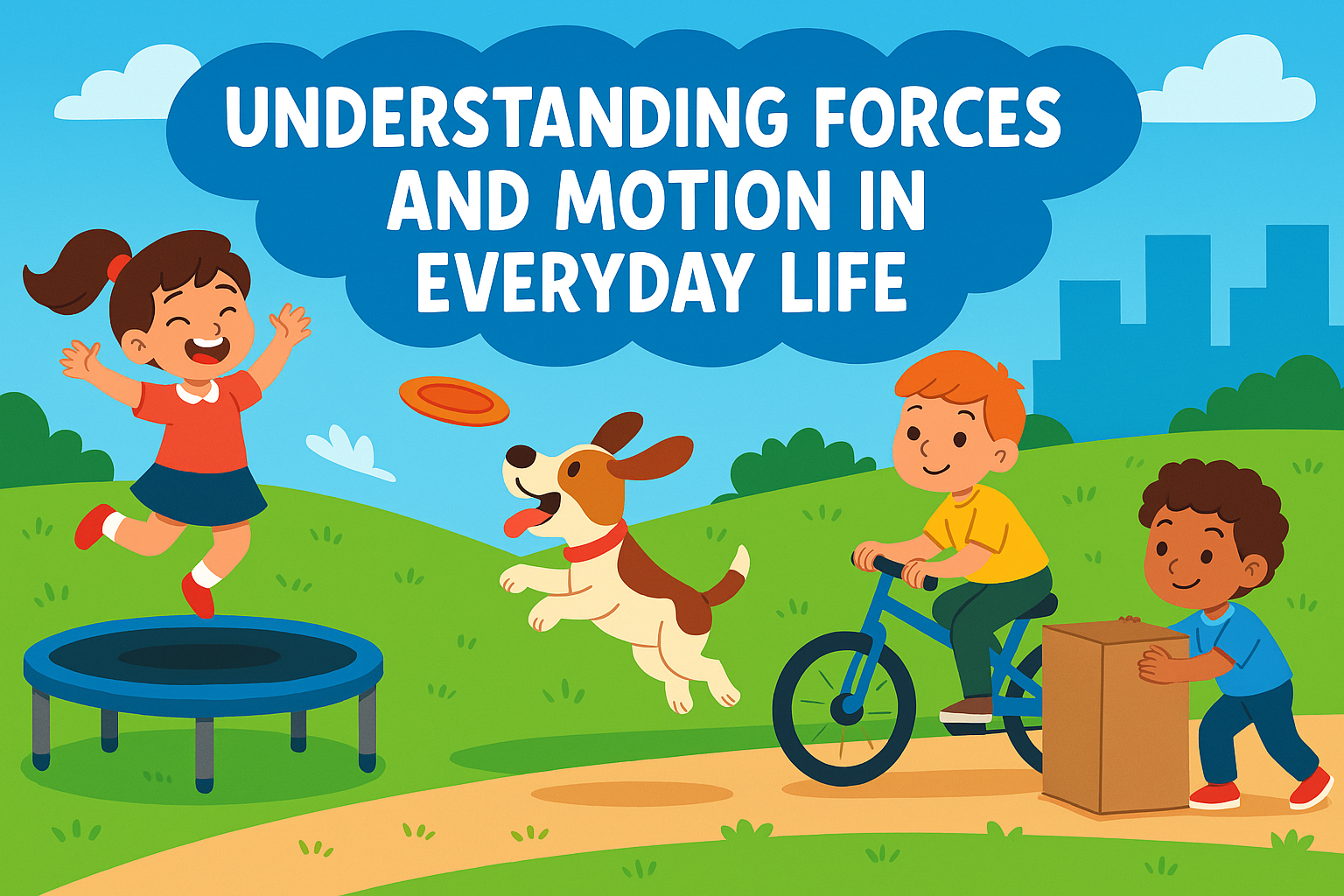
This topic is part of our Info Zone collection. You can read the full topic, once logged in, here: Understanding Forces and Motion in Everyday Life
You’ll also find a full Lesson Plan and a handy Parent Q & A sheet, for this topic, ready to use..
What Are Forces and Why Do They Matter?
Forces are simply pushes or pulls. You use them every single day, even if you don’t realise it. When you open a door, you’re using a force. When you kick a ball, you’re also using a force. These actions change how objects move or stop. That’s why forces are important—they control the world around us!
A force can make an object start moving, stop moving, change direction, or change shape. Without forces, nothing would move at all! Imagine trying to get out of bed without being able to push the blankets away. Sounds tricky, doesn’t it?
There are different types of forces, like gravity, friction, and air resistance. Some forces need contact—like when you push a trolley. Others, like gravity, work from a distance. Learning how these forces work helps us understand everything from sports to building rollercoasters.
Understanding forces and motion in everyday life gives us power—power to design, create, and even stay safe. It’s science that’s super useful in real life!
So let’s dig into the forces behind everything you do. Get ready for a journey filled with pushing, pulling, sliding, and zooming!
Gravity: The Force That Keeps You Grounded
Gravity is the force that pulls objects towards each other. On Earth, gravity pulls everything towards the ground. It’s why apples fall from trees and why you don’t float away when you jump.
This invisible force was famously studied by Isaac Newton when he saw an apple fall from a tree (no, it didn’t hit his head, that’s just a myth!). He realised that the same force keeping us on the ground also keeps the Moon orbiting the Earth.
Gravity affects everything around you. It gives you weight, keeps water in rivers, and even controls how planets move in space. The more mass something has, the stronger its gravity.
If the Earth suddenly had no gravity, we’d all fly off into space like balloons. Thank goodness for gravity, even if it sometimes makes us trip and fall!
Understanding gravity helps us build planes, rockets, and even playground slides. It’s a force you can’t see, but you feel it all the time.
Friction: The Force That Slows Things Down
Friction is the force that tries to stop things from moving. It happens when two surfaces rub against each other. Without it, you’d slide across the floor like a penguin on ice!
Think about when you try to slide across a carpet. It’s much harder than sliding on a wooden floor. That’s because the carpet creates more friction.
Friction can be helpful. It helps your shoes grip the ground so you don’t slip. It also stops your bike when you press the brakes. But sometimes we want to reduce friction—like when we use oil in a car engine or wear smooth sports gear.
Understanding friction is key in designing things like shoes, tyres, and sports surfaces. Too much friction slows you down. Too little, and you might fall!
So the next time you stop your scooter or rub your hands to get warm, thank friction for helping out!
Types of Motion: How Things Move
Motion means movement, and things can move in different ways. Some things move in straight lines, like a train. Others spin in circles, like a wheel. And some bounce around, like a football.
There’s linear motion (straight line), circular motion (like a merry-go-round), and oscillating motion (like a swing). Each type of motion has different rules.
When you’re on a swing, you’re moving back and forth. That’s oscillating motion. When a car goes around a roundabout, that’s circular motion. And when you run across the field—that’s linear!
Understanding different types of motion helps engineers design rides at theme parks, plan car routes, and build safer roads.
Next time you’re moving, try to spot what kind of motion you’re doing. It’s more fun than you think!
Balanced vs Unbalanced Forces
Forces can be balanced or unbalanced. Balanced forces mean nothing moves. Unbalanced forces cause motion. It’s that simple!
If you push on a wall and it doesn’t move, that’s because your push is balanced by the wall’s resistance. But if you push a box and it slides, that’s unbalanced.
When you’re sitting still, the forces on your body are balanced. Gravity pulls you down, and the chair pushes you up. But when you stand, walk, or jump, unbalanced forces are at work!
Unbalanced forces are how we start and stop things. Runners push off the ground to move forward. A football slows down because of friction—another unbalanced force.
So the next time something moves or stays still, ask yourself: are the forces balanced or unbalanced?
Inertia and Newton’s First Law
Isaac Newton had three famous laws of motion. His first law is all about inertia. That’s a fancy word for saying things like to keep doing what they’re already doing.
If something is still, it stays still—unless a force acts on it. If it’s moving, it keeps moving—again, unless something stops it.
For example, if your bike hits a rock, it stops—but *you* keep moving and fly over the handlebars! That’s inertia in action (and why helmets are important!).
Newton’s First Law helps explain why seatbelts are needed in cars. Your body wants to keep moving, even if the car stops suddenly.
Inertia affects everything from footballs to shopping trolleys. So don’t forget: objects love to stay how they are—until a force makes them change!
Everyday Forces in Action
Forces are all around you, every single day. When you jump on a trampoline, lift your backpack, or throw a ball, you’re using forces.
Even brushing your teeth involves motion and force. The brush moves because your hand applies a force. The harder you push, the more cleaning you do (but don’t go too hard—ouch!).
Have you ever tried to open a stubborn jam jar? That’s friction and grip at work. When you ride your bike uphill, you’re pushing against gravity. Downhill? Gravity helps you zoom!
Understanding forces and motion in everyday life makes us more aware of how we move and interact with the world.
Next time you’re building Lego, stacking blocks, or jumping on the bed—think about the science behind your fun!
Forces and Transport
Transport is all about motion, and motion needs forces. Cars, trains, planes, and bicycles all move because of applied forces.
Engines produce force to move vehicles forward. Brakes use friction to slow them down. Even wings on planes use air resistance and lift—forces that help them fly!
Designers and engineers carefully balance forces to make transport safe and fast. Too much drag? The vehicle slows down. Too little grip? It might skid!
That’s why sports cars are shaped to reduce air resistance. And bike tyres are made to grip the road, not slide around like socks on a kitchen floor!
Next time you’re in a car or train, look around. Can you spot the forces at work?
A Final Thought
Forces and motion aren’t just school topics—they’re part of your everyday life. The more you understand them, the more you’ll notice them in action. From tiny insects crawling on walls to rockets heading into space, forces are always at play. So next time you move, stop, or slide—remember, science is behind it all!
What Do You Remember?
- What are the two main types of forces?
- How does friction help you when walking?
- What does Newton’s First Law say?
- What is the difference between balanced and unbalanced forces?
- Can you name one example of circular motion in everyday life?
Write your answers in the comment section below
Related Wikipedia Links
Want to learn more about how science explains the way we move?
What Do You Think?
Can you think of a time when understanding forces and motion helped you solve a problem or stay safe? Share your thoughts in the comments!