
The Sinking of the Titanic and the Wreck That Remains (Q&A)
Q & A - The Sinking of the Titanic and the Wreck That Remains
The Titanic parent Q&A is designed to help you answer the tricky questions that might come up when learning about this famous maritime disaster. Whether your child is asking how such a massive ship could sink, why it happened so fast, or what happened to the people onboard, this page offers straightforward answers you can use at home.
We know it can be tough to explain complex topics like buoyancy, water pressure, and cold shock without a science background. This Parent Q&A page is here to support you, with clear explanations in plain English — no jargon, no lectures. Everything’s been broken down in a way that makes sense and relates to real-world situations. There’s also a complete lesson plan available if you want to explore the topic in more depth.
Understanding how and why the Titanic sank matters because it shows how science, design, and human decisions all come together — sometimes with tragic results. It’s not just history. It’s also a way to talk about safety, consequences, and how we learn from mistakes. This parent Q&A page will give you the confidence to guide your child through thoughtful conversations and spark curiosity that lasts long after the lesson ends.
This topic is part of our Info Zone collection. You can read the full topic, once logged in, here: The Sinking of the Titanic and the Wreck That Remains
You’ll also find a full Lesson Plan and a handy Parent Q & A sheet, for this topic, ready to use..
Tip for Parents: Don’t worry if your child’s questions seem challenging — this page gives you straightforward answers in plain English. Use it as a conversation guide rather than a script.
What exactly caused the Titanic to sink?
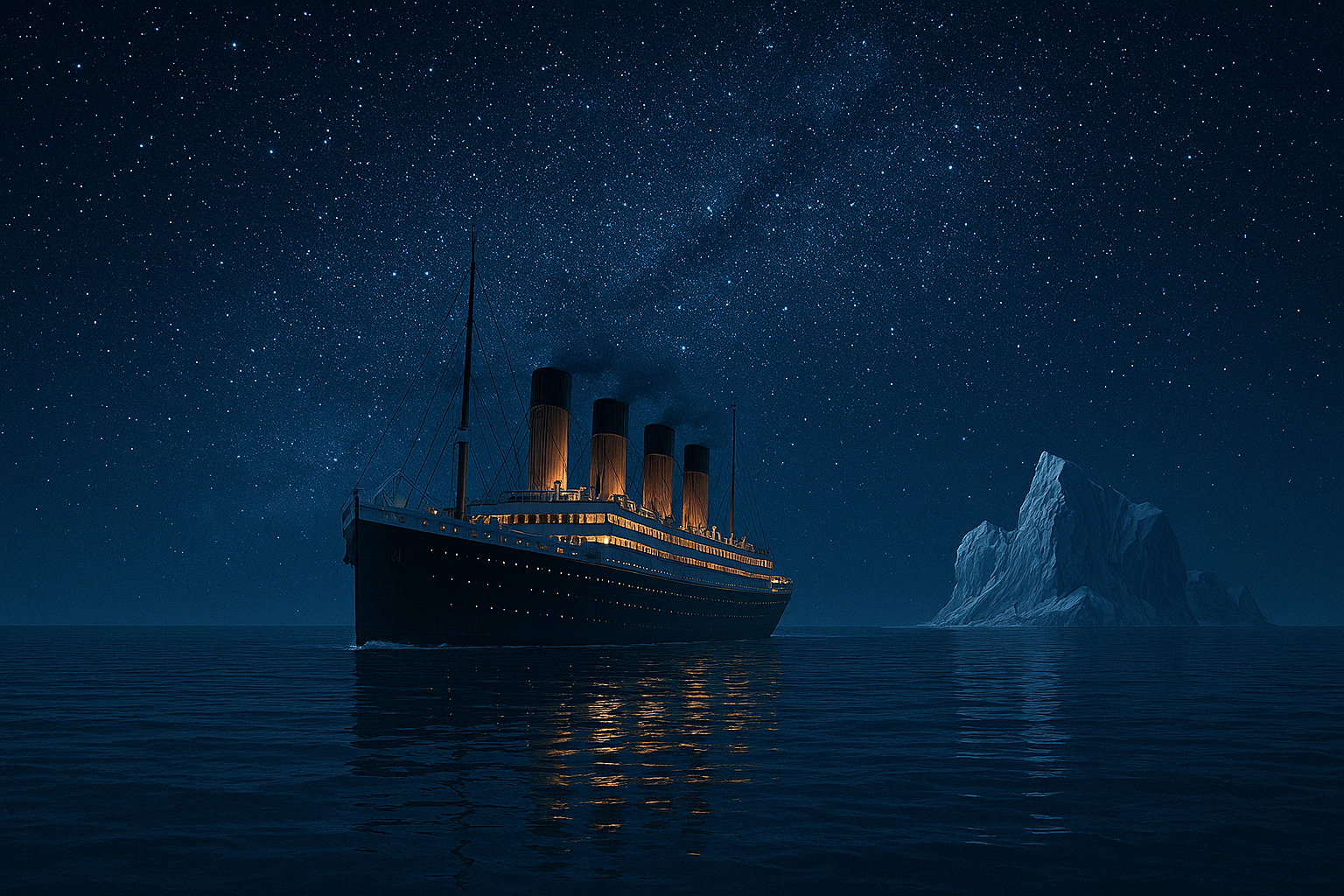
The Titanic hit an iceberg that tore open several of its watertight compartments. Water flooded in, the front of the ship dipped lower, and the back eventually rose out of the water and broke apart. It wasn’t just the iceberg — design choices and safety oversights also played a role.
Was the Titanic really “unsinkable”?
No ship is truly unsinkable. That phrase was used by some people before the voyage, but not officially by the shipbuilders. The Titanic was well-built, but key safety features — like enough lifeboats — were missing. Many believed it was safer than it actually was.
Why didn’t they avoid the iceberg?
The lookout didn’t spot the iceberg in time. It was a moonless night with very calm seas — no waves were breaking around the iceberg to make it stand out. Plus, the lookout didn’t have binoculars because they’d been accidentally locked away.
How cold was the water and why was that so dangerous?
The water was around -2°C (that’s below freezing, but salt water doesn’t freeze as easily). At that temperature, people lost the ability to swim or hold on to anything within minutes. Most died from cold shock and hypothermia, not drowning.
Why weren’t all the lifeboats used properly?
The Titanic had only 20 lifeboats — enough for about half the people onboard. Some boats were launched half full, either because of confusion or because they were planned to be filled from gangway doors lower down. Sadly, the ship tilted too fast for that to work.
Were third-class passengers trapped?
No, they weren’t locked in. But many third-class passengers had trouble finding their way to the upper decks, especially families with young children. Language barriers and confusing signs made things harder for some.
Did the captain do anything wrong?
Captain Edward Smith was highly experienced. Some say he ignored ice warnings, but others believe he trusted his officers and followed normal procedures. He stayed on the ship until the very end and was seen helping people to safety. His body was never found.
What happened to the Titanic’s owner?
J. Bruce Ismay was the chairman of the company that owned the Titanic. He survived by getting into a lifeboat after helping others. He was criticised afterwards, even though he didn’t break any rules. Public opinion turned against him.
Who was Thomas Andrews?
He was the ship’s designer and was on board for the voyage. He helped organise the evacuation and encouraged people to get into lifeboats. He was last seen on deck, not trying to save himself. Survivors remembered him as calm and heroic.
How deep is the Titanic now?
The wreck lies about 3,800 metres (nearly 2.4 miles) under the sea. That’s deeper than most submarines can go. The pressure at that depth is enormous — enough to crush most materials instantly if not designed to handle it.
Can the Titanic be brought back up?
No. The wreck is too fragile and too deep. Over time, bacteria have been eating away at the metal. It’s now slowly disintegrating, and experts believe it could collapse completely in a few decades.
Did the disaster change anything?
Yes. After the Titanic sank, new maritime safety laws were introduced. Ships had to carry enough lifeboats for everyone, run regular drills, and have 24/7 radio watch. These changes have saved lives ever since.
Is the wreck protected today?
Yes. The Titanic site is protected by international agreements. Scientists and historians study the wreck using remotely operated vehicles, but no one is allowed to remove items or damage the site.
Why does the Titanic story still matter?
It’s not just a sad story — it’s a powerful example of what happens when science, engineering, and human behaviour collide. It’s also about bravery, mistakes, and learning from the past. That’s why people are still fascinated by it over 100 years later.
Where can I learn more?
This Parent Q&A is based on our full topic page here: The Sinking of the Titanic and the Wreck That Remains. You can also explore museums, documentaries, or use the lesson plan if you’d like to take it further.
Final Question to Ask Your Child
What do you think people should have done differently — and how would YOU have helped if you were there?