Cloud Weight: The Surprising Science (Q&A)
Q & A - Cloud Weight: The Surprising Science
Have you ever looked up at the sky and wondered how something as soft-looking as a cloud can weigh anything at all? It’s a great question – and actually, the answer might surprise you. Clouds may look light and fluffy, but they can weigh hundreds of tonnes. This Parent Q&A sheet is designed to help you feel confident answering these kinds of questions at home, using clear language and practical explanations that make sense – even if science wasn’t your strongest subject in school.
This topic helps children understand some big ideas in physics and weather, like mass, gravity, and how water moves through the air. You don’t need any special equipment or science knowledge. Just a bit of curiosity and some conversation. These question-and-answer pairs will walk you through the main facts in plain English, with helpful tips and real-world examples.
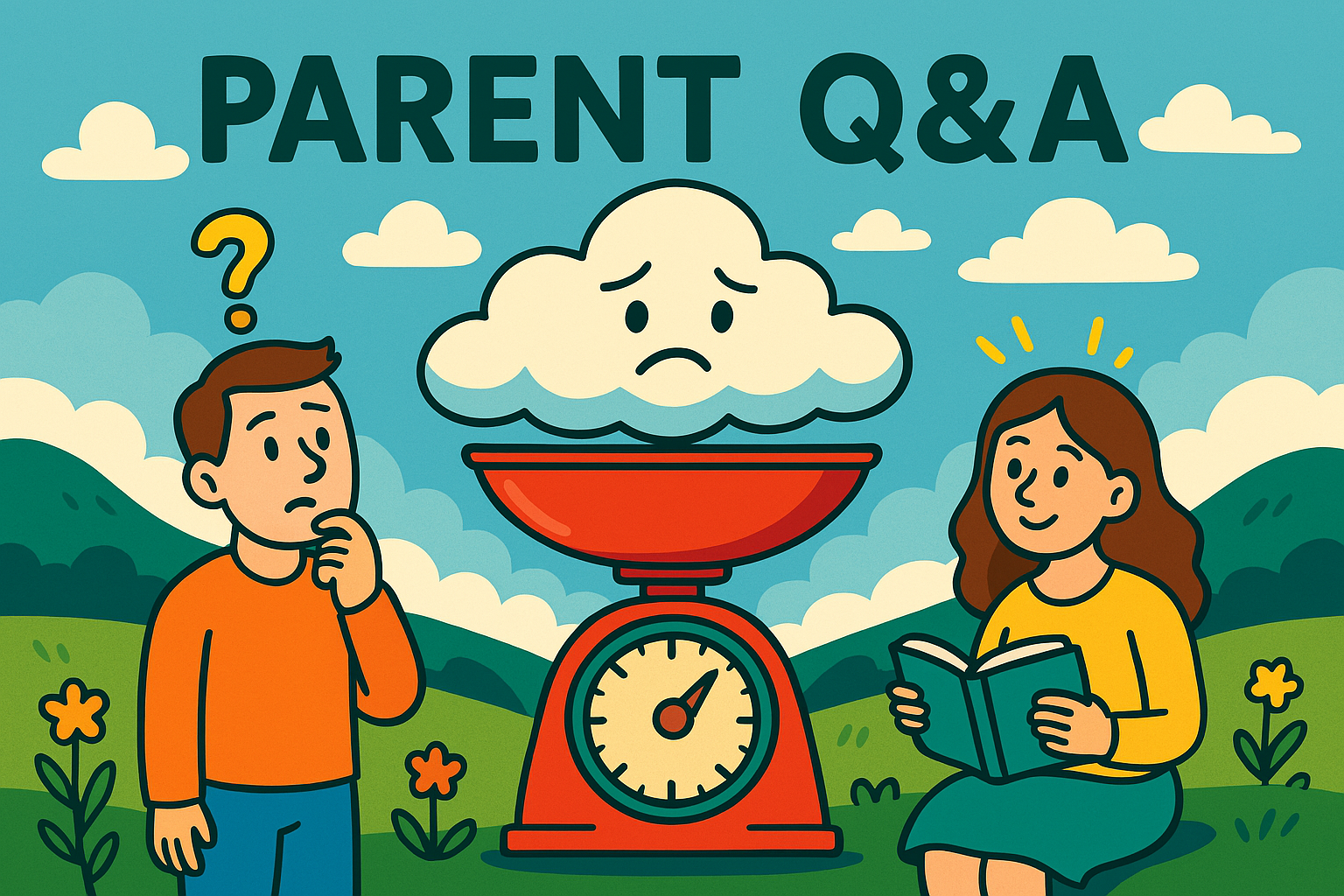
It also gets your child thinking beyond the facts – asking why clouds float, what keeps them in the sky, and how something that heavy doesn’t crash down on our heads. And if you’d like to take it further, we also offer a lesson plan to go with this topic. But if you’re just here to answer your child’s questions, you’re in exactly the right place.
This topic is part of our Info Zone collection. You can read the full topic, once logged in, here: Cloud Weight: The Surprising Science
You’ll also find a full Lesson Plan and a handy Parent Q & A sheet, for this topic, ready to use..
[cl_logged_in]
Tip for Parents
It’s okay to say “I don’t know, let’s find out together.” This sheet is here to help you explain the surprising science behind cloud weight in a way that feels natural and simple at home.
[br][br]
What does “cloud weight” mean?
It means the total mass of all the water droplets or ice crystals in a cloud. Even though clouds float, they can weigh hundreds of thousands of kilograms.
[br][br]
How can something so heavy float?
Clouds are made of tiny droplets spread far apart. They fall slowly, but warm air rising from the ground pushes them back up – a bit like steam in a kettle.
[br][br]
What are clouds made of?
They’re made of water droplets or ice crystals. These form when water vapour (invisible gas) cools and turns back into liquid or solid.
[br][br]
What is the average cloud weight?
A typical cumulus cloud – the fluffy kind – can weigh over 500,000 kilograms. That’s about the same as 100 elephants or a jumbo jet!
[br][br]
Do all clouds weigh the same?
No. Different clouds have different densities (how packed the droplets are) and sizes. Big storm clouds can weigh even more.
[br][br]
How do scientists measure cloud weight?
They estimate the mass of clouds by using the average water content, size, and density of a cloud. It’s all calculated using weather data and maths – not with scales!
[br][br]
Why don’t clouds fall?
Because the droplets are tiny and spaced out. They fall slowly, but air resistance and rising warm air keep them floating – until they get too heavy.
[br][br]
What makes a cloud rain?
When cloud droplets bump into each other, they grow. Once they’re too heavy to stay up, they fall as rain. That’s when cloud weight really matters.
[br][br]
What happens to the cloud’s weight after it rains?
The cloud becomes lighter because it’s released some of its water. But it might refill if more water vapour rises and condenses again.
[br][br]
Can we see how heavy a cloud is just by looking?
Not exactly. But darker, thicker clouds often hold more water. That means they’re denser and heavier – and more likely to rain soon.
[br][br]
Do different types of clouds weigh different amounts?
Yes! High, wispy cirrus clouds weigh much less than low, thick cumulonimbus clouds (which can be full of water and very heavy).
[br][br]
Does cloud weight affect the weather?
Definitely. Heavy clouds often lead to rain, storms, or snow. Lighter clouds usually mean calm weather or sunshine.
[br][br]
Why is cloud weight important in science?
It helps us understand the water cycle, weather patterns, and even climate change. Knowing how heavy clouds are can also improve weather predictions.
[br][br]
What would happen if clouds didn’t float?
If clouds didn’t float, rain would fall constantly or suddenly in dangerous bursts. Luckily, nature has balance – and air helps support cloud weight until it’s time to rain.
[br][br]
Can cloud weight ever be dangerous?
Yes, in some ways. Extremely heavy clouds can lead to flash floods or storms. That’s why scientists monitor cloud density and rain potential closely.
[br][br]
How does cloud weight relate to the water cycle?
Cloud weight is part of how water moves through the air and back to Earth. It’s a key stage between evaporation and precipitation (falling rain).
[br][br]
What’s one easy way to explain cloud weight to a child?
Say this: “Imagine lots of tiny drops of water floating in the sky – even though each one is small, they all add up!”
[br][br]
[/cl_logged_in]
[cl_logged_out]
Members Only
You need to be registered and logged in to access this Q and A sheet and all other learning resources, games and quizzes.
[/cl_logged_out]

