Hello Alan Lloyd - Your Scores - Logout

Frost Fairs on the River Thames: How, Why?

Frost Fairs on the River Thames: How, Why?

Hundreds of years ago, the River Thames sometimes froze so solid that people held huge winter festivals right on the ice! These were called Frost Fairs and had stalls, games, and even dancing. Find out why the Thames froze, what people did at these icy fairs, and why they stopped happening. Discover the chilly but exciting history of London’s coolest winter events!
This topic is part of our Info Zone collection. You can read the full topic, once logged in, here: Frost Fairs on the River Thames: How, Why? You’ll also find a full Lesson Plan and a handy Parent Q & A sheet, for this topic, ready to use..

The Mighty River Thames and the Little Ice Age

The River Thames is one of the most famous rivers in the world. It flows right through London and has been important for transport, trade, and life in Britain for centuries.

But did you know that in the past, the river sometimes froze solid during winter? This happened during a time known as the Little Ice Age, which lasted from about the 1300s to the 1800s. The weather was colder than usual across Europe, and the Thames often turned into a giant sheet of ice.

However, it wasn’t just the colder temperatures that caused the river to freeze. Back then, the old London Bridge had lots of narrow arches and wooden supports that slowed the water, making it easier to freeze. Combine that with bitter winters, and you had the perfect recipe for a frozen river.


What Exactly Were Frost Fairs?

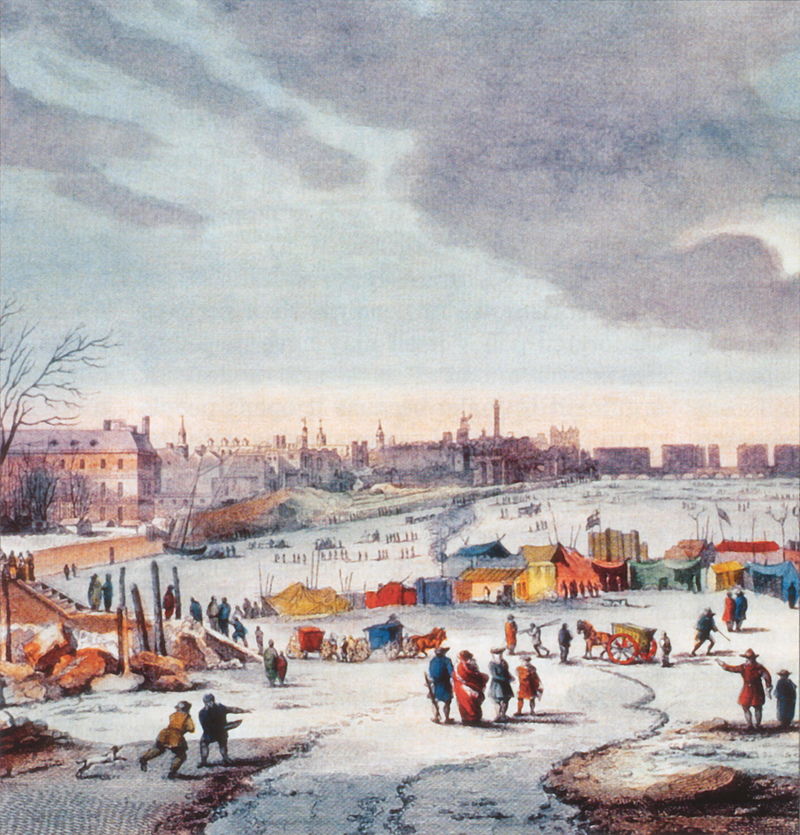
Frost Fairs were like giant winter carnivals held on the frozen River Thames. When the ice was thick and strong enough, people would set up tents, stalls, and even little shops directly on top of the ice! These fairs were packed with fun activities.

People skated, played games, watched puppet shows, and even rode on sledges pulled by horses. You could buy hot food like roasted chestnuts and gingerbread, get your name printed on a special Frost Fair souvenir, and even dance to music right there on the ice.

Some brave people even cooked meat on open fires on the frozen river! It might sound risky, but they knew how to test the ice carefully before inviting the crowds.


How Did People Know When the River Was Safe?

People in the past were careful when it came to frost fairs. Before opening the fair, locals and organisers would test the ice by drilling small holes to check its thickness. If it was less than six inches thick, they wouldn’t dare hold a fair.

When it reached eight inches or more, it was considered safe for stalls and crowds. Once the news spread that the ice was ready, Londoners would flood onto the frozen river to join the fun.

Can you imagine getting a message from a friend saying, “Meet me on the river for some ice-skating and gingerbread!”?


What Did You Find at a Frost Fair?

Frost Fairs had all sorts of exciting stalls and attractions. Some people sold books and printed special souvenirs called Frost Fair Cards, which were like early versions of postcards.

There were stalls selling food like pies, hot drinks, and sweets to keep everyone warm and happy. Puppet shows and plays entertained young and old alike, while jugglers and street performers wowed the crowds.

You could even find blacksmiths setting up temporary forges right on the ice to make small metal trinkets. The most daring stallholders cooked food directly over open fires, which seems dangerous today, but they knew what they were doing!


Did People Really Dance on the Ice?

Yes, they did! Music was a big part of Frost Fairs. People brought fiddles, drums, and other instruments to play cheerful tunes.

Dancing in thick coats, hats, and scarves became part of the fun. Some fairs even had proper dance floors made from wooden boards laid on the ice to stop people slipping too much. Imagine dancing with friends under the open winter sky, with the icy river beneath your feet and the sound of laughter and music all around. It must have felt magical, but also a bit chilly!


Were Frost Fairs Safe?

While most Frost Fairs were safe and well-planned, there were risks. If the weather suddenly warmed up or if too many people gathered in one spot, cracks could form in the ice.

There were some accidents, and sadly, a few people did fall into the freezing water. This is why people had to be very careful, especially near the edges or if they heard the dreaded sound of cracking.

Despite these dangers, Frost Fairs were remembered fondly by those who attended, and people were usually sensible enough to spot the warning signs before disaster struck.


The Strange Things Sold at Frost Fairs

Some of the items sold at Frost Fairs were quite unusual. One popular souvenir was having your name or a short poem printed on a piece of paper using a printing press set up right on the ice.

These prints became treasured keepsakes. Some stallholders even sold frozen birds, fish, and small animals as curiosities, showing how strange and fascinating the fairs could be.

You could also buy handmade toys, simple jewellery, and even mini ice sculptures. People loved bringing home a little reminder of their day on the frozen Thames.

A Place for Everyone

Frost Fairs were special because people from all walks of life joined in. Rich and poor, young and old, everyone shared the fun. Kings and queens even visited some of the fairs! In 1684, King Charles II himself went to one.

For many Londoners, it was a rare chance to take a break from the hardships of winter and enjoy time together. Even traders and craftsmen who usually worked on land loved setting up stalls on the icy river. It felt like the whole city turned out to make the most of the frosty weather.

Why Did Frost Fairs Stop Happening?

You might be wondering why we don’t have Frost Fairs today. The answer is a mix of climate change and engineering. The Little Ice Age came to an end during the 1800s, and winters became less harsh.

Also, the old London Bridge was replaced in the 1830s with a newer design that allowed the river to flow faster, making it harder to freeze. As winters got milder and the river kept flowing more freely, the

Thames simply stopped freezing over thick enough for Frost Fairs to be safe. The last proper Frost Fair happened in 1814, and after that, it was too risky to hold them again.


What Was the Most Famous Frost Fair?

The most famous Frost Fair happened during the winter of 1683-1684, one of the coldest winters ever recorded in Britain. The Thames froze for about two months, and a massive Frost Fair took place.

There were all the usual stalls, shows, and activities, but this fair was so big it even had an ox roast — yes, they roasted a whole ox on the ice!

This fair became legendary, and people talked about it for many years afterwards. Even today, historians still find stories, paintings, and old prints showing how incredible it was.


Ice Printing: The Coolest Souvenir

One of the most talked-about features of the Frost Fairs was the printing press on the ice. It wasn’t just for fun — it was a clever way to make money!

People paid to have their names, poems, or little messages printed on paper marked with the date of the fair. Some of these printed souvenirs still survive today in museums. Imagine holding a slip of paper that says “Printed on the Ice, River Thames, 1684.” What a cool bit of history to show your friends!


Were There Frost Fairs Anywhere Else?

Believe it or not, it wasn’t just the Thames that froze during the Little Ice Age. Other rivers and lakes across Britain and Europe sometimes froze solid too, and people would occasionally hold smaller frost fairs or winter markets.

But none of them were as famous, as large, or as well-remembered as the Thames Frost Fairs. London’s frost festivals were truly one of a kind, drawing huge crowds and creating lasting memories for those who went.


The End of an Icy Era

As the Little Ice Age ended, Londoners had to say goodbye to their beloved Frost Fairs. The river no longer froze solid, and the new bridge made sure the water flowed too quickly to ice over safely. However, the stories, paintings, and souvenirs from those chilly days on the frozen Thames remain.

They remind us of a time when Londoners turned winter into something magical, fun, and full of community spirit. Today, some winter fairs and markets try to capture a little bit of that Frost Fair feeling, but nothing will ever be quite the same as skating, dancing, and shopping on the actual River Thames!


What Do You Remember?

  1. What was the Little Ice Age, and how did it help create Frost Fairs?

  2. Name three activities people enjoyed at Frost Fairs.

  3. Why was the old London Bridge important for the Thames freezing?

  4. What was one of the most famous souvenirs you could buy at a Frost Fair?

  5. Why don’t Frost Fairs happen on the Thames anymore?

Write your answers in the comment section below.


Related Topics

If you enjoyed learning about the Frost Fairs, you might also like to discover more about the history of the River Thames, how people survived the Little Ice Age, or how London’s bridges changed the city. These topics will help you explore more about how people adapted to freezing weather and how life in London has changed over the centuries.

Learn more:


What Do You Think?

If you found this to be an interesting topic, why not have your say. Or if you can think of ways we could improve it. We would love to know what you learned and more importantly, what you think. So now is your chance, use the comments section below to let us know your thoughts.


Leave a comment


'; // Add header content for print html += '

Lenara Learning

Get more learning resources at www.lenara.uk

'; // Insert the worksheet content html += '
' + content + '
'; html += ''; printWindow.document.write(html); printWindow.document.close(); printWindow.focus(); // Trigger printing and auto-close the popup printWindow.print(); printWindow.onafterprint = function() { printWindow.close(); }; setTimeout(function() { printWindow.close(); }, 1500); }