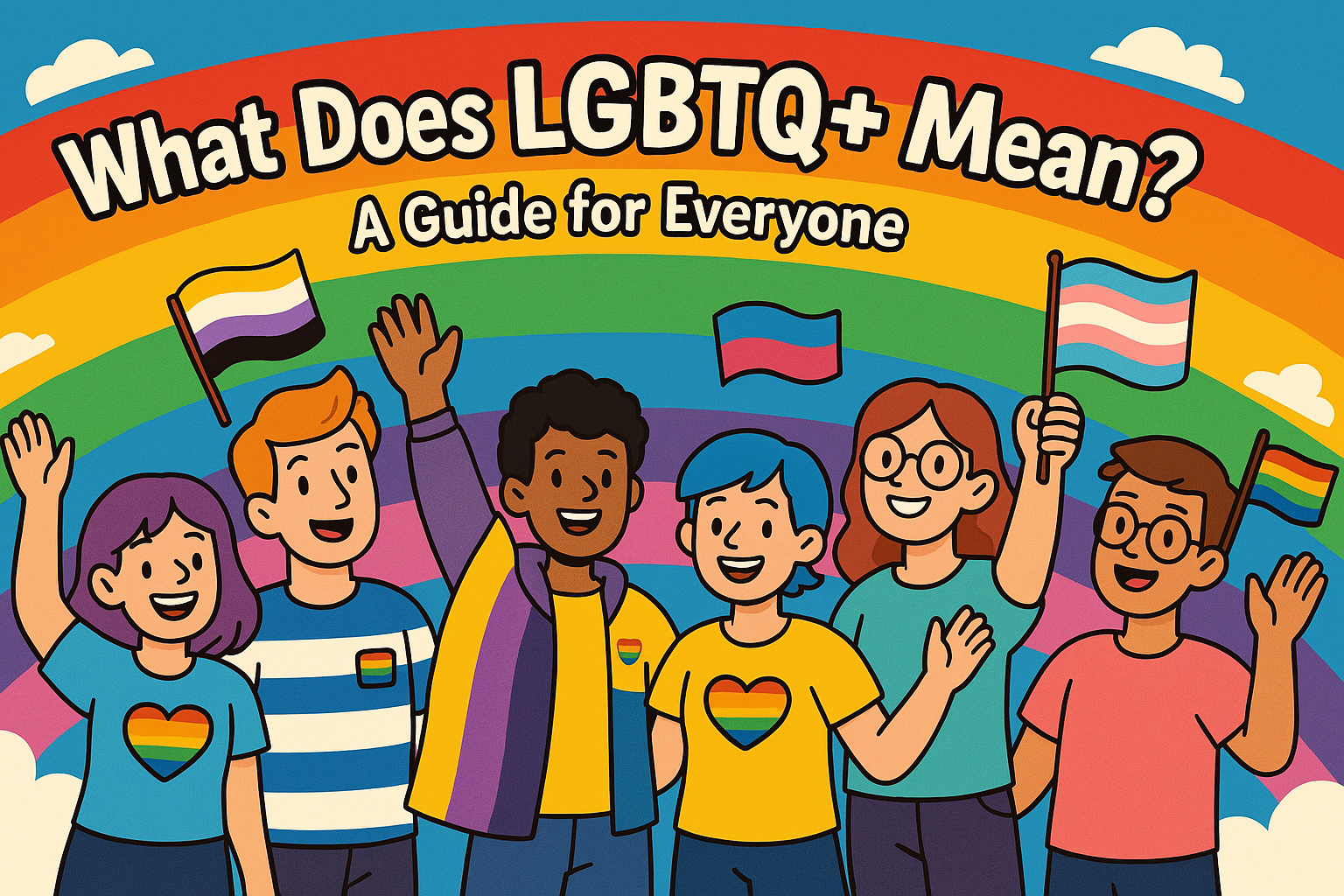
What Does LGBTQ+ Mean? A Guide for Everyone
What Does LGBTQ+ Stand For?
LGBTQ+ is a group of letters that stand for different identities. Each letter represents something important. L stands for lesbian, G for gay, B for bisexual, T for transgender, and Q for queer or questioning. The plus sign (+) is there to include other identities like asexual, non-binary, and more. It’s a way of saying, “We see you too!”
These terms describe how people feel inside or who they are attracted to. For example, someone who is gay might be a man who loves other men. A transgender person might feel they were born in the wrong body. The LGBTQ+ label helps people feel connected and supported.
Why Are There So Many Letters?
You might wonder why there are so many letters. It’s because human beings are all different, and one size doesn’t fit all. Some people fall in love with boys, some with girls, and some with both—or neither. Others feel different about their gender, like they don’t feel like a boy or a girl.
The more letters we include, the more people feel seen and accepted. These letters aren’t just random; they mean something real to someone. It’s like having the right name tag at a party—it feels good when people understand who you are.
What Does Being Lesbian, Gay, or Bisexual Mean?
Let’s break it down even more. A lesbian is a woman who loves other women. A gay person usually means a man who loves other men, though some women use the word too. Bisexual means someone who is attracted to both men and women.
These are just a few of the ways people can feel about who they love. It’s not about choosing, it’s about understanding what feels natural inside. Love is love, and it doesn’t always follow the rules we expect. Everyone’s feelings are valid.
What About Transgender and Non-Binary People?
Transgender people feel that the gender they were given at birth doesn’t match who they really are. For example, someone born as a boy might feel deep inside that they are a girl.
They might choose to live as a girl instead, and that’s okay. Non-binary people don’t feel like just a boy or just a girl. They might feel like both, neither, or something in between. Gender is about more than what’s written on your birth certificate. It’s about who you are on the inside.
What Does Queer Mean?
The word “queer” used to be an insult, but many people have taken it back and now use it proudly. Queer is a word that can mean many things. It’s a way for people to say, “I’m not straight and that’s okay.” It includes people who don’t fit into the usual boxes of gender or love. Some people like it because it feels flexible. Others don’t like it because of its past. That’s why it’s important to respect how people want to describe themselves.
Why the Plus Sign (+)?
The plus sign in LGBTQ+ is like a big open door. It says, “We welcome everyone else too.” This includes people who are asexual (don’t feel romantic or sexual attraction), pansexual (love people regardless of gender), and intersex (born with a mix of male and female body parts). There are lots of different ways people can be, and the plus sign makes space for them all. It’s about kindness, respect, and making sure no one is left out.
Is It OK To Be LGBTQ+?
Yes, absolutely! Being LGBTQ+ is completely normal. It’s not something people choose or catch. It’s just part of who they are. People should never be made to feel bad about being themselves. Sadly, some people still don’t understand and can be mean.
That’s why it’s important to learn, support, and speak up. Everyone deserves to feel safe and accepted. There’s nothing wrong with being different. In fact, differences make the world more interesting!
Why Do People Come Out?
Coming out means telling others about your gender identity or who you love. It can be scary, but it can also feel like a big relief. Imagine carrying a secret for a long time and then finally being able to share it—it feels like breathing fresh air. People come out so they can live as their true selves. It’s important that we support our friends and family when they come out. Listening and being kind makes a big difference.
How Can I Be a Good Ally?
An ally is someone who supports LGBTQ+ people, even if they’re not LGBTQ+ themselves. Being an ally means standing up when people are bullied or left out. It means using the right names and pronouns, and not making jokes that hurt others. Allies help create a world where everyone feels welcome. You don’t have to be perfect—you just have to care. Ask questions, be respectful, and keep learning.
What About School and Friends?
Schools should be safe places for everyone. That means no bullying, name-calling, or leaving people out because they’re LGBTQ+. If you see someone being treated unfairly, you can help by telling a teacher or standing beside them. Friends are important too. If someone tells you they’re LGBTQ+, thank them for trusting you. Be kind and supportive. It takes courage to be honest about who you are.
Why Do Pride Events Exist?
Pride is a celebration of LGBTQ+ people. It often happens in June, but events happen all year round. There are parades, music, rainbow flags, and people coming together in joy. Pride started because LGBTQ+ people were treated unfairly in the past. Today, it’s still about standing up for rights and being proud of who you are. Some people dress in bright colours, wave flags, or hold signs saying “Love is Love.” It’s a powerful way to say, “We belong here too.”
Is LGBTQ+ in Stories and Films?
Yes, more and more! You might notice LGBTQ+ characters in books, TV shows, and movies. This helps people feel seen and understood. It’s also great for others to learn that being LGBTQ+ is just one part of who someone is. When we see all kinds of people in stories, it shows us that everyone matters. If you’re ever writing your own stories, don’t be afraid to include all kinds of characters. Representation is important.
What If I’m Still Figuring Things Out?
That’s totally okay. You don’t have to have everything figured out. Some people know early, others take time. There’s no rush and no rulebook. What matters most is being kind to yourself while you discover who you are.
You can talk to someone you trust, like a parent, teacher, or school counsellor. If you don’t feel ready to talk, that’s okay too. Just know that you’re not alone, and there are people who care and want to help.
Where Can I Get Help or Support?
If you ever feel confused, worried, or upset, it’s important to talk to someone. There are amazing organisations that help LGBTQ+ young people. In the UK, you can contact Childline (0800 1111) or visit their website.
Another great charity is Stonewall, which supports LGBTQ+ people of all ages. These places are safe, understanding, and full of people who want to listen. You deserve support, no matter what.
Why Is Learning About LGBTQ+ Important?
When we learn about LGBTQ+ people, we become more understanding. It helps us be better friends, classmates, and family members. It also makes schools and communities kinder places to be. Knowing the meaning of LGBTQ+ helps us see the world in a brighter, more accepting way. Everyone deserves to be treated with respect, and that starts with learning. So whether you’re LGBTQ+ or an ally, you’re part of making the world better.
What Do You Remember?
What do the letters in LGBTQ+ stand for?
Why is there a plus sign at the end of LGBTQ+?
What does it mean to be transgender?
How can you be a good ally?
Why are Pride events important?
Write your answers in the comment section below.
Related Topics
If you enjoyed learning about LGBTQ+ identities, you might also like exploring gender identity, diversity, and human rights. These topics help us understand more about people and the world around us. You can also learn about the history of Pride and how people have fought for equality.
Learn more:
https://en.wikipedia.org/wiki/LGBT
https://en.wikipedia.org/wiki/History_of_LGBT_rights_in_the_United_Kingdom
What Do You Think?
If you found this to be an interesting topic, why not have your say. Or if you can think of ways we could improve it. We would love to know what you learned and more importantly, what you think. So now is your chance, use the comments section below to let us know your thoughts.