Hello Alan Lloyd - Your Scores - Logout

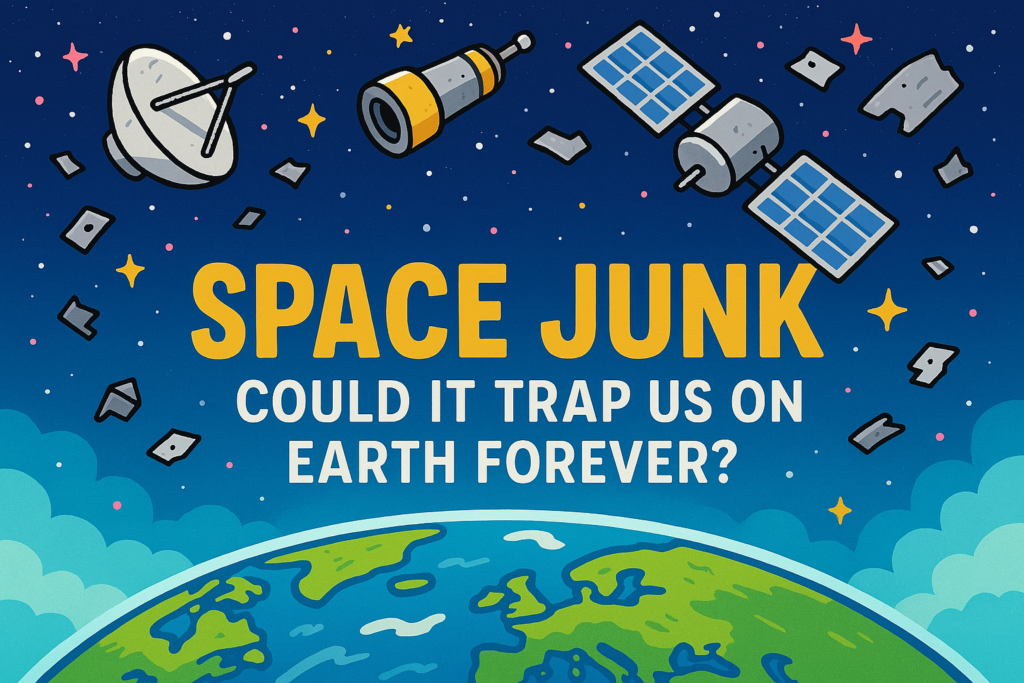
Space Junk: Could It Trap Us on Earth Forever?

Space Junk: Could It Trap Us on Earth Forever?

Imagine looking up at the night sky and seeing stars twinkle like tiny diamonds. Now, imagine if, instead of stars, all you could see is space junk. Bits of broken satellites, tools, and even a lost glove floating above our heads!

It is a mess and it’s a growing problem. But could it actually trap us on Earth one day? Could it stop astronauts from ever visiting space again, going to the Moon or Mars?

This topic will help you discover the fascinating (and slightly worrying) truth about space junk, the Kessler Syndrome, and the giant groups of satellites called mega-constellations, like Starlink, Project Kuiper, and OneWeb.

Space Junk: Could It Trap Us on Earth Forever?
By Alan Lloyd


This topic is part of our Info Zone collection. You can read the full topic, once logged in, here: Space Junk: Could It Trap Us on Earth Forever?

You’ll also find a full Lesson Plan and a handy Parent Q & A sheet, for this topic, ready to use..

What is Space Junk and Why Should We Care?

Space junk, sometimes called space debris, is made up of all the old, broken, or abandoned objects humans have left floating around the Earth. It includes dead satellites, bits of rockets, nuts, bolts, and even tiny flakes of paint. These objects whizz around our planet at incredible speeds — up to 28,000 kilometres per hour!

So, why is it a problem? Well, even something as small as a paint chip can cause serious damage when it’s moving that fast. Imagine getting hit by a pebble travelling faster than a speeding bullet. That’s what astronauts and spacecraft face when dealing with space junk.

The more space junk we leave up there, the greater the danger for future space missions, satellites, and even the International Space Station (ISS).


How Did Space Junk Get There?

Since the 1950s, when the first satellites were launched, humans have been leaving objects in orbit. Each time a satellite finishes its job, or a rocket releases its payload, some pieces are left behind. Sometimes, satellites crash into each other or explode, creating thousands of tiny fragments.

At first, space seemed so big that no one worried about leaving a little rubbish behind. But today, there are more than 40,500 pieces of junk larger than 10 centimetres and millions of smaller bits that we can’t even track properly!

With new satellites launching every year, the problem is growing faster than ever.


The Dangers of Space Junk

Space junk isn’t just floating harmlessly around. It can smash into working satellites, spacecraft, or even the ISS. In fact, astronauts on the ISS often have to perform special manoeuvres to dodge dangerous pieces of debris.

Satellites help us with weather forecasts, GPS, television, and internet. If space junk damages them, it could affect everyday life for people on Earth. A single collision could also create thousands more pieces of debris, making the situation even worse.

In the future, too much space junk could make it risky or impossible to launch rockets safely through Earth’s orbit.


What is the Kessler Syndrome?

The Kessler Syndrome is a scary idea first suggested by NASA scientist Donald J. Kessler in 1978. He warned that if too much space junk builds up, it could cause a chain reaction. One crash could create more debris, leading to more crashes, and so on.

Imagine smashing two glass bottles together. The glass doesn’t just disappear; it shatters into hundreds of sharp pieces. Now, imagine each of those pieces smashing into other bottles. That’s what Kessler Syndrome could do in space.

If this happens, Earth’s orbit could become so crowded and dangerous that we might not be able to safely launch satellites or spacecraft at all. This is why scientists are working hard to prevent it.


Space Junk and Mega-Constellations

In recent years, companies like SpaceX, Amazon, and OneWeb have started launching thousands of satellites as part of something called “mega-constellations.” These are huge networks of satellites working together to provide internet access across the world.

SpaceX’s Starlink project plans to launch up to 42,000 satellites. Amazon’s Project Kuiper aims for over 3,200, while OneWeb has already placed hundreds in orbit and plans to add thousands more.

These mega-constellations could bring internet to people who currently have no access. But they also add many more satellites to an already crowded orbit, making space junk an even bigger challenge.


How Are Satellites Launched into Orbit?

Satellites are launched using powerful rockets. The rockets push the satellite up through Earth’s atmosphere and into space. Once there, the satellite is placed into orbit — a path that circles the Earth.

Different satellites go into different orbits depending on what they do. Some orbit close to Earth (Low Earth Orbit), while others go much higher. Most space junk is found in Low Earth Orbit because that’s where most satellites operate.

As more rockets are launched, more leftover parts and broken bits are added to the growing cloud of space junk.


Tracking Space Junk

Luckily, we don’t just leave space junk floating without watching it. Organisations like NASA and the European Space Agency (ESA) track space junk with powerful radars and telescopes.

They keep a close eye on larger pieces, predicting their paths to help spacecraft and astronauts avoid collisions. However, many small bits are too tiny to track, making them very dangerous because they can’t be avoided easily.

Space agencies share this information around the world to help keep space safe for everyone.


Can Space Junk Trap Us on Earth?

If space junk continues to increase, the Kessler Syndrome could become real. This could create a deadly shield of debris, making it almost impossible to launch rockets without hitting something.

While this hasn’t happened yet, many scientists are worried. Future astronauts, space missions, and satellite launches could be at risk. If we can’t safely launch rockets, it would limit our ability to explore space, send astronauts to the Moon or Mars, or even maintain the satellites we already depend on.

This is why dealing with space junk is so important right now.


What Are We Doing to Solve the Space Junk Problem?

Scientists and engineers are coming up with clever ideas to remove space junk. Some are designing spacecraft with robotic arms to grab debris. Others are testing giant nets or harpoons to catch space junk and safely bring it down into Earth’s atmosphere, where it burns up.

Space agencies also now plan missions more carefully. Satellites are built to move themselves out of the way when they’re finished, reducing the risk of collisions.

International rules are also being developed to make sure space remains safe for future generations.


How Can Mega-Constellations Be Made Safer?

SpaceX, Amazon, and OneWeb all know about the dangers of space junk. They have promised to make sure their satellites will move themselves safely out of orbit at the end of their lives. SpaceX even made some Starlink satellites lower, so they will naturally fall into Earth’s atmosphere and burn up after a few years.

These steps help, but the more satellites we put up, the harder it will be to avoid adding to the junk problem. This is why companies and governments need to work together to create safe and responsible space plans.

Scientists hope that with the right rules and technology, we can enjoy the benefits of these mega-constellations without making space too dangerous.


Why Space Still Matters

Space isn’t just about rockets and astronauts. It helps us every single day. Satellites make GPS, TV, weather forecasts, and even internet connections possible. We rely on space more than most people realise!

That’s why solving the space junk problem matters so much. We need to protect Earth’s orbit, just like we try to protect the environment here on the ground.

Space is part of our future, and we all have a role to play in keeping it safe and clean.


What Do You Remember?

  • What is space junk and why is it dangerous?
  • What is the Kessler Syndrome and how could it trap us on Earth?
  • What is a mega-constellation and why are companies launching them?
  • How do scientists track and try to remove space junk?
  • Why is it important to keep space safe and clean?

Write your answers in the comment section below.


Related Topics

Space is full of mysteries, challenges, and fascinating science. If you enjoyed learning about space junk, you might also want to explore more about satellites, astronauts, and space exploration.


What Do You Think?

If you found this to be an interesting topic, why not have your say. Or if you can think of ways we could improve it. We would love to know what you learned and more importantly, what you think. So now is your chance, use the comments section below to let us know your thoughts.


Leave a comment


'; // Add header content for print html += '

Lenara Learning

Get more learning resources at www.lenara.uk

'; // Insert the worksheet content html += '
' + content + '
'; html += ''; printWindow.document.write(html); printWindow.document.close(); printWindow.focus(); // Trigger printing and auto-close the popup printWindow.print(); printWindow.onafterprint = function() { printWindow.close(); }; setTimeout(function() { printWindow.close(); }, 1500); }