
Who Were the Vikings – And Why Were They So Fierce?
Who Were the Vikings – And Why Were They So Fierce?
The Vikings were some of the most famous warriors in history. You’ve probably heard stories of them sailing in longships, wearing helmets with horns (which isn’t actually true!), and causing chaos wherever they went.
But who were they really? And what made them so fierce in the eyes of the world? This article dives deep into Viking life, culture, and legend to uncover the truth behind the myths.
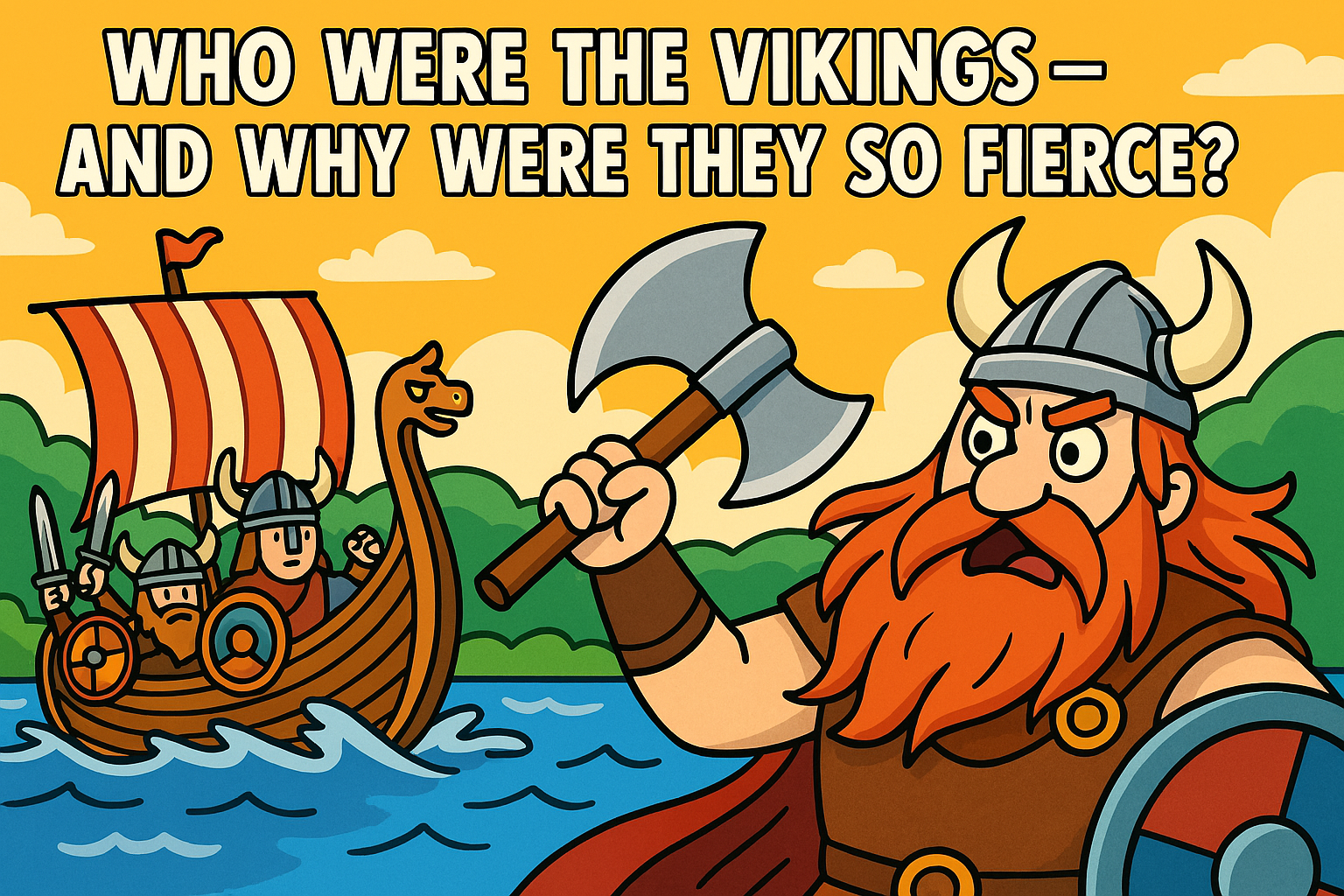
This topic is part of our Info Zone collection. You can read the full topic, once logged in, here: Who Were the Vikings – And Why Were They So Fierce?
You’ll also find a full Lesson Plan and a handy Parent Q & A sheet, for this topic, ready to use..
Who Were the Vikings – And Why Were They So Fierce?
The word “Viking” actually refers to the Norse seafarers from Scandinavia — mainly from what we now call Norway, Sweden, and Denmark. From around AD 793 to 1066, they travelled by sea to trade, raid, explore, and settle in other parts of Europe. While many think of Vikings as just brutal raiders, they were also skilled farmers, traders, and shipbuilders.
They earned their fierce reputation mainly from their surprise attacks on towns and monasteries along the coast. They struck fast and without warning, and their strength, speed, and bravery in battle became legendary. But there was much more to Viking life than fighting. They built communities, made laws, and even had their own gods and stories.
Let’s explore the different sides of Viking life and find out what made them such a powerful and unforgettable part of history.
Where Did the Vikings Come From?
The Vikings came from the cold northern lands of Scandinavia — mainly modern-day Norway, Sweden, and Denmark. These areas were full of mountains, forests, and fjords. Life was tough, and the people had to be strong and clever to survive. Farming was hard due to rocky soil, so many turned to the sea.
Being surrounded by water helped them become brilliant sailors and shipbuilders. This gave them a huge advantage and allowed them to travel much farther than most people of their time. They didn’t just raid nearby villages — they reached as far as North Africa, Russia, and even North America!
Their homeland shaped who they were — strong, independent, and always ready for adventure.
What Were Viking Longships?
Viking longships were fast, narrow boats with a shallow bottom. This meant they could travel on both the sea and rivers. The design allowed them to land right on beaches, making their raids super quick and surprising. These ships could hold up to 60 men and were powered by both sails and oars.
Longships were more than just transport — they were a symbol of Viking power. The front often had a carved dragon or serpent to scare their enemies and show off their craftsmanship.
Their shipbuilding skills helped them explore and settle in faraway lands. Without longships, the Viking Age might never have happened.
Were the Vikings Really That Fierce?
Vikings were fierce in battle, but that wasn’t all they were. They were trained from a young age to fight, but also to hunt, fish, and farm. In battle, they used swords, axes, and shields. They wore tough clothes and some even had chainmail, although that was rare and expensive.
They didn’t wear horned helmets — that’s just a myth! Real Viking helmets were made of iron and had a simple rounded or conical shape.
Vikings believed that dying in battle could send them to Valhalla — a kind of warrior heaven. This belief made them fearless and gave them the strength to fight bravely, even when outnumbered.
What Did the Vikings Believe In?
Vikings followed a religion called Norse mythology. They believed in gods like Odin, Thor, Freya, and Loki. These gods were powerful and sometimes quite naughty! Vikings told stories, called sagas, about these gods and their adventures.
Odin was the god of wisdom and war. Thor, with his mighty hammer Mjölnir, was the god of thunder and protector of people. Loki was the trickster who often caused problems for the other gods.
They also believed in a tree called Yggdrasil that held up the whole universe. Their religion shaped how they saw the world — as a place of honour, bravery, and destiny.
Did All Vikings Raid and Fight?
Not all Vikings were warriors. Many were peaceful farmers, traders, and craftspeople. They grew crops, kept animals, and made everything from tools to jewellery. Women played a strong role too — some even ran farms or joined raids!
Viking traders sailed across Europe to sell fur, amber, weapons, and more. They also brought home silk, spices, and silver from distant lands.
Raiding was just one part of their culture. It brought wealth and glory, but it wasn’t something every Viking did.
Where Did the Vikings Travel?
Vikings travelled far and wide. They reached places like Britain, Ireland, France, Spain, Italy, and even parts of the Middle East. They also explored rivers in Russia and built settlements in Iceland, Greenland, and Canada.
Their travels weren’t just for raiding — they settled in many places and often mixed with local people. The city of York in England was once a major Viking town called Jorvik.
Some Vikings, like Leif Erikson, may have reached North America around 500 years before Christopher Columbus!
How Did Viking Society Work?
Viking society was built around small communities. Families lived in longhouses and worked together on farms. At the top were the jarls (nobles), in the middle were karls (freemen), and at the bottom were thralls (slaves).
They had their own laws and held meetings called “things” where people gathered to settle disputes and make decisions. These meetings were very democratic and everyone had a say.
Being part of a strong family and community was really important. Loyalty and honour mattered a lot to the Vikings.
What Did the Vikings Believe About Life, Death, and the Gods?
Viking religion was based on a system of powerful gods, magical creatures, and incredible myths known as Norse mythology. Unlike modern religions with one god, the Vikings believed in many gods and goddesses who ruled over different parts of the world. Their stories explained how the world was created, how it worked, and how it would eventually end.
At the top was Odin, the All-Father. He was the god of wisdom, war, and magic, and he gave up an eye for knowledge. Thor, the thunder god, was loved by the people for protecting them from giants with his mighty hammer, Mjölnir. Freyja was the goddess of love, beauty, and war, and she was also linked to magical powers called “seidr.”
The Vikings believed the universe was made up of nine realms connected by a giant ash tree called Yggdrasil. Humans lived in Midgard, while gods lived in Asgard. Other realms were home to elves, giants, dwarfs, and the dead. One of these was Helheim, the cold and shadowy land where many people went after death — but dying in battle could send a warrior to Valhalla, Odin’s great hall, where they would feast and fight forever.
They didn’t build churches like today’s religions. Instead, Vikings worshipped outdoors at sacred groves, stones, or temples known as “hofs.” Rituals often involved offerings, animal sacrifices, or feasts to honour the gods and spirits. They even believed in fate, called “wyrd,” and thought that everyone’s destiny was already woven by powerful beings called the Norns.
Eventually, many Vikings converted to Christianity as they settled in new lands. But their old beliefs didn’t vanish overnight — traces of Norse myths and names of gods can still be found in our days of the week: Thursday is named after Thor, and Wednesday after Odin (Woden).
When Did the Viking Age End?
The Viking Age officially ended in AD 1066, when King Harold of England defeated the Norwegian king Harald Hardrada at the Battle of Stamford Bridge. This marked the end of Viking raids on England.
By that time, many Vikings had converted to Christianity and settled in new lands. They were no longer seen as invaders but as part of the cultures they joined.
Even though the age of Viking raids ended, their legacy still lives on today in language, place names, and legends.
Why Are We Still Fascinated by the Vikings?
Vikings have become legends — not just for their battles but also for their daring adventures and strong culture. Their gods, ships, and myths are still popular in books, films, and games today.
We admire their bravery, curiosity, and strength. They were people who weren’t afraid to explore the unknown and make their mark on the world.
Learning about them helps us understand how people lived in the past and how much we’ve inherited from them.
What Do You Remember?
- Where did the Vikings originally come from?
- What made Viking longships so special?
- Did all Vikings spend their time raiding?
- Who were some of the Viking gods?
- What happened at the end of the Viking Age?
Write your answers in the comment section below.
Related Topics
Curious to know more about the ancient world? You might enjoy learning about the Anglo-Saxons, Roman Britain, or the history of Norse mythology. These topics will give you an even deeper understanding of how the Vikings fit into the big picture of history.
What Do You Think?
If you found this to be an interesting topic, why not have your say. Or if you can think of ways we could improve it. We would love to know what you learned and more importantly, what you think. So now is your chance, use the comments section below to let us know your thoughts.