The Battle of 1066: Who Conquered England? (Lesson Plan)
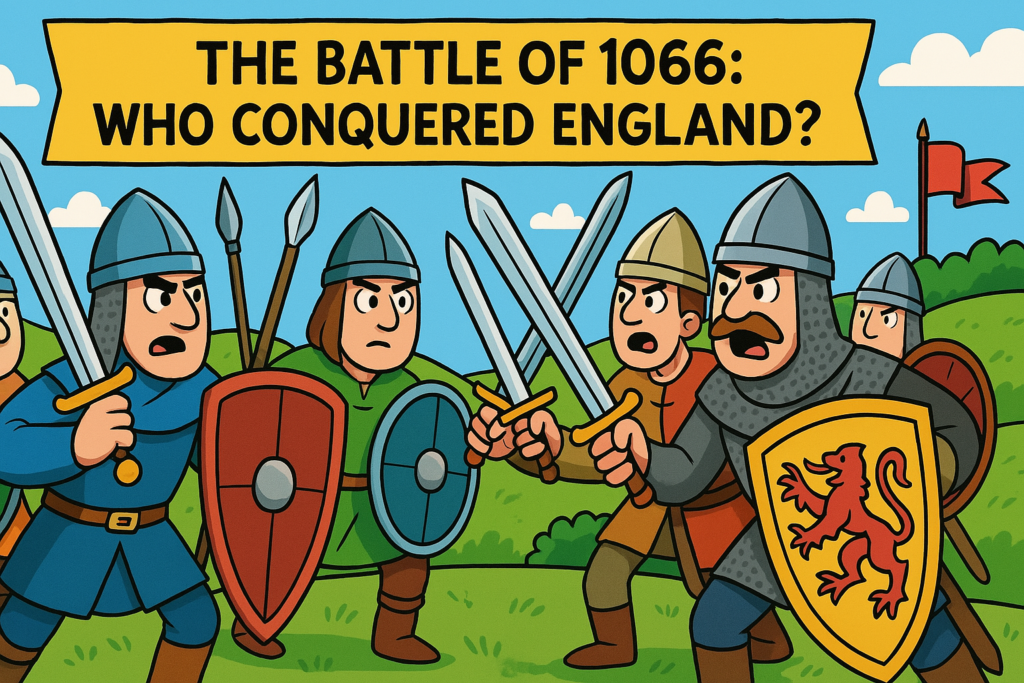
Lesson Plan -The Battle of 1066: Who Conquered England?
The lesson plan for The Battle of 1066: Who Conquered England? is designed to support parents and carers using Elective Home Education. It guides learners through one of the most dramatic and important years in English history — a year of rival kings, fierce battles, and the famous victory at Hastings that changed the country forever.
This flexible resource includes key learning goals, reading tasks, creative activities, comprehension questions, and thought-provoking discussion points. It’s suitable for learners aged 8–16, and can be used as a stand-alone lesson or as part of a wider project on English or medieval history.
The plan aims to make learning meaningful and enjoyable at home. It gives parents a ready-made structure while still leaving space to adapt each activity to suit their own child’s pace and interests. Whether your learner enjoys drawing, writing, acting out scenes, or diving deep into a topic, there’s something here for them to explore.
This topic is part of our Info Zone collection. You can read the full article here: The Battle of 1066: Who Conquered England?
You’ll also find a full Lesson Plan and a handy Parent Q & A Sheet ready to use.
@page { margin: 10px; } * { box-sizing: border-box; margin: 0; padding: 0; } @media print { #hidethis, .topymenu, .topstuff, button { display: none !important; } #printableArea { position: absolute; top: 0; left: 0; width: 100%; margin: 0; padding: 0; } table { page-break-inside: avoid; } } button { margin: 20px auto; display: block; padding: 10px 20px; font-size: 16px; cursor: pointer; } #printableArea { width: 100%; padding: 10px; } /* Table layout and row spacing */ .lesson-plan-table, .lesson-plan-explanation-table { width: 100%; border-collapse: separate; border-spacing: 0 30px; /* Adds spacing between rows */ margin-top: 20px; font-size: 0.9em; background: none !important; border: none !important; } /* Text formatting for all cells */ .lesson-plan-table th, .lesson-plan-table td, .lesson-plan-explanation-table th, .lesson-plan-explanation-table td { padding: 30px !important; border: none !important; background: none !important; text-align: left; vertical-align: top !important; font-size: 18px !important; color: #AC0606 !important; page-break-inside: avoid !important; break-inside: avoid !important; } /* Section headers in first column */ .lesson-plan-table td:first-child, .lesson-plan-explanation-table td:first-child { font-weight: bold !important; color: #000000 !important; white-space: nowrap; width: 20%; } /* Centered column headers */ .lesson-plan-table th, .lesson-plan-explanation-table th { text-align: center; font-size: 20px !important; font-weight: bold; color: #2F00A2 !important; background: none !important; } @media print { .lesson-plan-table, .lesson-plan-explanation-table { border-spacing: 0 30px !important; } .lesson-plan-explanation-table { page-break-before: always; } } @media print { body { margin-top: -100px; /* Applies ONLY in print mode */ } }Members Only
You need to be registered and logged in to access this lesson plan and all other learning resources, games and quizzes.