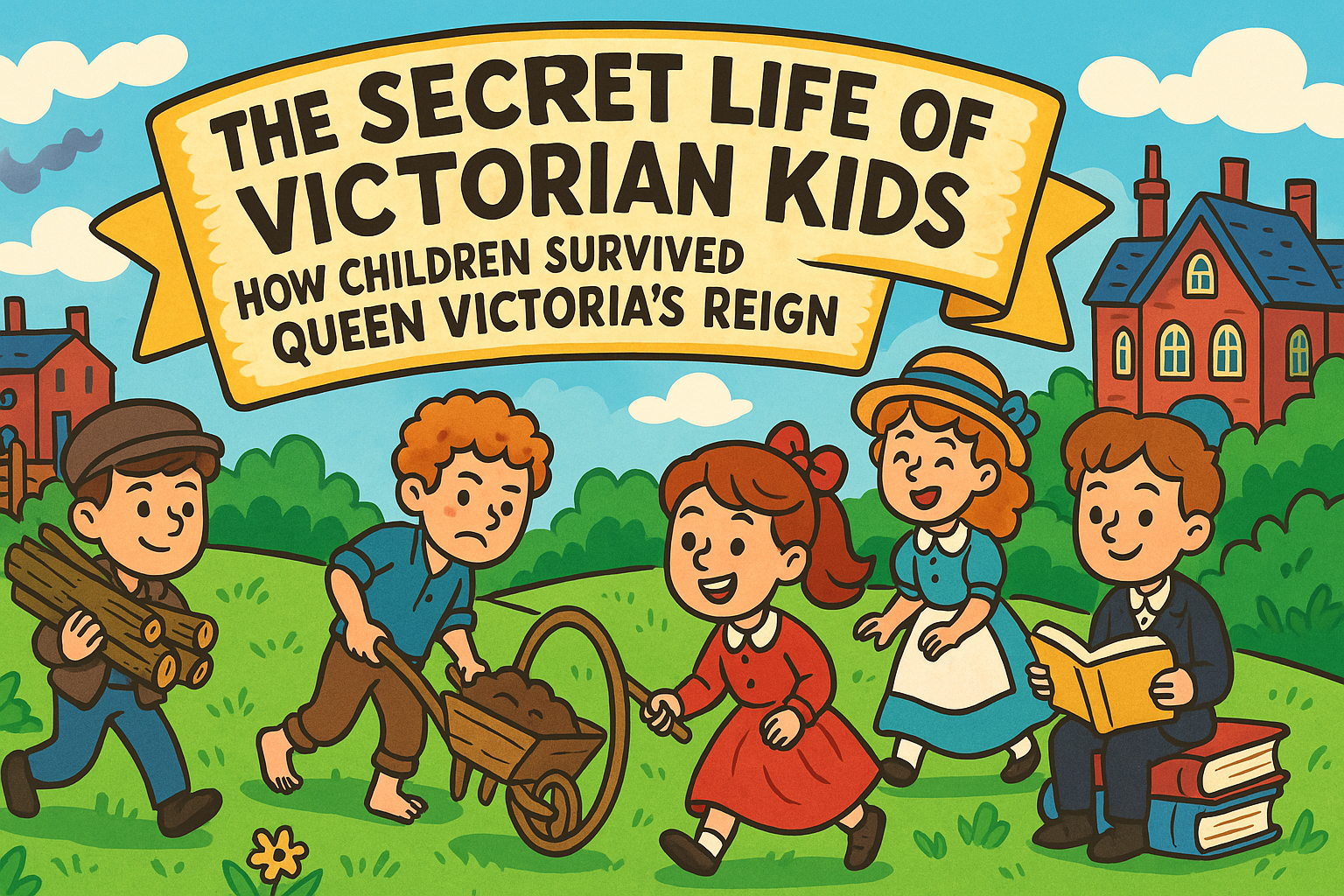
The Secret Life of Victorian Kids: How Children Survived Queen Victoria’s Reign (Q&A)
The Secret Life of Victorian Kids: How Children Survived Queen Victoria's Reign
This Parent Q&A sheet for The Secret Life of Victorian Kids: How Children Survived Queen Victoria’s Reign is designed to help parents confidently guide their child through this fascinating topic. During Queen Victoria’s reign, children’s lives were shaped by social class, work, education, and family roles. Understanding how childhood used to be so different is an eye-opening way to explore British history.
The Q&A covers all the major parts of the topic and offers clear, plain-English answers to questions your child might ask. From what jobs kids had and why they worked so young, to how holidays, homes, and school life differed between rich and poor families—it’s all included here. You don’t need to be a history expert to use this sheet. Everything is explained in a way that makes it easy to teach and talk about.
The idea is not just to give you facts, but to spark meaningful conversations. It supports flexible learning and can be used alongside our main article or lesson plan. You can dip in and out, or explore the whole topic at your own pace. Whether you’re new to home education or have years of experience, this is a helpful and engaging resource for learning together.
This topic is part of our Info Zone collection. You can read the full topic, once logged in, here: The Secret Life of Victorian Kids: How Children Survived Queen Victoria’s Reign
You’ll also find a full Lesson Plan and a handy Parent Q & A sheet, for this topic, ready to use..
| Victorian Children Q&A: The Secret Life of Victorian Kids | |
|---|---|
| Tip for Parents | This Q&A sheet is designed to help you answer your child's questions confidently. Use it as a guide while discussing the topic, encouraging your learner to think deeper and ask even more. |
| 1. Why did many Victorian children have to work? | Most poor families needed every member, even young children, to earn money to survive. There were no benefits or safety nets like we have today, so children worked in factories, mines, and even on the streets. |
| 2. Were there any rules to protect working children? | Not at first. But laws like the Factory Acts (starting in 1833) slowly improved conditions by limiting working hours and setting age limits. These changes happened because people began to realise how unfair child labour was. |
| 3. Did all children go to school in Victorian times? | At the beginning of Queen Victoria’s reign, only wealthier children had access to proper schools. By 1880, school became compulsory for children aged 5 to 10, thanks to the Education Acts. |
| 4. What was school like for Victorian children? | School was often strict and basic. Children sat in rows, repeated facts, and were punished with the cane for misbehaving. Poor schools had few resources, while rich families hired private tutors or sent children to expensive schools. |
| 5. What kind of jobs did Victorian children do? | They worked in many places—coal mines, textile mills, as chimney sweeps, or selling goods on the street. Jobs were usually dirty, tiring, and dangerous, especially for younger children. |
| 6. Why were children used for hard jobs like chimney sweeping? | Because they were small and could squeeze into tight spaces. Employers liked hiring them as they could be paid less and didn’t often complain, even though the work was unsafe. |
| 7. What did rich Victorian children do instead? | They had nannies and governesses, learned at home or went to expensive schools, and had toys, books, and free time. They didn’t work and were trained to take over family businesses or become proper ladies and gentlemen. |
| 8. How did children's clothing show their social class? | Rich children wore clean, fancy clothes like suits, dresses, and lace. Poor children often wore hand-me-downs (clothes used by others), patched trousers, or worn-out boots—if they had shoes at all. |
| 9. What toys did Victorian children have? | Wealthy children had dolls, trains, rocking horses, and books. Poor children played with homemade toys like hoops, spinning tops, and marbles. Imagination played a big part in their games. |
| 10. What was family life like for Victorian children? | Families were usually large. In poor homes, everyone helped out, and living space was cramped. In rich homes, children were kept away from adult life and were raised by staff like nannies. |
| 11. Did children have any holidays? | Yes, especially Christmas, which became more popular during Queen Victoria’s time. Children got small presents, sang carols, and sometimes joined in public celebrations. Wealthier families had bigger, more decorated holidays. |
| 12. Why did some children die young? | Diseases like cholera, typhoid, and tuberculosis spread quickly in crowded, dirty areas. Medical care was basic, and many families couldn’t afford treatment or healthy food. |
| 13. How did Victorian children help bring change? | As more people spoke out against child labour and poor living conditions, the government introduced new laws to protect children. The harsh lives of Victorian kids helped spark social reforms. |
| 14. Were boys and girls treated the same? | No. Boys often had more freedom and better chances at education or jobs. Girls were trained to become wives and mothers and were expected to help at home from a young age. |
| 15. How can I explain the difference between now and then? | Try comparing everyday things—school, chores, clothing, and free time. For example, ask your child how they’d feel about working 12 hours a day in a factory instead of doing lessons at home. |
| 16. How did poor families live? | In crowded, damp homes called slums. Sometimes, multiple families shared one room. There was often no clean water or toilet, and illness spread easily. |
| 17. Why didn’t parents stop their children from working? | Because they didn’t have a choice. Without the child’s wages, the family might not have been able to buy food. It was a matter of survival. |
| 18. What’s one myth about Victorian childhood? | That all children were treated cruelly. While many suffered, some had happy, secure lives, especially in wealthier homes. However, the difference between rich and poor was massive. |
| 19. How can I help my child understand the topic better? | Use pictures, old-fashioned objects, or video clips showing Victorian life. Let your child compare their life now to what children experienced back then, and encourage them to reflect on the changes. |
| Extra Conversation Ideas |
|
[cl_logged_out]
Members Only
You need to be registered and logged in to access this Q and A sheet and all other learning resources, games and quizzes.
[/cl_logged_out]