
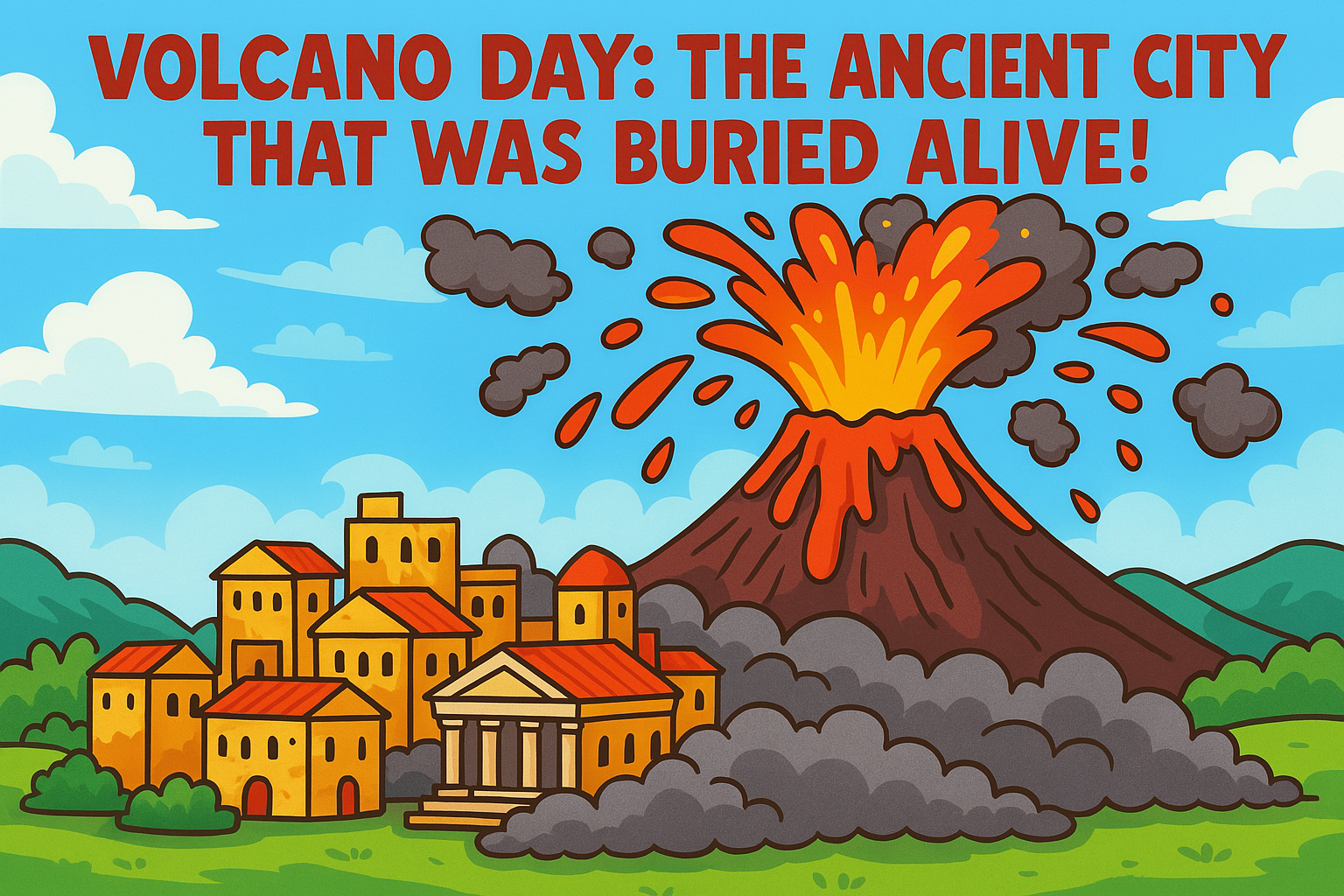
The Calm Before the Catastrophe
In 79 CE, the people of Pompeii were enjoying a normal summer day. The shops were open, kids were playing, and families were preparing meals. Nothing seemed unusual—except for a few small earthquakes earlier in the week. Most people didn’t think much of it.
Mount Vesuvius loomed in the background, but it had been quiet for centuries. No one living in Pompeii had ever seen it erupt. To them, it was just a mountain, not a dangerous volcano. That would change very quickly.
Scientists believe pressure had been building inside the volcano for a long time. Underground, hot magma was rising. Gases and ash were collecting, waiting for the perfect moment to explode. And on 24 August 79 CE, it finally did.
It started with a loud rumble and a huge burst of ash shooting into the sky. People looked up in shock. Some ran. Others stayed, unsure what to do. This was the beginning of one of the worst volcanic disasters in human history—the famous Pompeii eruption.
It wasn’t just the city of Pompeii that was in danger. Other nearby towns like Herculaneum were also hit. But Pompeii became the most well-known, because of what happened next.
Mount Vesuvius: A Ticking Time Bomb
Mount Vesuvius is a stratovolcano—meaning it has steep sides and powerful, explosive eruptions. It’s located in southern Italy, near the modern city of Naples. And yes, it’s still active today.
Back in 79 CE, nobody understood volcanoes. The Romans didn’t even have a word for one yet! They had no idea the quiet mountain next to them was a deadly threat. But deep inside Vesuvius, pressure from gases and molten rock was building fast.
On the morning of the eruption, the volcano blasted a cloud of ash and pumice nearly 20 km into the air. It created what scientists call a “Plinian eruption,” named after a Roman writer, Pliny the Younger, who watched it from a distance and described everything in a letter.
The eruption lasted more than 24 hours. It wasn’t just one big boom—it came in waves. First came the ash. Then the rocks. Then the deadly heat. And finally, the pyroclastic flows—super-hot clouds of gas and debris moving faster than a car.
Mount Vesuvius didn’t just cover Pompeii. It erased it.
Pompeii Eruption: What Happened to Pompeii?
At first, the falling ash made it hard to see or breathe. Roofs collapsed under the weight. Streets filled with dust. But the real danger came later, when the pyroclastic flows hit the city. These were fast, burning-hot clouds of gas, rock, and ash.
People caught in these flows didn’t survive. The heat was so intense, it could kill in seconds. Even those hiding inside homes or stone buildings weren’t safe. In many cases, their bodies were covered by ash almost immediately, preserving their final positions.
For centuries, no one even knew where Pompeii had gone. It was buried under metres of hardened volcanic rock. A whole city, lost to history—until it was discovered again nearly 1,700 years later.
Many people tried to escape, and some did. Archaeologists found skeletons near gates and harbours, showing that not everyone stayed frozen in place. But thousands were trapped. The buried city became a time capsule, preserving Roman life like a snapshot.
Today, when we think about ancient volcanic disasters, Pompeii is always at the top of the list.
Rediscovering the Buried City
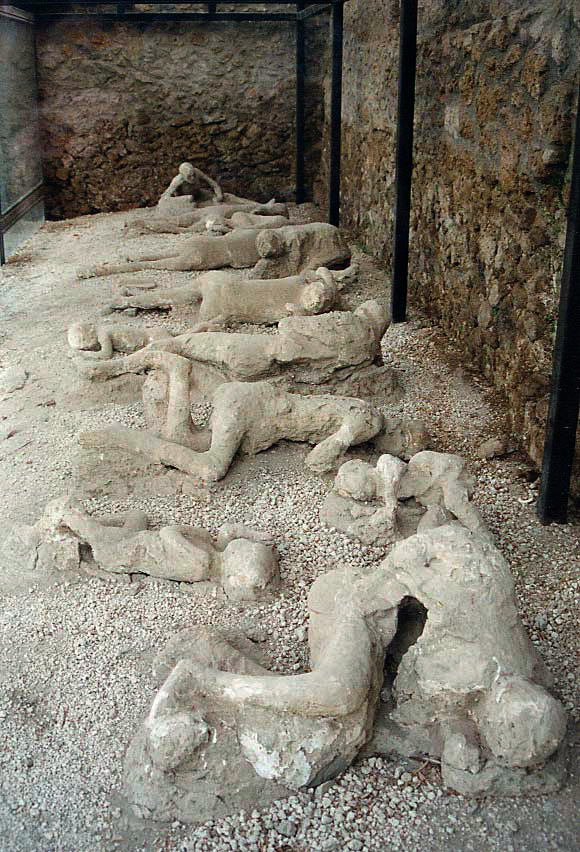
In the 1700s, people started digging in the area around Mount Vesuvius. What they found was shocking—buildings, statues, tools, and even people frozen in time beneath the earth.
These weren’t just ruins. Everything was nearly perfect. The ash had acted like a seal, keeping out air and moisture. This helped protect walls, paintings, furniture, and even food.
One of the most famous parts of the rediscovery was the preserved body shapes. When the ash hardened around people’s bodies and they decomposed, it left empty spaces. Later, archaeologists filled these gaps with plaster to make casts of the victims in their final poses.
It’s sad, but it also helps us understand what life was like in an ancient Roman city. Their homes, baths, theatres, and roads all tell stories about daily life in 79 CE.
Pompeii became one of the most famous archaeological sites in the world. And it still teaches us new things all the time.
What Pompeii Teaches Us About Volcanoes
Thanks to Pompeii, scientists learned more about how volcanoes work. It showed just how fast and deadly an eruption can be, especially from a volcano like Mount Vesuvius.
We now understand what warning signs to look for—like small earthquakes, gas release, or changes in temperature around the volcano. These clues help scientists decide when it’s time to evacuate an area.
Vesuvius is still considered one of the most dangerous volcanoes in the world. That’s because millions of people live nearby. If it erupted again today, it could cause a massive disaster. But because of the Pompeii eruption, we’re more prepared than we were 2,000 years ago.
The city also reminds us that nature is powerful. It’s easy to forget that a calm, pretty mountain can hide danger underneath. That’s why scientists keep studying volcanoes and trying to understand them better.
And Pompeii? It’s more than just ruins. It’s a message from the past.
A Final Thought
Imagine being able to walk through the streets of an ancient Roman city, frozen in time by a volcano. That’s what Pompeii offers. It’s not just a story about death and destruction. It’s also about discovery, learning, and remembering.
From the moment Mount Vesuvius erupted to the moment Pompeii was uncovered again, this tale reminds us that history is all around us—sometimes, just beneath our feet.
Quick Quiz
- What type of volcano is Mount Vesuvius?
- What year did the eruption of Pompeii happen?
- What is a pyroclastic flow?
- How did archaeologists make casts of people’s bodies?
- Why is Pompeii so important to scientists?
Write your answers in the comment section below.
Related Wikipedia Links
If you want to learn more about this topic, check out these links:
What Do You Think?
Would you ever want to visit the ruins of Pompeii? What would you do if a volcano erupted near where you live? Let us know your thoughts in the comments!