Hello Alan Lloyd - Your Scores - Logout

The Most Crowded City on the Planet!

The Most Crowded City on the Planet!

Living in the most crowded city on the planet sounds like something out of a busy dream—or a stressful one! But for millions of people, especially children and teens, this is real life. Welcome to Dhaka, the capital of Bangladesh, and officially the most densely populated major city in the world.

In this topic, we’ll explore what life is really like there. From traffic jams to tasty street food, school days to smog-filled skies, you’re about to take a deep dive into one of the planet’s busiest urban jungles!
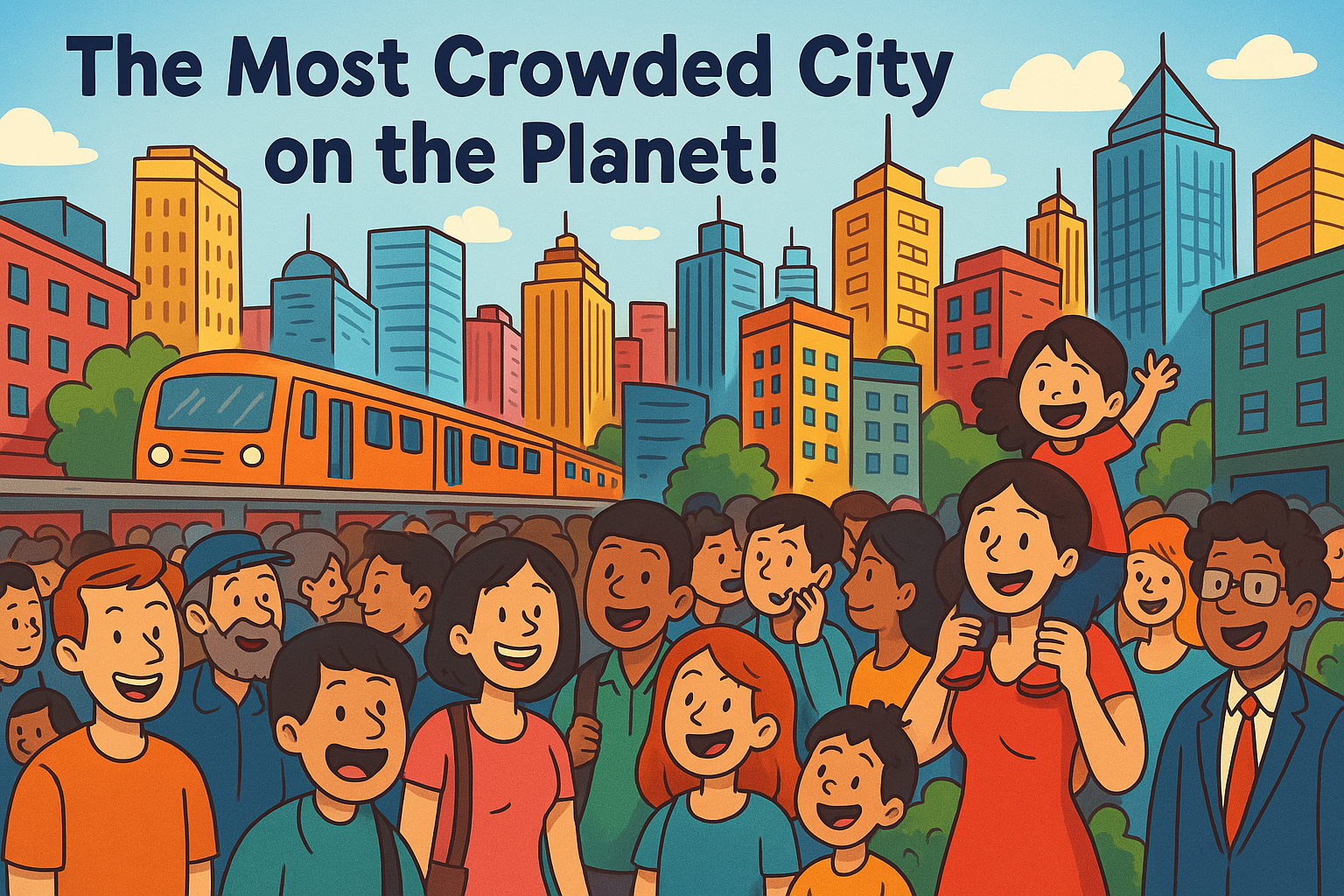
The Most Crowded City on the Planet!
By Alan Lloyd


This topic is part of our Info Zone collection. You can read the full topic, once logged in, here: The Most Crowded City on the Planet!

You’ll also find a full Lesson Plan and a handy Parent Q & A sheet, for this topic, ready to use..

Where Is the Most Crowded City on Earth?

The most crowded city on the planet is Dhaka (pronounced DAK-uh), the capital of Bangladesh, a country in South Asia. Dhaka has an estimated population density of over 36,000 people per square kilometre! That means if you drew a square just one kilometre across, it could hold more people than a small town in the UK. It’s bursting with life, movement, colour—and challenges.

It’s not the biggest city by total population (cities like Tokyo or Delhi have more people), but it is the most crammed in. Dhaka is like a never-ending traffic jam mixed with markets, rickshaws, skyscrapers, slums, and schools all squeezed together in a chaotic but vibrant mix.

The city’s location in a delta region means it’s surrounded by rivers, so expansion is tricky. That’s one of the reasons why so many people are packed into such a tight space.

For many children and teenagers, Dhaka is the only place they’ve ever known—and they’ve become experts at navigating crowded streets, loud buses, and busy school schedules.


What Is It Like to Be a Teenager in Dhaka?

Being a teenager in Dhaka means dealing with a lot of noise, traffic, and people—every single day. But it also means being part of a buzzing city filled with energy and opportunity. Teenagers often travel to school using rickshaws (three-wheeled bicycle taxis), buses, or even on foot, weaving through streets jammed with cars, vendors, and pedestrians.

School is taken seriously, and competition to do well in exams can be intense. There are public and private schools, and many teens also go to tuition (extra classes) after school to improve their grades. Education is a big deal for families who want their kids to have a better future.

In between studies, many teenagers hang out at shopping malls, play cricket in tight alleyways, or scroll social media on cheap smartphones. But space is limited—parks and playgrounds are rare, and many kids grow up in flats with little room to run around.

Still, teens in Dhaka are used to it. They find ways to enjoy their lives despite the chaos around them. It’s normal for them—but it might seem unbelievable to someone used to wide-open countryside!


What’s It Like Going to School in the Most Crowded City?

Schools in Dhaka come in all shapes and sizes—some are modern and air-conditioned, while others might be crowded, hot, and short on supplies. With so many children in the city, classrooms can often have 50 or more students at once!

Many students start their school day early, leaving home before the sun rises to avoid traffic. Lessons are taught in Bengali (the national language), but English is also important and taught from a young age.

Due to the pressure to do well, it’s common for kids to study late into the night. Some even face exams as young as 10 years old that decide what school or college they can attend later. That can create a lot of stress—but also a strong motivation to succeed.

Despite the challenges, many students in Dhaka dream big. They want to be doctors, engineers, or even start their own businesses. Education is seen as a ticket to a better life—and many are willing to fight through crowds and hardship to get there.


Where Do Families Live in Such a Packed City?

Housing in Dhaka ranges from fancy high-rise flats to tiny one-room homes in slums. Many families live in small spaces, often with grandparents, parents, and children all sharing a couple of rooms. Privacy can be hard to find, and electricity cuts (called load shedding) are still common.

Some wealthier areas have large apartment buildings with security gates, but millions of people live in informal settlements, where homes are made from tin and wood and packed together like puzzles.

Water shortages and poor sanitation are major issues in some areas. Access to clean water is improving but not guaranteed for everyone. Flooding is also a problem—during monsoon season, parts of Dhaka can turn into lakes, and families have to wade through dirty water to get home.

But Dhaka is also a city full of community spirit. Neighbours often know each other well, and children play together in stairwells, rooftops, or anywhere there’s a bit of free space.


What Do Kids Eat in the World’s Most Crowded City?

Dhaka’s food is famous for being cheap, spicy, and super tasty. Street food stalls sell snacks like samosas, fuchka (crispy shells filled with spicy water and chickpeas), and grilled meat sticks. These treats are popular with kids after school.

Most families eat rice, lentils (called daal), and vegetables every day. Meat is more expensive, so it’s usually eaten on special occasions. Many kids help their parents shop at noisy wet markets, where shouting sellers compete to sell fish, fruit, and spices.

School lunches might be brought from home or bought from local vendors. Hygiene can be a concern, though, so parents often prefer to make food themselves if they can.

Despite challenges, Dhaka’s food culture is rich, and even in small spaces, families cook up feasts during festivals and family events. Teenagers often learn to cook from a young age, especially if their parents work long hours.


How Do Teenagers in Dhaka Spend Their Free Time?

Free time in Dhaka might be limited, but teenagers still find ways to have fun. Cricket is the number one sport, and kids often use rooftops or narrow streets to play with homemade bats and taped tennis balls.

Mobile phones are everywhere, even in poorer neighbourhoods. Teens use apps like TikTok, Facebook, and YouTube to connect with friends, follow trends, and learn new things. Cafés with Wi-Fi have become popular hangouts too.

Some join clubs for music, debate, or art, especially if their schools offer extracurricular activities. There are also small cinemas and amusement parks, but they can be expensive, so not everyone gets to go.

Public libraries and museums are growing in number, and many young people are becoming interested in photography and storytelling, using their phones to capture life in their city.


Is It Safe Growing Up in Dhaka?

Like many big cities, Dhaka has its dangers. Traffic accidents are common due to crowded roads and poor traffic rules. Pollution is a big concern too—Dhaka often ranks among the most polluted cities in the world, and air quality can be harmful, especially for children.

However, crime rates are not as high as you might think. Most areas are quite safe during the day, especially with neighbours looking out for each other. But safety for girls can be an issue, with harassment being a concern on public transport and in crowded places.

Local charities and groups work to improve child safety and offer support where needed. The city also has growing awareness of mental health, and some schools now provide counselling for stressed-out students.

Despite the challenges, many young people in Dhaka are strong, street-smart, and determined to shape a better future for themselves and their families.


What Do You Remember?

  • What country is Dhaka the capital of?
  • Why is Dhaka considered the most crowded city?
  • What are some challenges students face when going to school in Dhaka?
  • What kinds of foods are popular with teenagers in Dhaka?
  • How do kids in Dhaka find ways to have fun in such a busy city?

Write your answers in the comment section below.


Related Topics

If you enjoyed learning about Dhaka, the world’s most crowded city, you might like reading about other super cities or extreme places. Explore the biggest cities on Earth, or discover how people live in the hottest, coldest, or most unusual places on the planet!


What Do You Think?

If you found this to be an interesting topic, why not have your say. Or if you can think of ways we could improve it. We would love to know what you learned and more importantly, what you think. So now is your chance, use the comments section below to let us know your thoughts.


Leave a comment

'; // Add header content for print html += '

Lenara Learning

Get more learning resources at www.lenara.uk

'; // Insert the worksheet content html += '
' + content + '
'; html += ' '; printWindow.document.write(html); printWindow.document.close(); printWindow.focus(); // Trigger printing and auto-close the popup printWindow.print(); printWindow.onafterprint = function() { printWindow.close(); }; setTimeout(function() { printWindow.close(); }, 1500); }