Hello Alan Lloyd - Your Scores - Logout

Worldbuilding for Beginners: Your Fun Guide to Worldbuilding

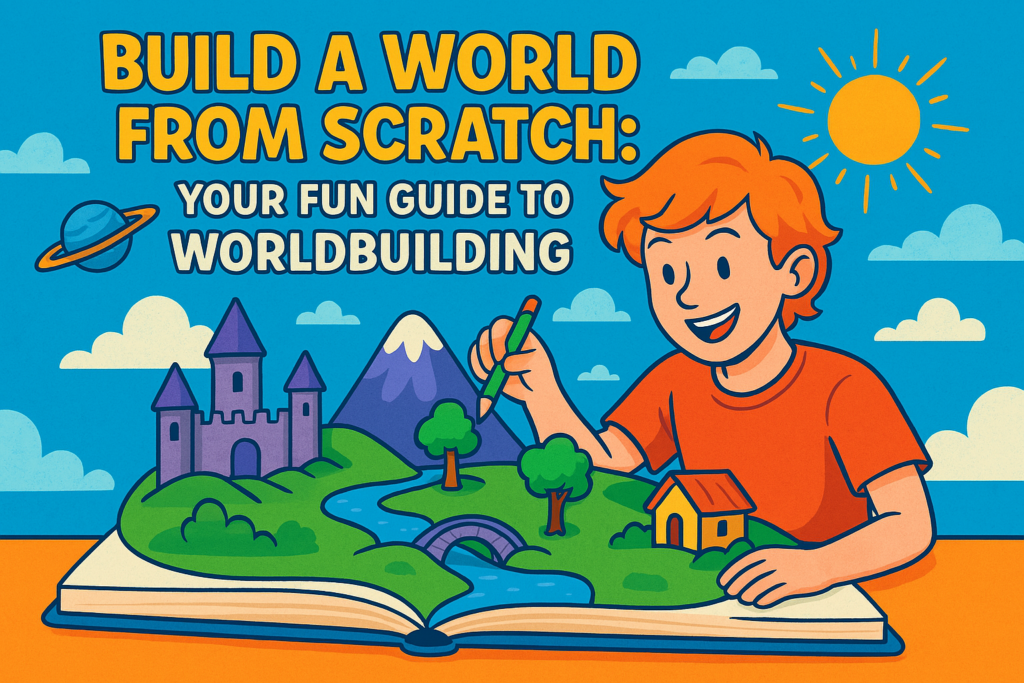
Build a World from Scratch: Your Fun Guide to Worldbuilding​

Worldbuilding for beginners is about creating your own imaginary worlds for stories, games, or adventures. You get to invent everything from magical lands to new creatures and even whole histories.

This guide will show you step-by-step how to build your own world from scratch. Let’s get creative!

Build a World from Scratch: Your Fun Guide to Worldbuilding​
By Alan Lloyd


This topic is part of our Info Zone collection. You can read the full topic, once logged in, here: Build a World from Scratch: Your Fun Guide to Worldbuilding​

You’ll also find a full Lesson Plan and a handy Parent Q & A sheet, for this topic, ready to use..

Worldbuilding for Beginners: Build a World from Scratch

Worldbuilding for beginners means learning how to create an entire imaginary world from your imagination. Writers, game makers, and filmmakers use worldbuilding to make their stories more exciting and believable. From enchanted forests to distant galaxies, worldbuilding is the magic that brings adventures to life. In this guide, you will discover everything you need to start worldbuilding step-by-step!

You don’t need to be a professional to be a brilliant worldbuilder. In fact, some of the most exciting and creative worlds are made by young people. You have the power to create silly, magical, adventurous, or even mysterious worlds — it’s all up to you!

By the end of this guide, you will have the tools to create your very own world for stories, games, or even just your daydreams.


What is Worldbuilding?

Worldbuilding is when you make a place where your story happens. It could be as big as a galaxy or as small as a single treehouse. Worldbuilding for beginners helps you shape this place so it feels real and full of life.

Some worlds are full of dragons and wizards, while others have space stations or underwater kingdoms. Whatever you dream up can be part of your world.

Your world is the stage for your characters and adventures. The more you know about it, the more fun you’ll have telling stories set inside it!


Choosing Your Type of World

One of the first steps in worldbuilding for beginners is deciding what kind of world you want to create. Is it magical, futuristic, silly, spooky, or something totally new?

You don’t have to stick to just one style. Maybe you want a futuristic city where magic still works or a fairy-tale land with spaceships!

Write down your ideas and start thinking about what makes your world special. Remember, this is your world — there are no limits!


Drawing Your World: Geography Matters

Geography is about shaping the land of your world. This step of worldbuilding for beginners is super fun because you get to draw your world’s map!

Will your world have tall snowy mountains, glowing forests, or rivers that flow backwards? Maybe floating islands or a city hidden inside a volcano?

Drawing a simple map helps you remember where things are and gives you inspiration for adventures and stories.


Weather and Climate

What is the weather like in your world? This is an important part of worldbuilding for beginners because weather affects everything! Does it rain chocolate? Are there snowstorms all year?

Maybe the weather changes depending on magic or the mood of the planet itself. How do the people and creatures in your world deal with these conditions?

Weather makes your world feel real and gives you more ideas for stories to tell inside it.


People, Creatures, and Races

In worldbuilding for beginners, deciding who or what lives in your world is key! Are there humans, aliens, fairies, or talking rocks?

Think about what they look like, what they wear, how they speak, and what makes them special. Maybe they have four eyes or breathe underwater!

Don’t forget to think about how they live. Where do they sleep? What do they eat? Do they have any pets or special hobbies?


Culture and Traditions

Every world has unique cultures. What do your characters celebrate? Do they have festivals, dances, or strange holidays?

Worldbuilding for beginners is about more than just places — it’s about creating the lives people live. Maybe there’s a giant pancake race every year or a day when everyone wears purple socks.

Adding culture makes your world feel alive and filled with personality.


History and Legends

Every world has a history. Even if it’s a silly one, it helps explain why things are the way they are. In worldbuilding for beginners, creating a short history makes your world feel deeper.

Did dragons once rule? Was there a great flood? Is there a hidden treasure waiting to be found?

These details make your readers curious and give you more stories to tell later.


Magic, Technology, or Both?

Does your world have magic spells, futuristic gadgets, or a mix of both? In worldbuilding for beginners, you decide how everything works!

Make sure to create rules for your magic or technology. Can only wizards cast spells? Does technology need special batteries made from stardust?

These rules help keep your world believable and interesting.


Language and Names

Inventing names is one of the most fun parts of worldbuilding for beginners. What are your towns, mountains, or creatures called?

You could make up words or mix words from real languages. Maybe you even want a secret language known only by wizards or robots!

Good names help make your world memorable and give it personality.


Money and Trade

Do people use coins, shells, magic stones, or something else as money? How do they buy food or trade goods?

Worldbuilding for beginners includes thinking about everyday life. Maybe your world doesn’t use money at all, and everyone shares!

This small detail can make your world feel more real and fun to explore.


Everyday Life

What do people or creatures do every day? Worldbuilding for beginners is about the little things too!

Do they fish, farm, fly airships, or mine glowing crystals? What do they eat? What games do children play?

Adding these tiny details helps you imagine life in your world and makes it easier for readers to connect with it.


Conflicts and Challenges

Good worlds have problems. Is there a volcano ready to explode? A villain causing trouble? A lost magical item?

Worldbuilding for beginners becomes even more fun when you add challenges. Your characters need something to do and overcome!

Even small problems, like finding lost pets or arguing over treasure, make great story ideas.


Heroes and Villains

Who are the main characters? Heroes and villains make stories fun. Worldbuilding for beginners often starts by creating brave, clever, or silly heroes.

Do they have special powers or a cool flying machine? Are they the only ones who can stop the villain?

Villains don’t have to be evil. Sometimes they are just misunderstood, making your story even more interesting.


Bringing Your World to Life

Worldbuilding for beginners is all about having fun and being creative. Imagine living in your world. What would a normal day be like?

Draw pictures, write short stories, or even make a model of your world! The more you explore it, the more ideas you’ll discover.

Most importantly, remember there is no wrong way to worldbuild. It’s your world, so enjoy creating it!


What Do You Remember?

  • 1. What is worldbuilding?
  • 2. Why should you draw a map of your world?
  • 3. Give two examples of creatures you could invent.
  • 4. How does adding history make your world better?
  • 5. Why are rules important in magic or technology?

Write your answers in the comment section below.


Related Topics

If you liked learning about worldbuilding for beginners, you might enjoy reading about storytelling, fantasy writing, or even map-making. These topics will help you make your worlds even more exciting!

Learn more


What Do You Think?

If you found this to be an interesting topic, why not have your say. Or if you can think of ways we could improve it. We would love to know what you learned and more importantly, what you think. So now is your chance, use the comments section below to let us know your thoughts.


Leave a comment


'; // Add header content for print html += '

Lenara Learning

Get more learning resources at www.lenara.uk

'; // Insert the worksheet content html += '
' + content + '
'; html += ''; printWindow.document.write(html); printWindow.document.close(); printWindow.focus(); // Trigger printing and auto-close the popup printWindow.print(); printWindow.onafterprint = function() { printWindow.close(); }; setTimeout(function() { printWindow.close(); }, 1500); }