
Science for Kids and Teens
Explore science for kids and teens with clear, engaging lessons designed for home education, independent learning, revision and curious young minds. Discover biology, chemistry, physics, Earth science and space while learning not only what happens in the natural world, but how scientists use evidence to work out why it happens.
Lenara Learning is built with home-educating families in mind, so science does not have to be studied in a rigid order or tied to a particular age. Choose a subject that interests you, investigate a question you have always wondered about, or start with one of the featured lessons below and follow your curiosity wherever it leads.
Explore the Science Behind Our World
Science begins with questions. Why does metal rust? What happens inside a living cell? Why do solid objects stop us falling through the floor when atoms are mostly empty space? What lies beneath Earth's crust? How can astronomers discover planets orbiting stars that are hundreds of light-years away?
Finding reliable answers means looking for evidence. Scientists observe, measure, compare results, develop explanations and test whether those explanations match what actually happens.
Those questions can take you from microscopic cells and molecules to Earth's deep interior, distant planets, collapsing stars and some of the biggest mysteries in the universe.
Choose a Science Topic
Explore the area of science that interests you most. Each section contains lessons that introduce important scientific ideas in clear language for young learners.
Biology
Explore cells, DNA, the human body, living organisms and the biological processes that allow life to grow, survive and respond to its environment.
Chemistry
Discover atoms, molecules, chemical reactions and materials, including the chemistry happening in food, metals, cleaning products and everyday life.
Earth Science
Investigate Earth's structure, volcanoes, magnetic field, ancient climate and the evidence scientists use to understand our changing planet.
Physics
Explore forces, motion, waves, energy, matter and the physical rules behind everything from ordinary objects to quantum behaviour.
Space and Astronomy
Journey beyond Earth to investigate planets, stars, galaxies, extreme objects and the scientific search for answers about our universe.
Featured Science Lessons
Not sure where to begin? These lessons take you across different branches of science, from cells and everyday chemistry to the structure of Earth and worlds beyond our Solar System.
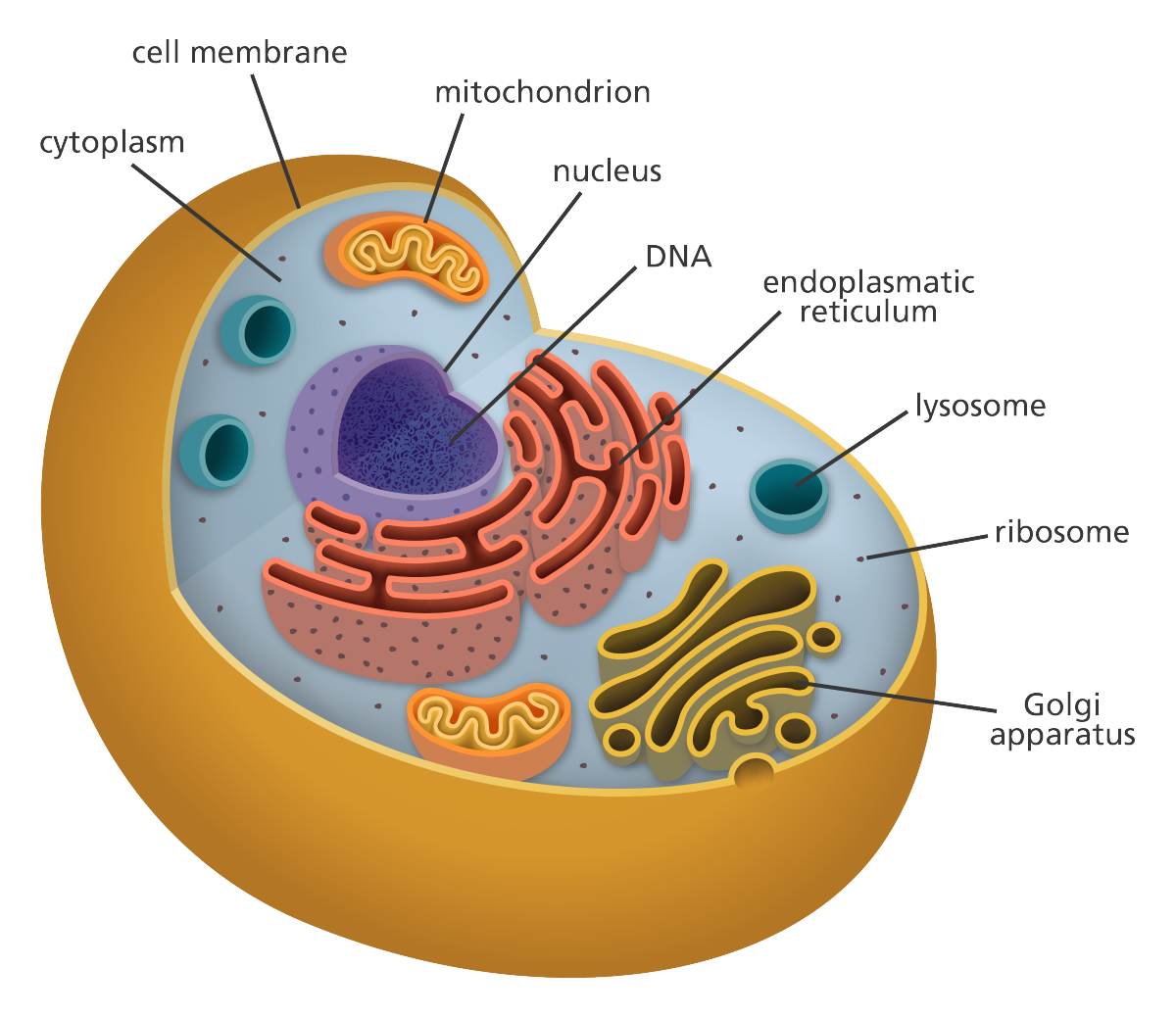
What's Inside a Cell? Meet the DNA Holder
Explore the tiny structures inside cells and discover how organelles such as the nucleus and mitochondria carry out different jobs that keep cells working.
Explore this lesson
How Soap Defeats Grease: The Chemistry of Surfactants and Micelles
Discover why water alone struggles to remove grease and how soap molecules can interact with both water and oily dirt.
Explore this lesson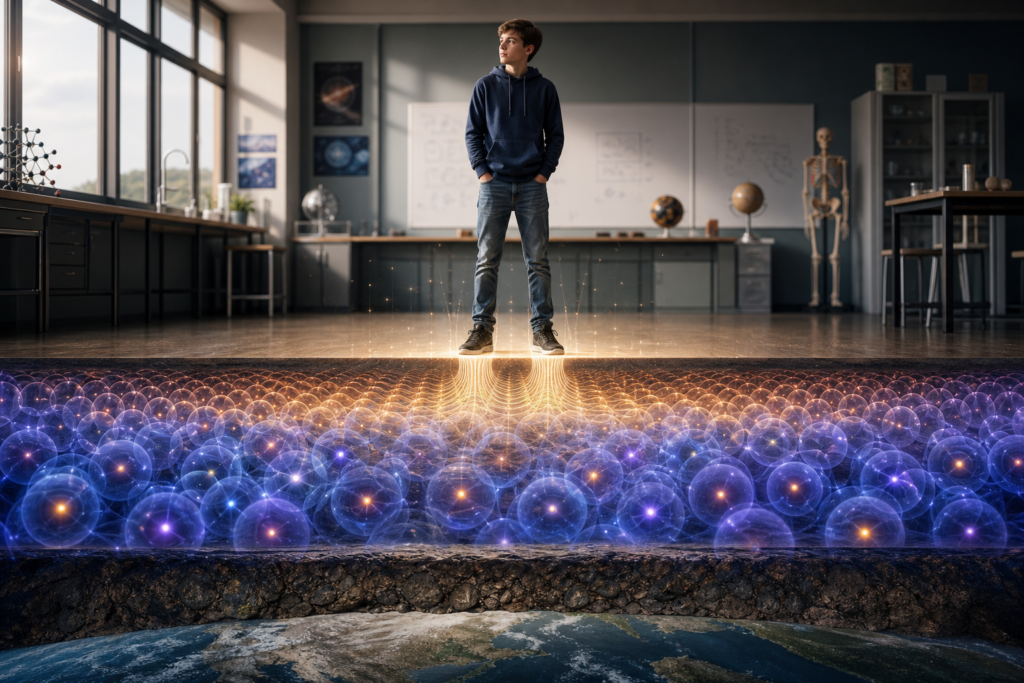
If Atoms Are Mostly Empty Space, Why Don't We Fall Through the Earth?
Find out what really creates the resistance between solid objects and why atomic structure does not mean matter can simply pass through other matter.
Explore this lesson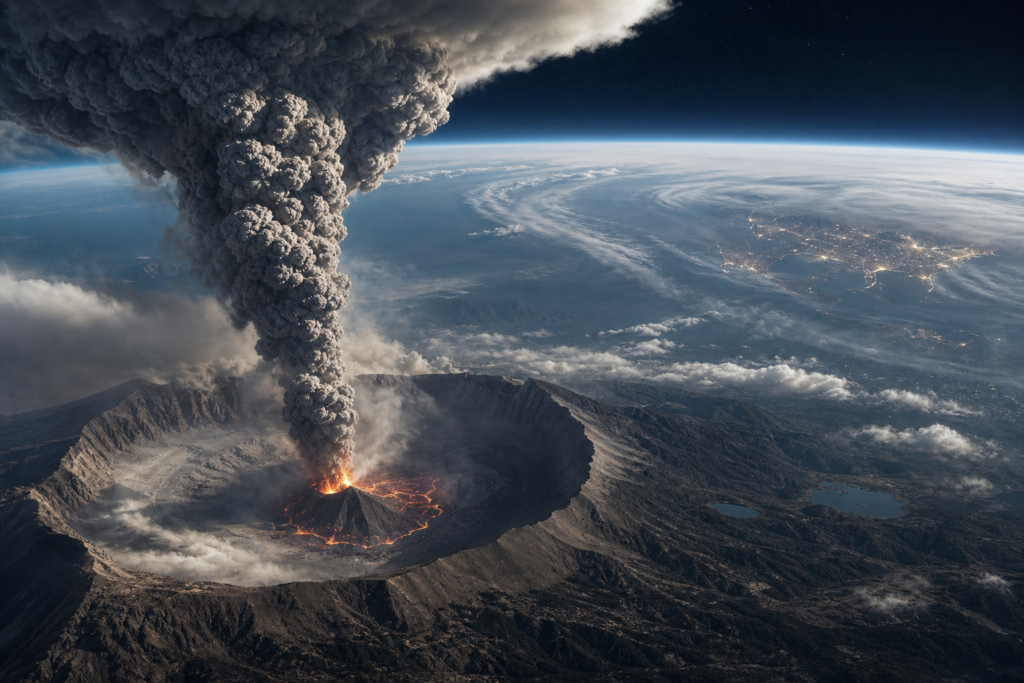
Could a Supereruption Change the Whole Planet?
Explore how an exceptionally large volcanic eruption could affect landscapes, air travel, sunlight, climate and people far from the volcano itself.
Explore this lesson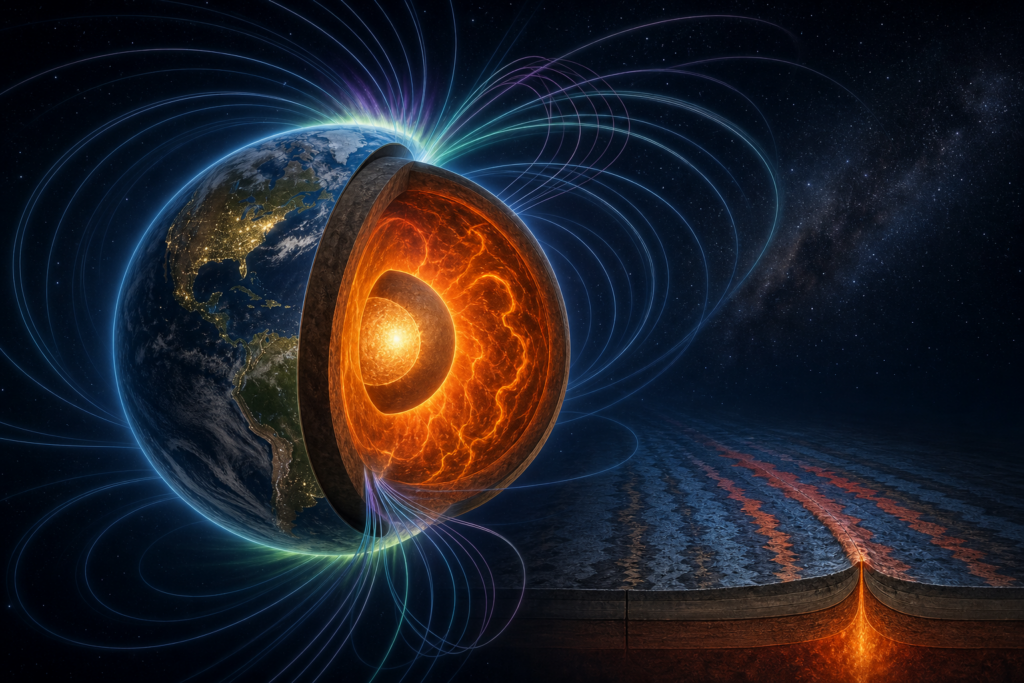
Earth's Wandering Magnetic Poles: Is a Global Reversal Coming?
Discover why magnetic north moves, how rocks record previous magnetic reversals and what scientists know about Earth's changing magnetic field.
Explore this lesson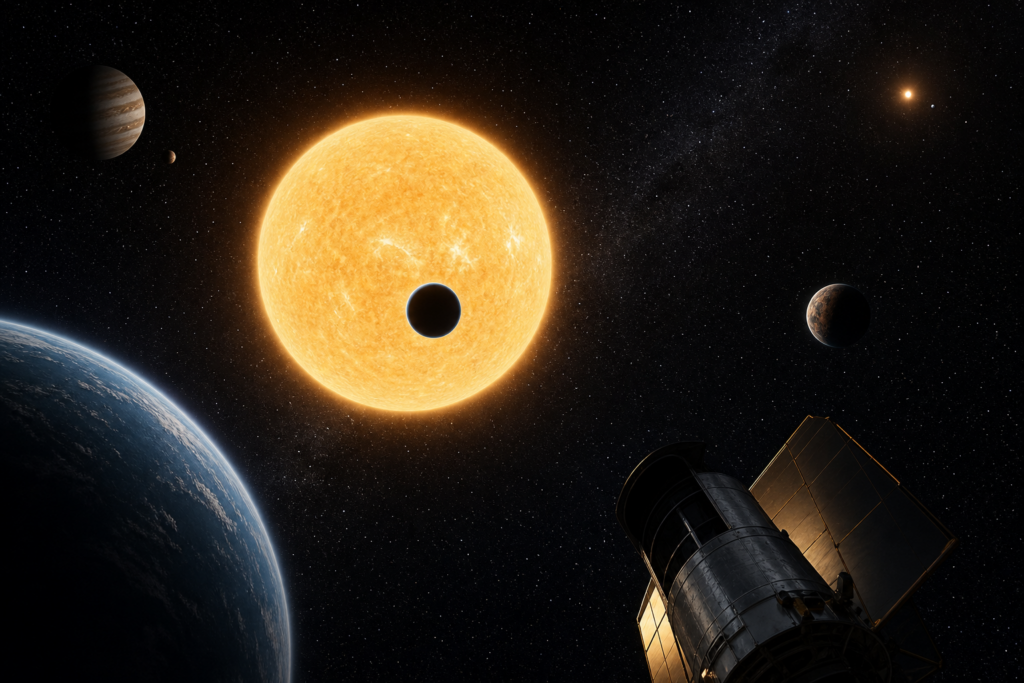
Exoplanets: How We Discovered New Worlds and What They Mean for Humanity
Learn how astronomers detect planets they often cannot see directly and what those discoveries reveal about planetary systems beyond our own.
Explore this lesson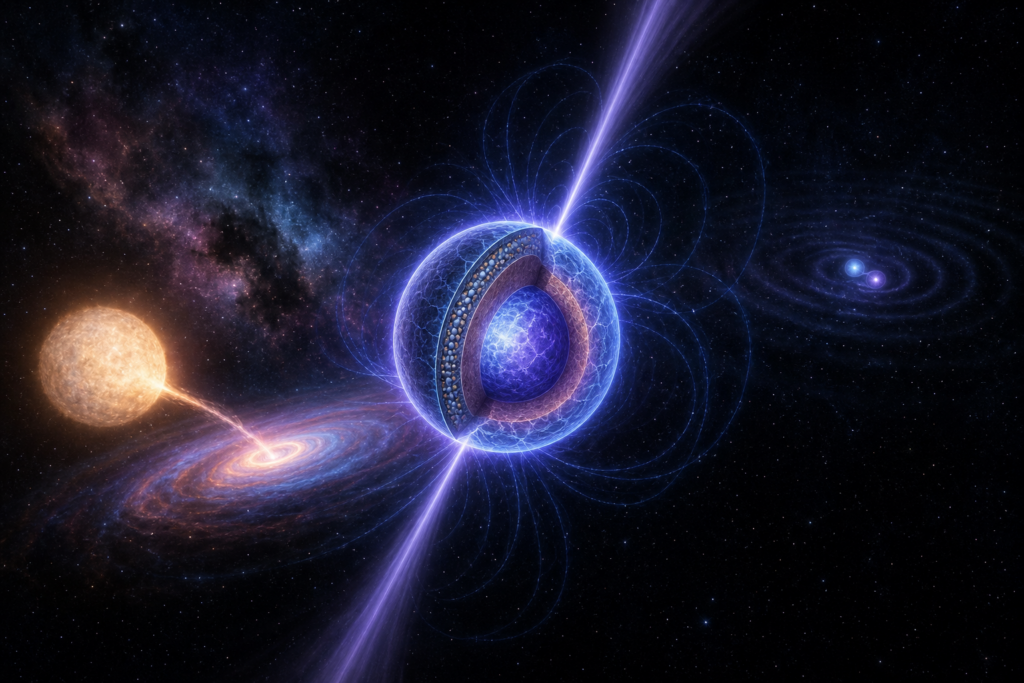
Neutron Stars: Inside the Universe's Most Extreme Matter
Discover what happens when more than a Sun's worth of matter is compressed into a stellar remnant only around the size of a city.
Explore this lesson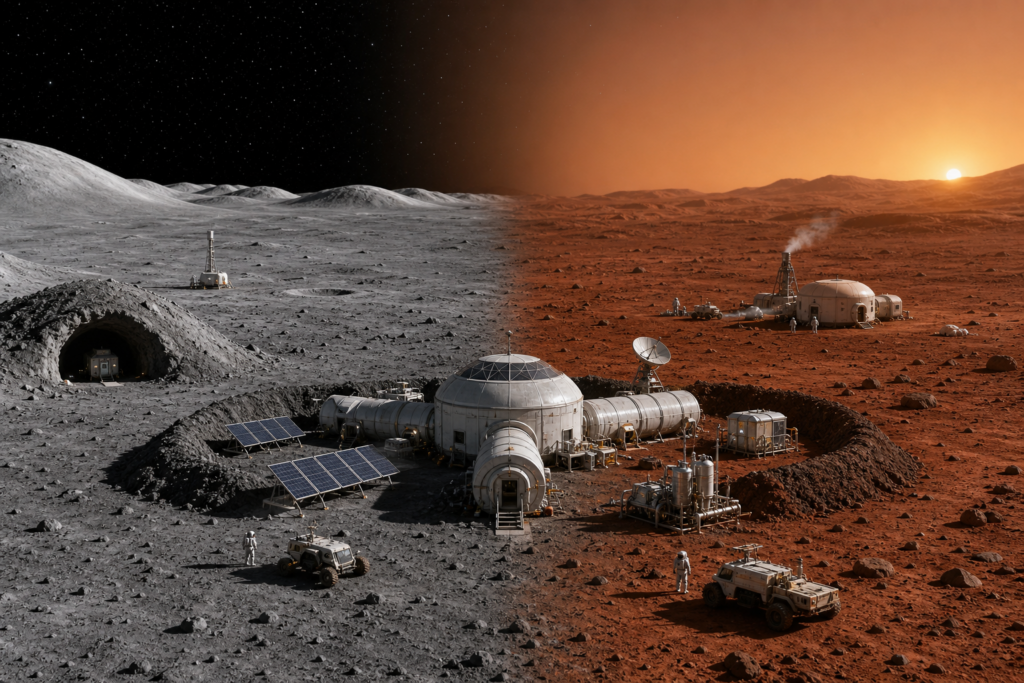
Could Humans Build a City on the Moon or Mars?
Explore the scientific problems humans would have to solve to create a safe and lasting settlement beyond Earth.
Explore this lessonBiology: Understanding Living Things
Biology explores life at every scale, from structures inside microscopic cells to complete organisms and the systems that keep them alive.
Our Biology lessons explore cells, DNA, the human body and the processes that allow living things to grow, function and respond to their surroundings.
Understanding biology often means connecting different levels of organisation. A change inside a single cell can affect a tissue, an organ or an entire organism. Genes can influence characteristics, while environmental conditions can also affect how living things develop and survive.
Chemistry: Understanding Matter and Change
Everything around us is made from matter, and chemistry helps explain why different substances have different properties and what happens when those substances interact.
Our Chemistry lessons explore atoms, molecules, elements, compounds and chemical reactions. They also connect these ideas to familiar experiences such as rusting metals, cooking food and removing grease.
Chemistry often explains visible changes by looking at events far too small to see directly. Scientists therefore use models of atoms, molecules, electrons and chemical bonds to understand how substances behave and to predict what may happen during a reaction.
Physics: Understanding the Rules Behind the Universe
Physics investigates matter, energy, forces, motion and some of the most fundamental behaviour in nature.
The Physics collection includes ideas that can be observed in everyday life as well as phenomena that happen at scales far beyond ordinary human experience.
Forces can change an object's motion. Waves can transfer energy and information. Electricity and magnetism affect technologies we use every day. At extremely small scales, quantum physics reveals behaviour that can be very different from the world we experience directly.
Physics also connects the very small with the very large. The same subject that investigates electrons and atoms can help explain planets, stars and the evolution of the universe.
Earth Science: Exploring a Changing Planet
Earth may feel solid and permanent beneath our feet, but our planet has been changing for billions of years.
Our Earth Science lessons investigate the crust, mantle and core, volcanoes, Earth's magnetic field and evidence preserved from ancient environments.
Scientists cannot travel to the centre of Earth to see what is there. Instead, they gather indirect evidence. Seismic waves from earthquakes behave differently as they travel through different materials, allowing scientists to investigate structures thousands of kilometres beneath the surface.
Rocks can preserve evidence of earlier magnetic fields, while ancient ice can trap samples of past atmospheres. By combining different types of evidence, scientists can reconstruct parts of Earth's history that happened long before humans existed.
Space and Astronomy: Exploring Beyond Earth
Space contains some of the most extreme environments known to science, from planets with conditions very different from Earth to stars containing extraordinary amounts of matter and energy.
Our Space and Astronomy lessons explore planets, stars, exoplanets, stellar remnants and the scientific methods humans use to investigate objects that may be trillions of kilometres away.
Astronomers often cannot visit or even directly photograph the things they study. Instead, light and other forms of radiation carry information across space. Tiny changes in the light from a star can reveal an orbiting planet, while spectra can reveal the elements present in distant objects.
This makes astronomy a powerful example of how science can discover something without physically touching it.
Science for Home Education
Science works particularly well within home education because learners can follow questions that genuinely interest them rather than having to explore every topic in a fixed sequence. One learner may become fascinated by space, while another wants to understand the human body, chemical reactions or the physics behind everyday objects.
Lenara Learning science lessons are designed to support that flexibility. They can be used as part of a wider home education programme, for independent study, to support revision or simply because a learner wants to understand something that has caught their attention.
Home-educating families can choose individual lessons, follow one of the Science categories above or combine Science with related subjects such as maths, technology and geography. This makes it easier to build learning around curiosity while still developing important scientific knowledge and thinking skills.
Parents who want to explore science, technology, engineering and maths more broadly can also read our guide to STEM skills for home educated children.
Science Is More Than a Collection of Facts
Scientific knowledge includes an enormous number of facts, but science itself is a way of finding reliable explanations.
Scientists observe patterns, collect measurements, compare evidence and develop models that attempt to explain what they find. A useful scientific explanation must fit the available evidence and, where possible, allow predictions that can be checked.
Different questions require different methods. An astronomer cannot put a star into a laboratory. A geologist cannot cut Earth open to inspect the core. A biologist studying an ecosystem may need observations collected across many years.
What matters is whether the method produces evidence capable of answering the question being investigated.
How Does Scientific Evidence Work?
Scientific claims should be supported by evidence, but not every piece of evidence is equally useful.
Scientists have to consider how measurements were made, whether a result can be repeated, whether other explanations have been ruled out and whether different sources of evidence point towards the same conclusion.
A single unusual observation may be interesting without being enough to overturn a well-supported explanation. When many independent measurements repeatedly produce compatible results, confidence becomes stronger.
Scientists must also recognise uncertainty. Measurements have limits, evidence can be incomplete and some questions cannot yet be answered with confidence.
Saying that something is uncertain does not mean scientists know nothing about it. It means the strength and limitations of the available evidence have to be considered.
Scientific Models Help Explain Things We Cannot See
Many important parts of science cannot be observed directly.
Atoms are too small to examine like ordinary objects. Earth's deep interior is inaccessible. Distant planets may be overwhelmed by the light of their stars. Processes inside stars take place in conditions impossible to reproduce completely on Earth.
Scientists use models to represent these systems.
A scientific model is not necessarily a miniature copy of reality. It focuses on the features needed to explain observations or make predictions. Models can be diagrams, mathematical relationships, physical representations or computer simulations.
Models can also change as evidence improves. An older model may remain useful for explaining a simple situation even when a more advanced model provides a more complete description.
Different Branches of Science Connect
Biology, chemistry, physics, Earth science and astronomy are useful ways of organising scientific knowledge, but the natural world does not divide itself neatly into school subjects.
Understanding living cells requires chemistry. Chemical bonds depend on physics. Earth's magnetic field involves geology and electromagnetism. Investigating whether another planet could support life requires astronomy, chemistry, biology and planetary science.
These connections are important because difficult scientific questions often require knowledge from several different areas.
The more science you explore, the easier it becomes to recognise that apparently separate subjects are often different ways of examining the same universe.
What Skills Does Studying Science Build?
Science develops skills that are useful far beyond remembering scientific terminology.
- Observation helps you notice important details and recognise patterns.
- Evidence evaluation helps you decide whether a claim is supported by reliable information.
- Cause and effect helps you distinguish between things that happen together and evidence that one actually causes another.
- Using models helps you understand systems that may be too small, large, distant or complicated to observe directly.
- Measurement allows observations to be compared accurately rather than relying only on impressions.
- Prediction allows scientific explanations to be tested against further observations.
- Critical thinking encourages you to question claims rather than accepting them because they sound convincing.
- Understanding uncertainty helps you recognise the difference between what evidence strongly supports, what remains uncertain and what has not been demonstrated.
These skills are particularly useful when encountering scientific claims in news reports, advertising, videos and social media. Asking what the evidence actually shows is one of the most important habits science can teach.
Do You Need to Learn Science in Order?
No. Some scientific concepts build on earlier knowledge, but you do not have to work through every branch of science in a fixed sequence.
If space fascinates you, start with astronomy. If you want to understand what happens inside your body, explore biology. If you are curious about atoms, materials and reactions, try chemistry. If forces, energy or strange quantum ideas interest you, explore physics. If you want to know what is happening beneath your feet, begin with Earth science.
This flexibility is particularly useful in home education, where learners can spend more time on subjects that capture their interest and return to foundational ideas when they need them.
As you explore more lessons, you will start making connections between different topics. An idea learned in chemistry may suddenly help explain biology, while something learned in physics may make an astronomy lesson much easier to understand.
Keep Exploring Science
Lenara Learning has a growing collection of Science lessons covering biology, chemistry, physics, Earth science and space, created to support home education, independent learning, revision and curious young learners.
Browse all Science lessons to see the complete collection, or return to the Lenara Learning lesson library to explore history, geography, maths, technology and many other subjects for kids and teens.