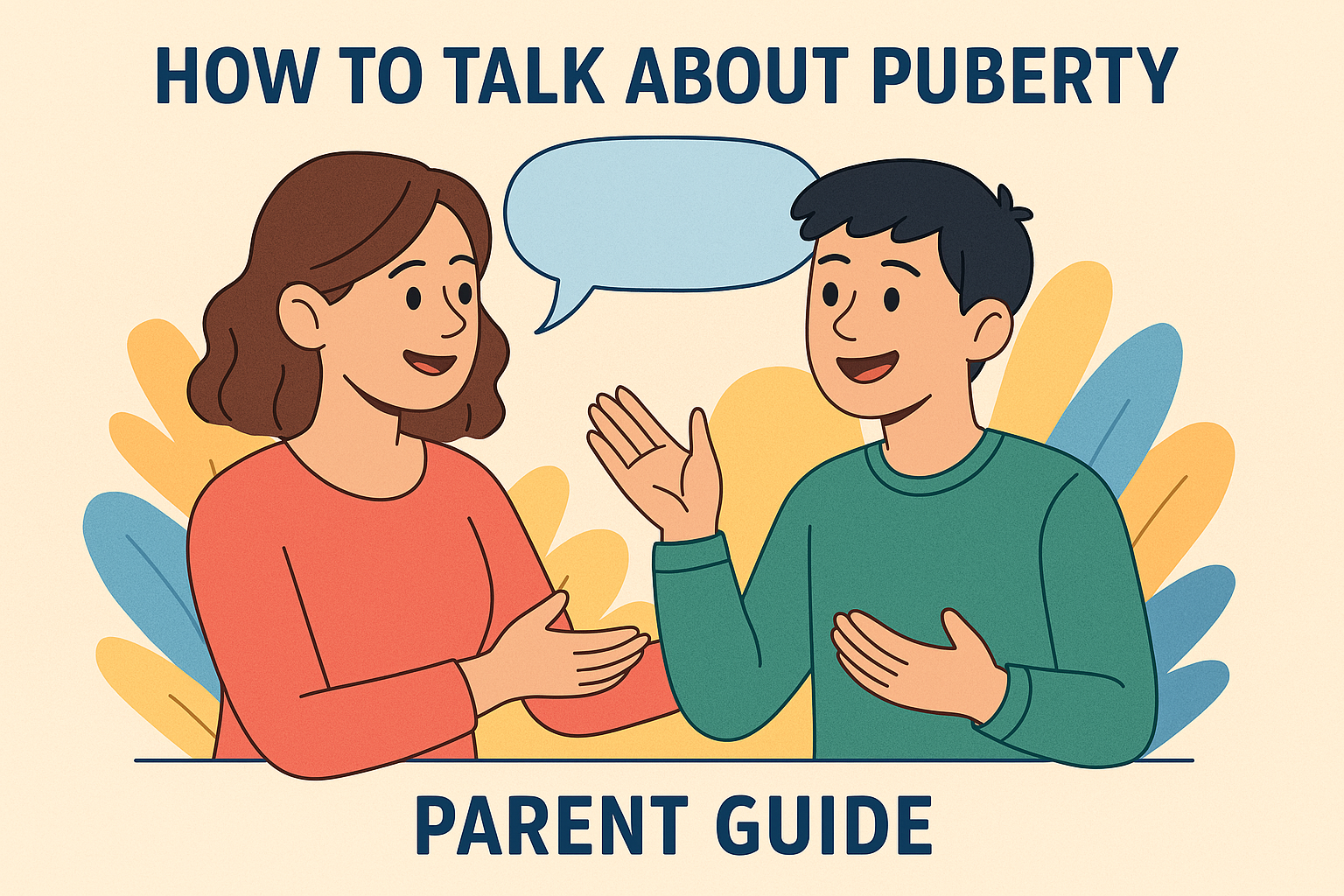
How to Talk About Puberty — Parent Guide
For many parents, one of the most uncomfortable and uncertain parts of parenting is talking about puberty. You may worry about saying the wrong thing, using the wrong words, or making your child feel embarrassed. Some parents avoid the topic altogether, hoping their child will learn what they need to know elsewhere. However, children and teenagers need trusted adults to help them make sense of the changes they are experiencing — both physically and emotionally. This printable resource, How to Talk About Puberty — Parent Guide, is designed to help you approach these conversations with confidence, honesty, and care.
This guide walks you through the key principles for having effective and supportive discussions about puberty. It doesn’t just list what to say — it shows you how to say it. Whether you are helping a child prepare for puberty, answering questions from a curious pre-teen, or supporting a teenager who is already experiencing changes, this guide gives you practical strategies for starting and continuing these important talks.
[cl_logged_out]
Members Only
You need to be registered and logged in to access this printable parents guide and other learning resources, games and quizzes. It only costs £1.99
[/cl_logged_out]
| How to Talk About Puberty — Parent Guide | |
|---|---|
| Why Talking Matters | Talking about puberty helps young people feel prepared, supported, and normal. Silence often leads to confusion, anxiety, and turning to less reliable sources like social media. You don’t need to be an expert — just open, honest, and kind. |
| When to Start Talking | It’s never too early to start gentle conversations. It’s better to begin before changes happen so your child feels ready. Look for natural opportunities, like when watching a film, shopping, or if they ask a question. |
| Tips for Starting the Conversation |
|
| How to Respond to Difficult Questions |
|
| Common Parent Worries |
|
| What Not to Do |
|
| Making it Ongoing | Puberty isn’t a one-time chat. Keep checking in gently over months and years. Make it normal to talk about growing up, bodies, and feelings openly. |
| Where to Get Extra Support |
- Childline - Puberty - The Mix - Talking About Puberty |
The resource focuses on creating an open and safe environment for conversations. It explains why it’s helpful to use the correct words (like penis, breasts, periods, etc.) instead of using nicknames or avoiding certain topics. It also provides tips for choosing the right moment, managing your own nerves, and answering tricky or awkward questions without shutting down the conversation.
Importantly, the guide also helps you deal with common worries parents have themselves, such as “What if I get embarrassed?”, “What if I don’t know the answer?”, or “What if they don’t want to talk to me?”. The answer is simple — you don’t need to be perfect. You just need to be present, willing to listen, and ready to learn together.
For home educators, this sheet is especially useful because it supports more flexible and ongoing learning. It can be used as part of a wider topic on personal development, health, relationships, or mental wellbeing. You can read it on your own before planning lessons, or you can share it directly with your child to help start conversations.
This printable is designed with parents in mind — including those who may not have had much formal education themselves. The language is plain and simple without being childish, and all advice is practical and adaptable to suit different family situations. Whether you are raising boys, girls, or children who are questioning their identity, this guide will help you support them through this stage of life.
With this resource, you’ll learn that talking about puberty doesn’t have to be scary — it can actually strengthen your relationship with your child and help them feel secure as they grow and change.